
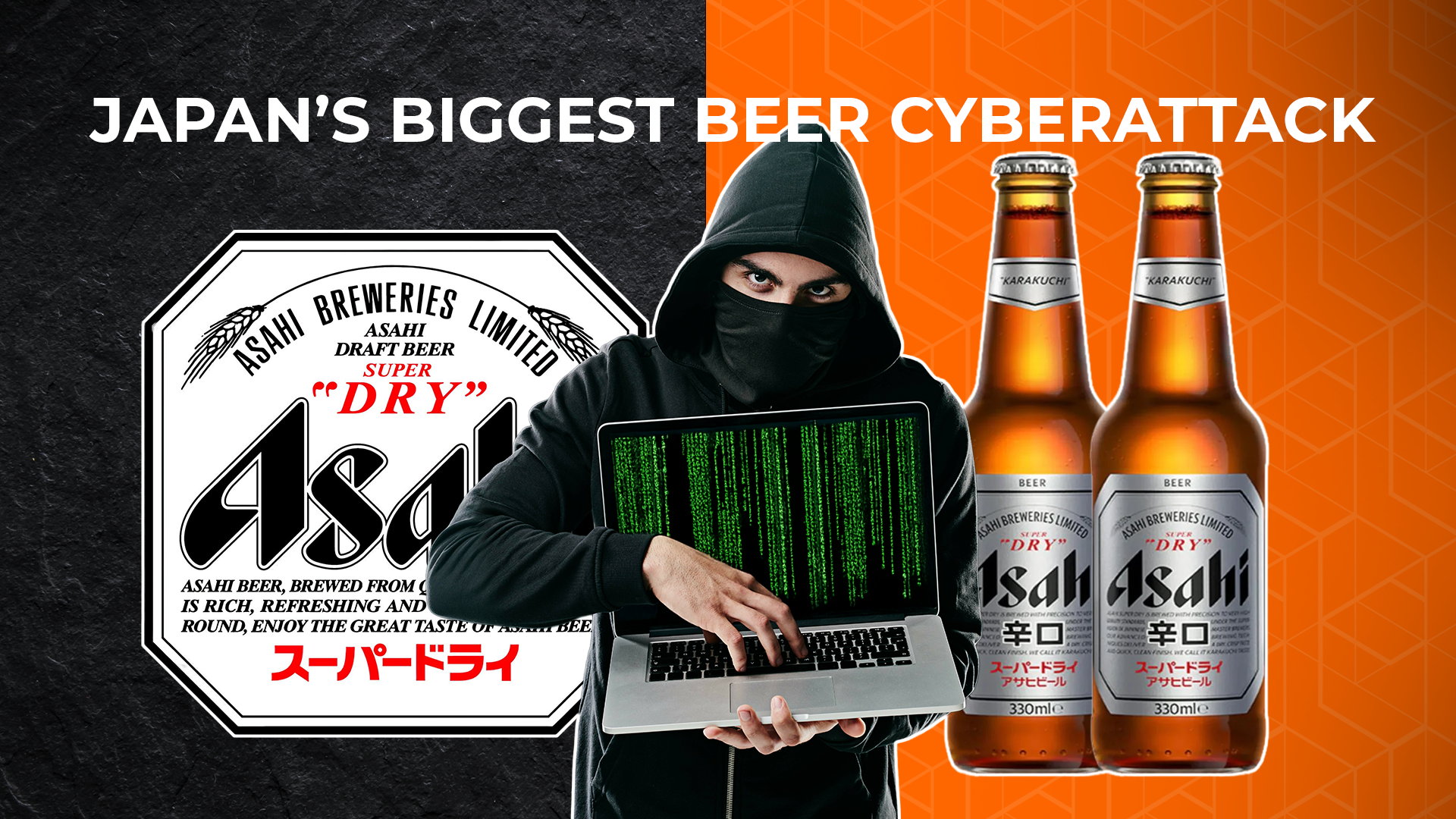

Asahi Cyberattack Disrupts Beer Production Across Japan
By Stefan @ WeDoTech
Asahi cyberattack has turned into the top business and technology story in Japan this week. The ransomware assault on Japan's favorite beer brewer, Asahi Group Holdings, halted operations at a record level, suspending production in more than 30 factories.
The Asahi cyberattack not only targets beer drinkers but also shows how dependent manufacturing and supply chains have become on digital infrastructure.

What Happened
The Cyberattack on Asahi reportedly began earlier this week, bringing one of Japan’s most iconic beverage companies to a standstill. Known for producing around 6.7 million bottles of beer every single day, Asahi’s network suffered a severe ransomware breach that crippled its ordering and delivery systems. As a result, production was completely halted in over 30 factories across the nation.
The firm's headquarters, notoriously built to resemble a giant beer mug, has also been partially disrupted since internal communications and logistics were impacted. Although Asahi has not yet announced whether customer or supplier information was hacked, the magnitude of the Cyberattack on Asahi indicates that efforts toward recovery will take weeks, if not more.

Key Features of the Incident
The Asahi Cyberattack was a ransomware attack—a type of malware that holds computer systems hostage until a ransom is paid. Such an attack has grown more common across manufacturing industries around the world. For Asahi, the attack targeted key backend systems dealing with scheduling, delivery planning, and factory automation.
Supermarkets and distributors in Japan are already feeling the effects. Many report stock shortages of Asahi’s popular beverages, including not just beer but also baby food—a lesser-known product line manufactured by the same company. With logistics and production on pause, restocking shelves may prove challenging for several weeks.

Criticism and Concerns
The Asahi Cyberattack has unleashed a torrent of criticism on corporate cyber security preparedness in Japan. The majority of industry observers think that Asahi, and the majority of other large manufacturers, may have underestimated the importance of network segmentation and data backup. Others indicate that the Asahi Cyberattack could act as a wake-up call to Japanese companies to invest more in cyber security provisions in a bid to protect both operational technology (OT) and information technology (IT) systems.
There are also growing concerns over the wider ramifications. One Cyberattack on Asahi had the potential to suspend production in dozens of sites, affecting both food and beverage stocks. This interlinking between product lines serves as a reminder of how streamlined contemporary manufacture can be exposed so quickly when under threat in a digital sense.
Competitor Comparison
As compared to its competitors Kirin and Sapporo, the Cyberattack on Asahi has left the company in a very precarious position. Kirin, for instance, has invested heavily in cybersecurity partnerships over recent years, scanning through its supply chains in real-time for threats, reports say. Sapporo, on the other hand, has adopted more decentralized production platforms, which allow operations to be maintained even if an area is compromised.
It is this contrast which underscores the importance of preventive cybersecurity interventions. If Asahi had such interventions in place, the Cyberattack on Asahi could never have attained such magnitude.

Final Thoughts
The Asahi Cyberattack shows how vulnerable global production networks are to digital attack. It's a harsh reminder that cybersecurity is no longer a technical problem—it's a matter of business survival. For Asahi, the next moves will be about rebuilding confidence, rebuilding systems, and hardening defenses against the next breach.
From baby food to beer, the effects of the Cyberattack on Asahi are an eye-opener on how a single ransomware attack can be experienced by millions of people. Whether or not this event heralds permanent change across Japan's corporate landscape remains to be seen—but until that time, Japan holds its breath for its beer and baby food's return.
If you found this interesting, after letting us know your thoughts in the comments, take a look at this article where we cover Nintendo's CEO of the American branch who had recently announced his retirement.