
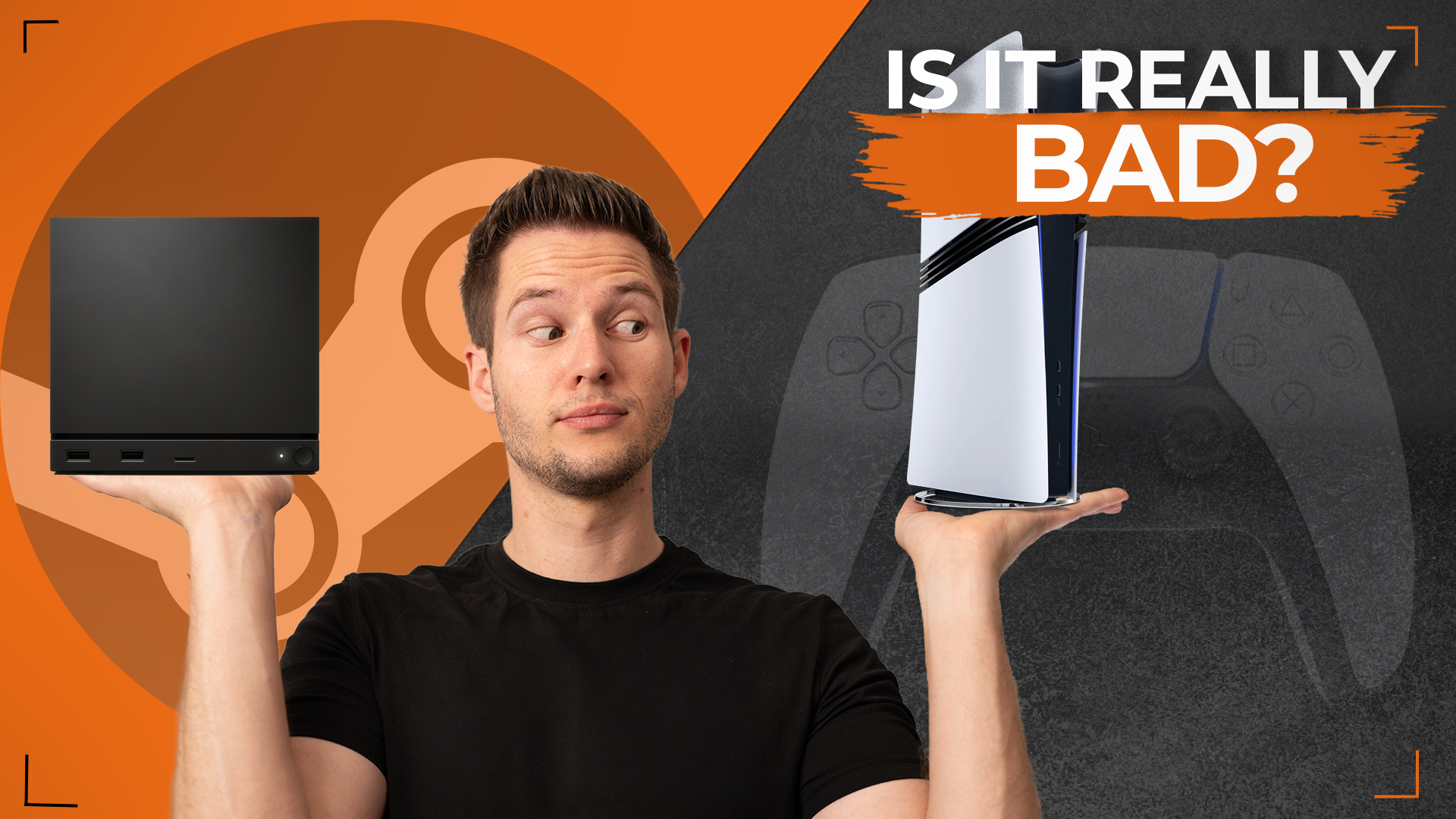

Steam Machine Review: Great Console, Wrong Price Tag
By Stefan @ WeDoTech
Valve Built Something Impressive. Then Priced It Into a Corner.
The Steam Machine is genuinely interesting hardware. A compact black cube that sits under your television, runs your entire Steam library through SteamOS, and bridges the gap between console convenience and PC flexibility in a way nobody has pulled off before. On paper, it is exactly what living room PC gaming has needed for years.
Then Valve announced the price, and the conversation changed entirely.
At $1,049 for the base 512GB model and $1,349 for the 2TB version, the Steam Machine is not competing with consoles anymore. It is competing with gaming PCs. And when you start doing that math, the value proposition gets uncomfortable fast.
What Valve Actually Built
Start with the hardware, because it deserves genuine credit.
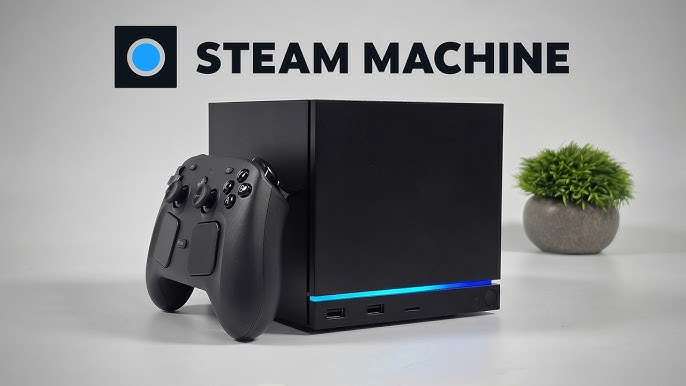
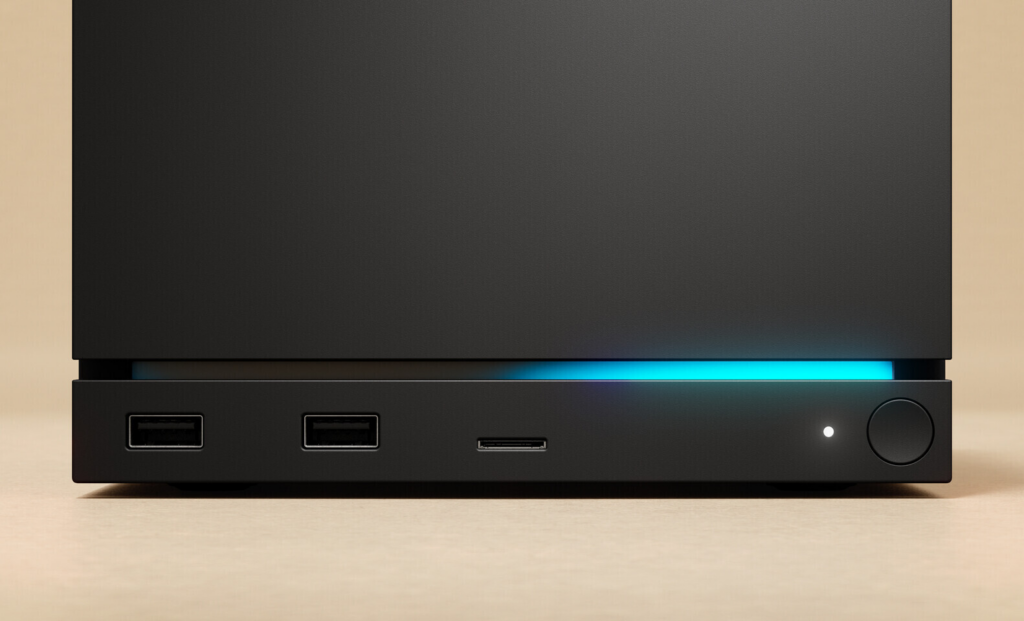
The Steam Machine runs on a semi-custom AMD chip combining a Zen 4 CPU with six cores and 12 threads clocked up to 4.8GHz, paired with an RDNA 3 GPU featuring 28 compute units running at 2.45GHz with a 110W power envelope. The system carries 16GB of DDR5 for general tasks alongside 8GB of GDDR6 dedicated video memory. Storage comes on an NVMe SSD, expandable via microSD.
Valve describes this as roughly six times the performance of the Steam Deck, and in practical terms the GPU sits in similar territory to a Radeon RX 7600. The target is 4K at 60fps, achieved through FSR upscaling rather than brute force native rendering, which is a reasonable trade-off for a living room device where you are sitting several feet from the screen. TCL
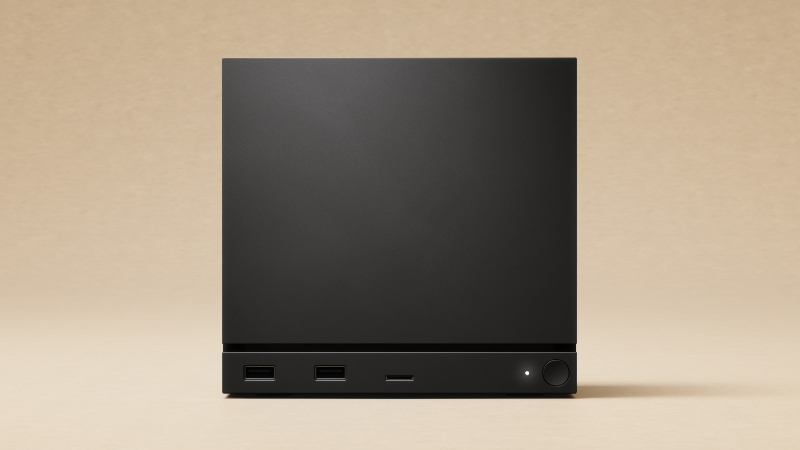
The form factor is genuinely impressive. Everything, including the power supply, fits inside the cube. There are no external bricks, no cluttered desk setup. It boots into SteamOS, works with a controller from the moment you power it on, and plays your existing Steam library without reinstalling anything. For someone who wants a PC gaming experience on their television without the complexity of building or configuring a PC, the concept is exactly right.
The new Steam Controller at $99 is also worth mentioning. It launched ahead of the Steam Machine in May 2026 and has been well received as a companion to SteamOS. The hardware ecosystem Valve is building around this device is coherent and well considered.
The Price Problem
Here is where things get difficult.
Valve had reportedly planned a starting price closer to $750, but the cost of RAM and storage rose sharply between the November 2025 announcement and launch. The global memory shortage, driven largely by AI data center demand consuming unprecedented quantities of DRAM and NAND flash, pushed component costs well beyond what Valve had budgeted. Valve has been transparent about this, acknowledging the situation and calling it "a strange time to launch hardware." TCLTCL
That context matters, but it does not change what you are actually being asked to spend.
At $1,049 for the 512GB model with no controller, you could instead buy two PlayStation 5s. Or a gaming laptop with an RTX 5060 and money left over. Or, if you plan carefully, a full desktop build with an RX 9060 XT that will significantly outperform the Steam Machine's GPU in every benchmark that matters.
Add the Steam Controller at $99 and you are at $1,128 for the base bundle. At $1,428 for the 2TB model with controller, the calculus gets even harder to justify. At that price point you are within reach of a gaming laptop with an RTX 5070 that you could run SteamOS on yourself and tuck behind your television. The Steam Machine's entire convenience argument starts to erode when the alternative is a more powerful machine for the same money.
Who Actually Benefits Here
The Steam Machine is not a bad product. It is a product with a specific audience that the price has made considerably smaller than Valve intended.
The person this genuinely works for is someone who wants console simplicity with PC game access, owns a large Steam library they do not want to abandon, and has no interest in building or maintaining a desktop PC. For that person, the Steam Machine delivers real value. SteamOS is polished, the hardware is capable, the form factor is tidy, and the setup experience is far simpler than configuring a traditional PC for television use.
The GPU sits close to an RX 7600 in desktop terms, and the system targets 4K through upscaling rather than native rendering, which works perfectly well at typical living room viewing distances. For the majority of games in most people's Steam libraries, performance will be more than adequate. TCL
The problem is that person now needs to spend over a thousand dollars to access that experience, at which point the comparison to a PS5 or a purpose-built gaming PC becomes unavoidable.
Steam Machine vs. PlayStation 5 and Gaming PCs
At $699, the PlayStation 5 Pro offers polished exclusives, a refined controller, and a console experience that has been optimized over years of software updates. Two PS5s cost less than one Steam Machine. That is a sentence that should give Valve pause.
Against gaming PCs, the Steam Machine's RDNA 3 GPU competes with mid-range discrete graphics. A desktop build at the same price can get you meaningfully more performance, more storage, more upgrade flexibility, and the same Steam library access. The trade-off is size and setup complexity, which is a real consideration for some buyers, but not a $300 to $400 premium worth of consideration for most.
Where the Steam Machine holds its own is form factor and ecosystem integration. No gaming PC in this price range ships as a compact cube with a built-in power supply, a polished controller-first interface, and seamless access to a library of tens of thousands of games without any configuration. That matters to the right buyer. It just matters to a smaller group than $750 pricing would have reached.
Final Thoughts
The Steam Machine is the best argument for living room PC gaming that has ever been made. The hardware is solid, the software experience is genuinely good, and the concept of a console-sized device that plays your Steam library without compromise is one that should have broad appeal.
The price undercuts all of that. Valve itself acknowledged the timing directly, calling it "a strange time to launch hardware." They are right. At $750, this would have been an easy recommendation. At $1,049, it is a hard one that only makes sense for a specific type of buyer who has already ruled out consoles and traditional PCs for reasons beyond performance and value. TCL
If the memory market stabilizes and Valve revisits pricing in 2027, the Steam Machine could become exactly what it was meant to be. Right now, it is a product worth admiring and thinking carefully about before buying.
For a look at what that money gets you on the portable side, check out our coverage of the Dell XPS 16 Creator Edition, another device proving that the $1,000 plus bracket is more competitive than it has ever been.