
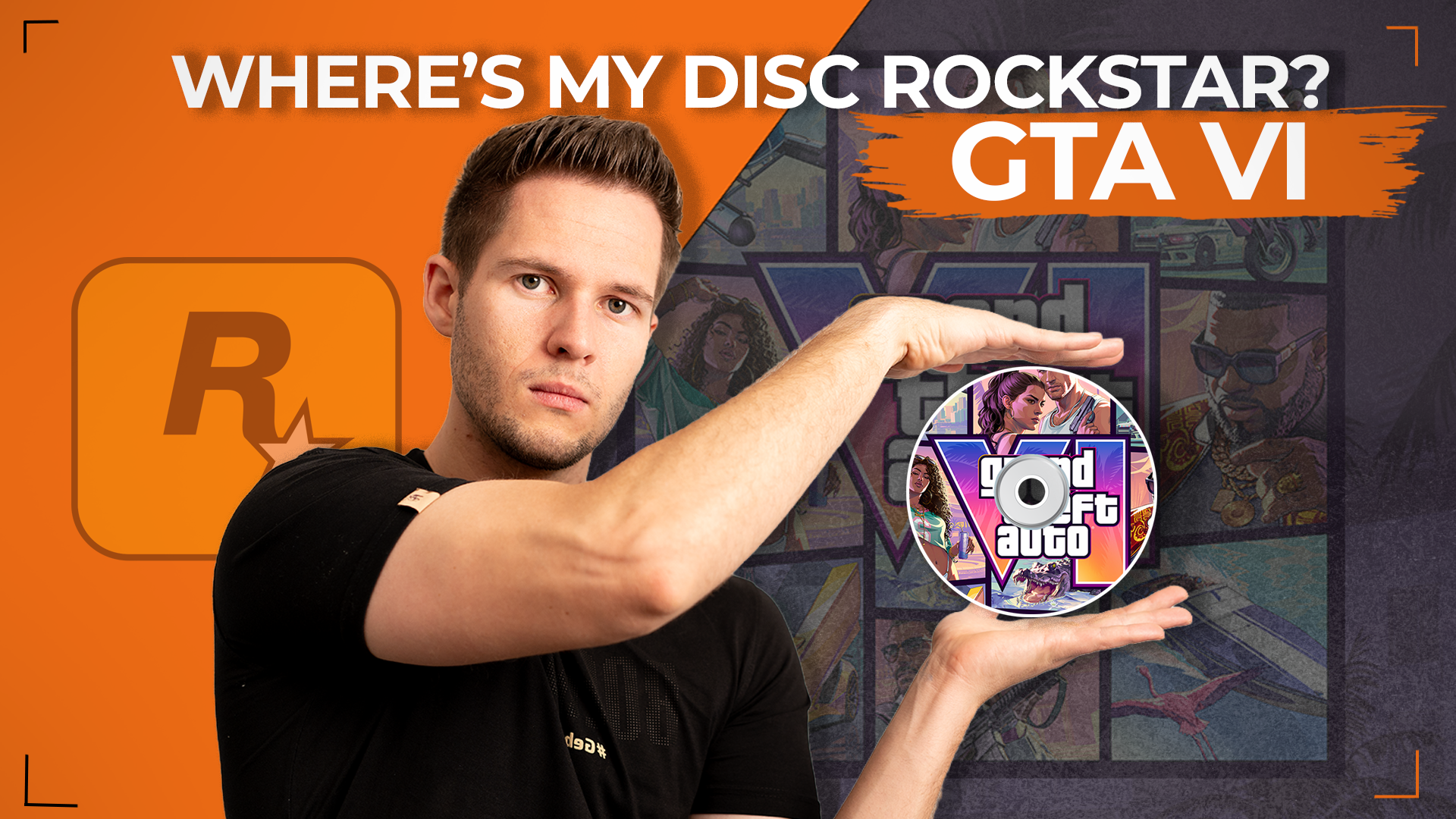

GTA 6 Has No Disc. This Anger, is Not about the Disc.
By Stefan @ WeDoTech
Rockstar Sold You a Box. The Game Is Not Inside It.
On June 25, 2026, pre-orders opened for Grand Theft Auto VI, one of the most anticipated game releases in history. Alongside the pricing confirmation, $79.99 for the Standard Edition and $99.99 for the Ultimate Edition, Rockstar quietly confirmed something that immediately overtook the conversation.
Physical copies of GTA 6 will contain a code that can be redeemed for the digital download of the game. A disc will not be included in the box.
The backlash was immediate and widespread. Forums, social media, and comment sections filled with players expressing frustration ranging from mild disappointment to genuine anger. And from a PC gaming perspective, where digital-only distribution has been standard for years, the initial reaction might be to shrug. Who cares about a disc?
That reaction misses the point entirely. The anger is not about the disc. It is about what the disc represented.
Why the Physical Game Mattered
Console gaming held onto something that PC gaming surrendered years ago without most players noticing.
When GTA 5 launched on PC, it shipped on seven DVDs just to contain 65GB of data, and still required additional downloads afterward. PC gamers moved to Steam, game launchers, activation keys, and accounts tied to their entire library a long time ago. The physical disc was already largely irrelevant on PC. What remained was the habit of buying games digitally and the quiet acceptance that those games were not truly owned, just licensed.
Console players had a meaningful alternative for longer. A physical disc meant something specific. You can install it offline, lend it to a friend, resell it, or keep it on a shelf as something you actually possess. The game existed independently of your account, your platform subscription, and whatever Rockstar or Sony decided to do with their servers in five years. You bought it. It was yours.
A code in a box gives you none of that. The code ties the game to your account, just like a digital purchase, making the physical copy really just a cardboard box wrapped around a digital license. You are paying $79.99 for packaging, and you cannot finish the campaign and sell it when you are done.
Why Rockstar Did This
The official explanation focuses on pre-loading. Physical copies hit stores a full week before the November 19 launch date specifically so buyers can redeem their code and begin downloading early. That is a practical benefit for players in areas with slow internet connections who would otherwise be waiting hours on launch day.
The more honest explanation involves leaks. Rockstar suffered an unprecedented security breach during GTA 6's development that resulted in early footage being distributed publicly before any official reveal. Distributing download codes instead of millions of physical discs gives Rockstar considerably greater control over when players gain access to the game. A code cannot be played early by a retail employee who breaks street date. A disc can.
There is also a financial dimension. Skipping discs at launch makes the game cheaper to manufacture and ship to storefronts. For a release projected to generate billions in revenue, the disc manufacturing cost is not the primary concern. But eliminating resale is. Rockstar sees none of the revenue from secondhand disc sales, and digital copies tied to accounts eliminate the secondhand market entirely. That is not a coincidental outcome of the code-in-box approach. It is one of its clearest benefits from a publisher's perspective.
It is also worth noting that Take-Two CEO Strauss Zelnick denied the plan publicly. Asked about rumors that physical copies might be delayed, he responded that was not the plan. The physical copies arrived on schedule. They just contained a piece of paper instead of a disc. Technically accurate. Not exactly transparent.
How Far Along We Already Were
The GTA 6 disc controversy arrived at a moment when physical game media was already in significant structural decline.
As of May 2026, 52% of Xbox Series consoles and 27% of PS5 consoles sold in the US do not have a disc drive. Sony reported that 85% of PlayStation games are now sold digitally. Capcom's digital sales rate sits at 93%. Even with physical sales at tracked lows, they still represented $1.5 billion in the US in 2025, which is not nothing, but the trajectory is unmistakable.
A total of 146 video games have featured code-in-box physical releases in 2026 so far in the US alone, with 30 of them selling at least 1,000 units each. GTA 6 is by far the highest-profile game to adopt this approach, but it is not the first, and it will not be the last.
What GTA 6 did was make the direction visible at a scale that could not be ignored. When the biggest entertainment launch in history ships without a disc, the casual assumption that physical games are still physical gets harder to maintain.
What Comes Next and What It Means
Reports from a credible insider who accurately predicted the disc-less launch now suggest a proper disc version of GTA 6 will arrive in December 2026. Rockstar has not confirmed this. If it arrives, players who want to own a genuine physical copy will effectively need to buy the game twice, since the launch code will already be redeemed and tied to their account.
The broader question is what the GTA 6 situation signals for the future of physical releases. Sony is in the process of winding down its optical disc manufacturing operations. Nintendo's Switch 2 uses game cards rather than discs. Microsoft has been steadily pushing digital distribution through Game Pass. The publishers generating the highest revenue are the ones whose titles sell predominantly as digital downloads.
Physical game retail has not died, and it may not die entirely. But the functional definition of a physical game, something you own independently of an account and can resell, is narrowing significantly. For players who value ownership, collectibility, and the ability to resell games, a boxed download code represents another step away from what physical games have traditionally meant.
The Disc vs. Digital Debate at $79.99
At $79.99 for a standard edition, GTA 6 is also the clearest example yet of the pricing shift happening across the industry. Nintendo set $79.99 as the standard for Switch 2 first-party titles. Publishers have watched the benchmark and followed. For that price, the expectation of actually owning what you bought feels reasonable.
Whether you are buying a standard digital copy or a code-in-box physical edition, the end result is identical. A license to play the game on your account, with no resale value and no guarantee of long-term access if the platform or publisher changes their terms. The box is packaging. The price is the same.
Final Thoughts
The GTA 6 disc situation is not just a story about Rockstar's distribution choices. It is a story about how far the definition of ownership in gaming has already shifted, and how large a release it took for most people to notice.
PC gamers lost this battle quietly and gradually over the past fifteen years. Console players held on longer because the disc gave them something real to hold. GTA 6 is the point where that physical claim is being surrendered too, at least at launch and at least for the most visible franchise in gaming.
The anger is understandable. It is just not really about the disc. It is about what the disc represented, and the growing suspicion that what comes next will make even the concept of owning a game feel like a relic of a previous era.
If you are thinking about what GTA 6's release means for gaming platforms, check out our coverage of the Steam Machine, where the question of what you own versus what you license is equally worth thinking about carefully.