

Powered By MSI: What It Actually Means
By Stefan @ WeDoTech
So… Is “Powered by MSI” Just Marketing?
Powered by MSI is one of those phrases you’ve probably seen on prebuilt PCs, product pages, or even promotional campaigns. At first glance, it sounds like a simple branding tag. Something to make a product feel more premium.
But once you dig into it, well it actually carries a lot more meaning than most people realize.
The problem is… that meaning isn’t always consistent.
What Actually Happened Here?
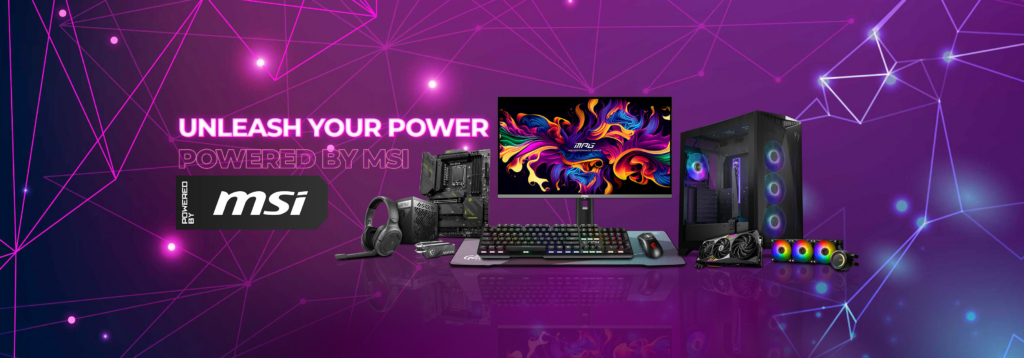
Powered by MSI comes directly from MSI’s own marketing and partner ecosystem. According to MSI, the label is most commonly used for prebuilt PCs assembled by official partners using MSI components.
In that context, Powered by MSI isn’t just branding. It’s tied to a structure.
These systems are typically grouped into tiers based on how many MSI components are included:
- Essential: at least 2 MSI components (usually motherboard and GPU)
- Advanced: 3 to 4 MSI components depending on region
- Ultimate: 6 or more MSI components
And that’s where things get interesting.
Even MSI doesn’t define these tiers globally in a single consistent way. In some regions, “Advanced” means three components. In others, it means four or more.
So Powered by MSI is not a universal standard. It’s a controlled label that can shift depending on campaign or location.
What Does Powered MSI Actually Offer?
When used correctly, Powered by MSI is meant to signal a few key things.
First, component consistency.
A Powered by MSI system should include core MSI hardware, especially the motherboard and graphics card. This increases the likelihood of compatibility and stable performance.
Second, ecosystem integration.
MSI pushes a unified experience through software like MSI Center, which allows users to manage performance, cooling, lighting, and updates in one place.
Third, partner-built assurance.
These systems are usually assembled by MSI-approved partners rather than random system builders. That adds a layer of perceived quality control.
So in the best-case scenario, Powered by MSI means a system that is:
- Built with matching components
- Designed for compatibility
- Integrated into a single software ecosystem
But again, this depends heavily on execution.
Where Powered By MSI Starts Falling Apart
Here’s where things get messy.
Powered by MSI is not a strict certification in the way people assume. It doesn’t guarantee exact performance, exact firmware behavior, or even a consistent build standard across all regions. The biggest issue is ambiguity.
Two systems can both be labeled Powered by MSI and still have very different configurations depending on how many MSI components are included. There’s also the question of support.
Because these systems are built by partners, responsibility can be split between the integrator and MSI. That means warranty, updates, and troubleshooting may not always be handled in one place. And then there’s branding confusion.
Outside of hardware, “MSI” is also used in software contexts, referring to Windows installer files. So if you’re not careful, Powered by MSI can be misunderstood entirely depending on where you see it.
In short, Powered by MSI sounds more standardized than it actually is.
Pricing
Powered by MSI systems don’t have a fixed price range, because they depend on the components inside.
However, there is a general pattern:
- Entry-level Powered MSI builds: ~$800–$1200
- Mid-range builds: ~$1200–$2000
- High-end Ultimate-tier builds: $2000+
So is it reasonable?
✅ For buyers who want convenience and ecosystem integration: Reasonable ❌ For users who can build their own PC: Not always reasonable
You’re often paying a premium for assembly, branding, and ecosystem consistency rather than raw performance alone.
Head-to-Head: Powered by MSI vs Custom Build
Powered by MSI (Prebuilt System)
- Components: MSI-focused (motherboard, GPU, and more)
- Build Quality: Partner-assembled
- Software: MSI Center integration
- Flexibility: Limited to preset configurations
- Price: Higher due to assembly and branding
Custom PC Build
- Components: Fully customizable
- Build Quality: Depends on the builder
- Software: No unified ecosystem by default
- Flexibility: Maximum control over parts
- Price: Often better value for performance
Verdict:
- Powered by MSI = convenience, ecosystem, and simplicity
- Custom build = flexibility and better value
If you don’t want to deal with building a PC, Powered MSI makes sense. If you care about maximizing performance per dollar, building your own system is still the better route.
Final Thoughts: A Label, Not a Guarantee
Powered by MSI is not meaningless, but it’s also not as strict as it sounds.
At its best, it represents a well-matched system built around MSI components with a unified software experience.
At its worst, it’s just a marketing label that doesn’t fully communicate what’s inside the system.
So the real takeaway is simple: don’t trust the badge alone. Look at the actual components.
If you’re interested in how hardware branding compares to real-world performance decisions, you might want to check out Gigabytes concept 5090.
Hey very nice blog!
Keep on writing, great job!