
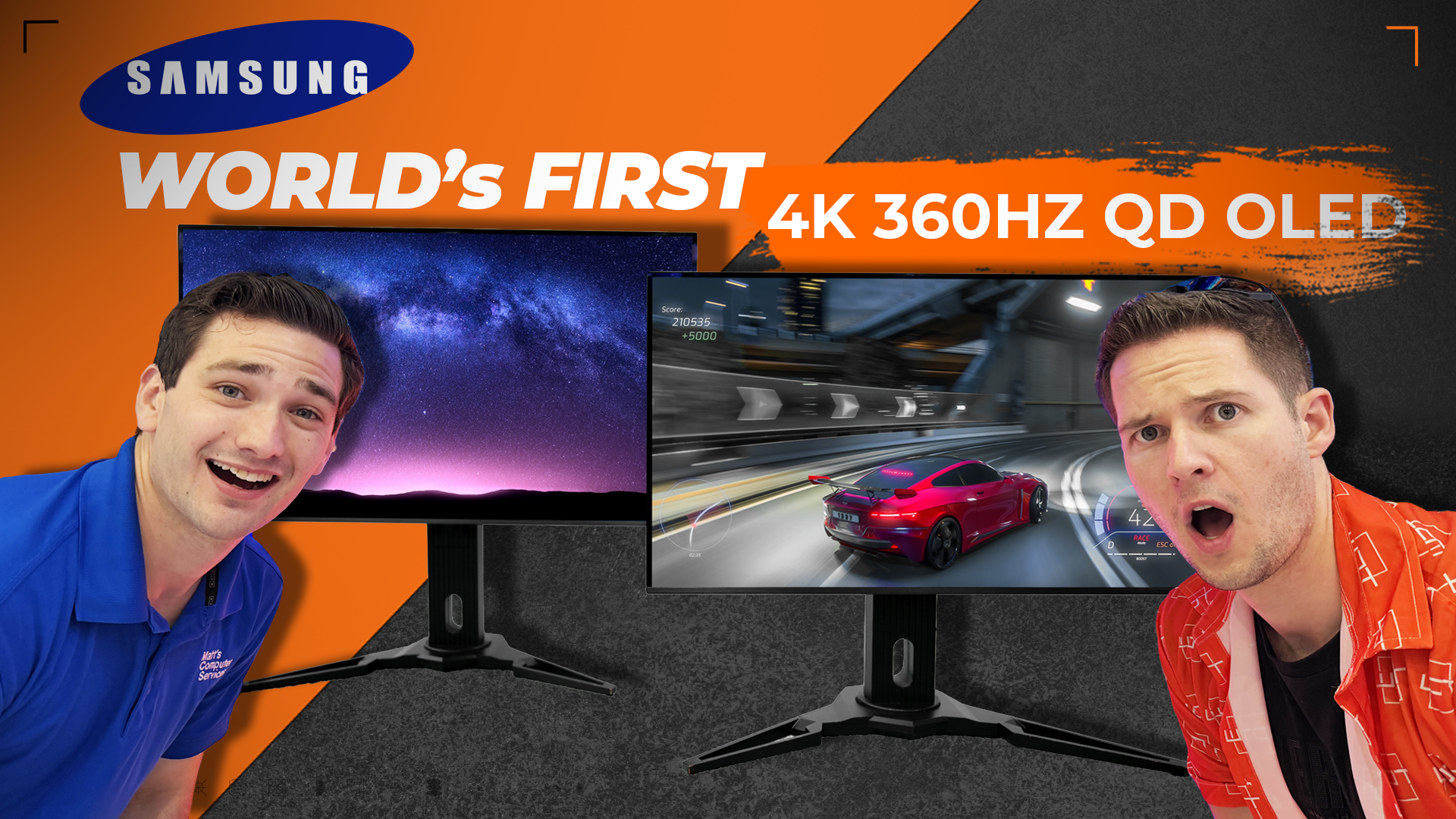

Samsung QD-OLED at Computex 2026: The Monitor Upgrade Worth Waiting For
By Stefan @ WeDoTech
Samsung Just Solved Gaming Monitor's Biggest Compromise
For years, buying a premium gaming monitor meant accepting a trade-off you could not avoid.
You could have 4K resolution at up to 240Hz. Or you could have 360Hz at 1440p. But not both at the same time, on the same panel, without any asterisk in the spec sheet. The physics of pushing that much pixel data through a display fast enough made it genuinely difficult, and no manufacturer had cracked it at production scale.
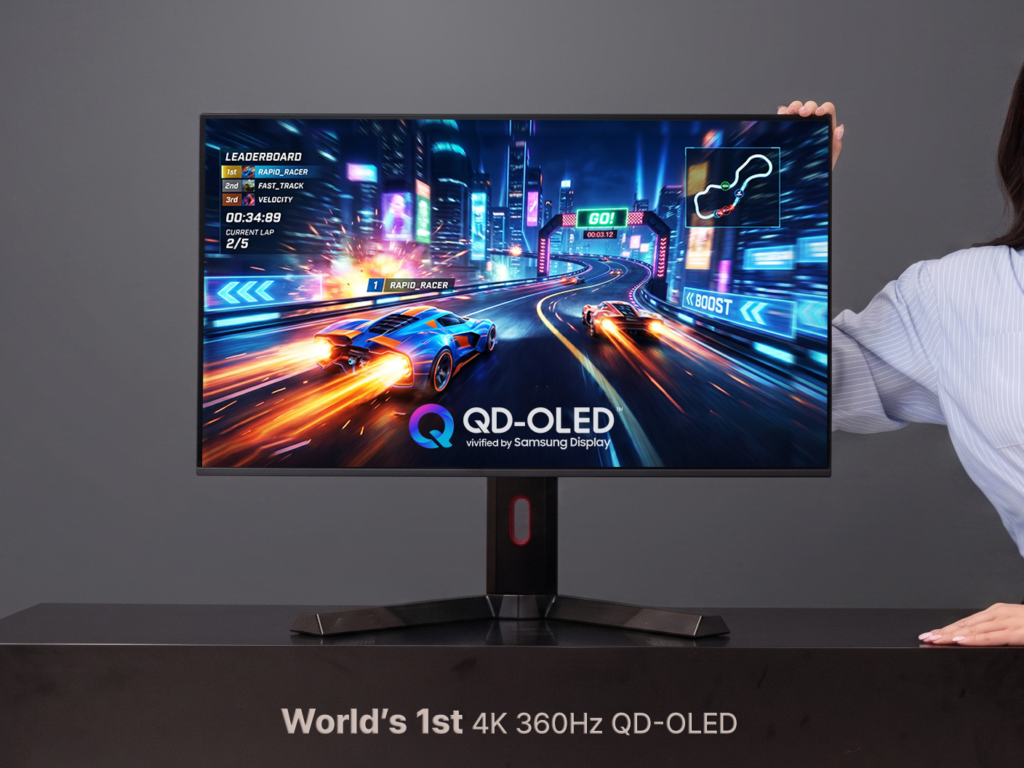
At Computex 2026, Samsung Display solved it. The world's first 4K 360Hz QD-OLED panel is real, it is in production, and seeing it in person makes the numbers feel even more significant than they look on paper.
What Samsung Actually Built
The headline product is a 31.5-inch QD-OLED panel running 3840x2160 at 360Hz simultaneously. That combination packs approximately 24 million pixels into a 31.5-inch display and refreshes all of them 360 times per second. Until this panel existed, those two specifications had never appeared together on a self-emissive display.
The engineering behind it starts with Penta Tandem technology, Samsung Display's fifth-generation QD-OLED structure. Where previous generations stacked four blue OLED layers, Penta Tandem adds a fifth, using updated organic materials throughout. The result is improved efficiency, a longer panel lifespan, and higher luminance, all of which matter in a panel being pushed this hard.
The panel carries VESA DisplayHDR True Black 600 certification, the highest tier in VESA's current standard for emissive displays. That requires peak brightness of at least 600 nits alongside black levels at or below 0.0005 nits. For context, the previous ceiling for premium OLED monitors was True Black 500. Samsung has moved the benchmark.
A new V-stripe pixel structure also makes its debut here. Previous QD-OLED panels used a triangular sub-pixel layout, which could cause minor colour fringing around fine text. The vertical stripe arrangement eliminates that issue and improves text clarity across both gaming and productivity use, which matters more than it sounds for anyone who uses a monitor for work as well as gaming.
The Dual Mode feature rounds out the spec sheet. Drop the resolution to Full HD and the panel pushes to 680Hz, giving competitive players who prioritize frame rate over resolution a meaningful additional option. MSI has already confirmed a monitor using this panel that adds a third mode at 1440p and 520Hz, effectively giving users three performance profiles in a single display.
The Ultra Slim Laptop Panel
The 4K 360Hz panel was not the only display Samsung brought to Computex.
The second announcement is arguably as significant for a different audience. Samsung Display also revealed an Ultra Slim laptop OLED panel measuring 0.8mm in total module thickness. Current production laptop panels sit at 1.1mm. The 0.8mm figure is achieved by etching both the TFT glass substrate and the encapsulation glass more than 30% thinner than before, reducing the outer-edge module thickness by over 20% compared to existing mass-produced panels.
Crucially, the reduction in thickness does not come with compromises in performance. The Ultra Slim panel maintains VESA True Black 1000 certification, supports refresh rates up to 240Hz, and carries ClearMR 11000 certification for motion clarity. For laptop manufacturers, this opens up meaningful design flexibility. Thinner chassis, lighter devices, or more space redirected to battery capacity all become more achievable when the display itself shrinks without giving anything up.
There is speculation, still unconfirmed, that Samsung's Ultra Slim panel could find its way into Apple's MacBook lineup, which has been the subject of persistent OLED transition rumours for years. Samsung Display is in discussions with more than ten global brands regarding panel supply. Whether Apple is among them remains unknown, but the timing and the spec sheet make the idea plausible.
Why This Matters Beyond the Spec Sheet
The practical significance of the 4K 360Hz panel is worth spelling out clearly.
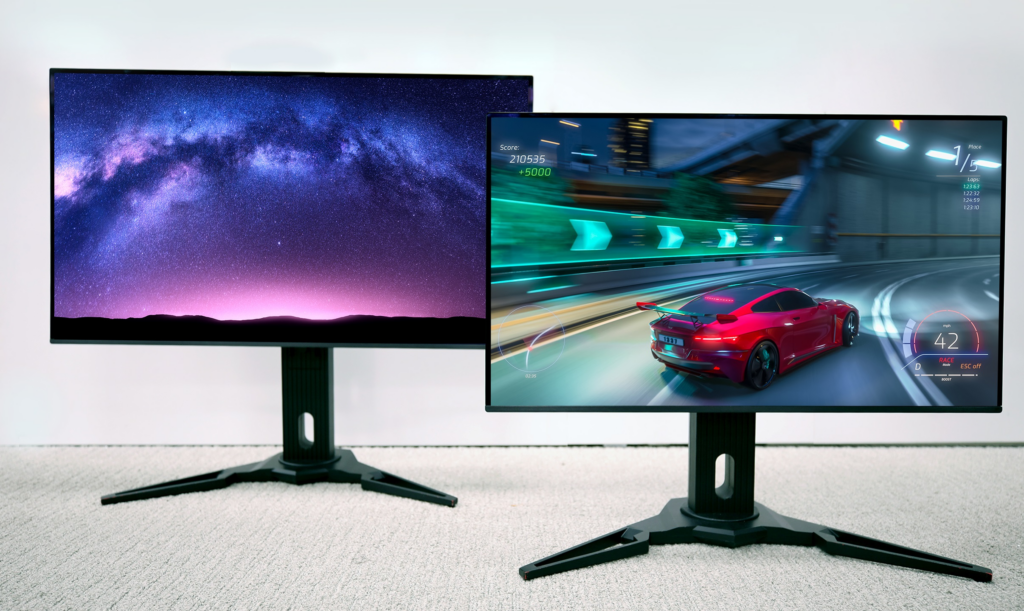
Most people shopping for a premium gaming monitor today still face the same choice that defined the market for the past several years. The Samsung QD-OLED removes that choice. You no longer have to decide whether resolution or refresh rate matters more to your use case, because you can now have both at the top of the market simultaneously.
The viewing angle advantage of QD-OLED is also worth noting. Side-by-side comparisons with LCD panels at Computex showed the QD-OLED maintaining colour accuracy and contrast at angles where LCD panels became visibly degraded. For households where multiple people watch or work from the same screen, or anyone who has ever moved off-axis and noticed their monitor look terrible, this is a genuine quality-of-life improvement rather than a spec sheet detail.
Samsung Display confirmed mass production is scheduled for the second half of 2026, with consumer monitors expected to reach shelves later this year.
Samsung QD-OLED vs. Current Premium Monitors
The current premium monitor market is largely divided between QD-OLED panels from Samsung, WOLED panels from LG Display, and high-brightness Mini-LED options. The 4K 360Hz QD-OLED shifts that landscape by removing the resolution ceiling that previously kept competitive gamers choosing 1440p high-refresh panels.
Pricing for monitors using this panel has not been confirmed. Given the flagship positioning and the engineering involved, premium pricing above current 4K OLED monitors is expected. The closest existing reference points are 32-inch 4K OLED gaming monitors currently selling between $800 and $1,200. The 4K 360Hz panel will almost certainly sit above that range when it arrives at retail.
Mini-LED remains the practical alternative for buyers who want large screen sizes at lower prices. However, the gap in black levels, viewing angles, and response times continues to favour OLED for anyone whose priority is image quality rather than screen size per dollar.
Final Thoughts
Samsung's 31.5-inch 4K 360Hz QD-OLED panel is the most significant monitor announcement to come out of Computex 2026. Not because of a single specification, but because it ends a compromise that has defined the premium display market for years.
Add the Ultra Slim laptop panel to the picture and Samsung Display had a strong case for being the most impactful display announcement at the show. The monitor panel solves a problem that competitive and enthusiast gamers have worked around for too long. The laptop panel opens up design possibilities that could reshape what thin-and-light devices look like over the next generation.
Mass production is underway. Monitors built on this panel are coming before the end of 2026. If display technology is something you follow closely, this is the announcement worth building your next upgrade decision around.
For more display technology worth paying attention to, check out our in-depth look at the TCL C7L SQD Mini-LED, another panel pushing the boundaries of what non-OLED displays can achieve.