
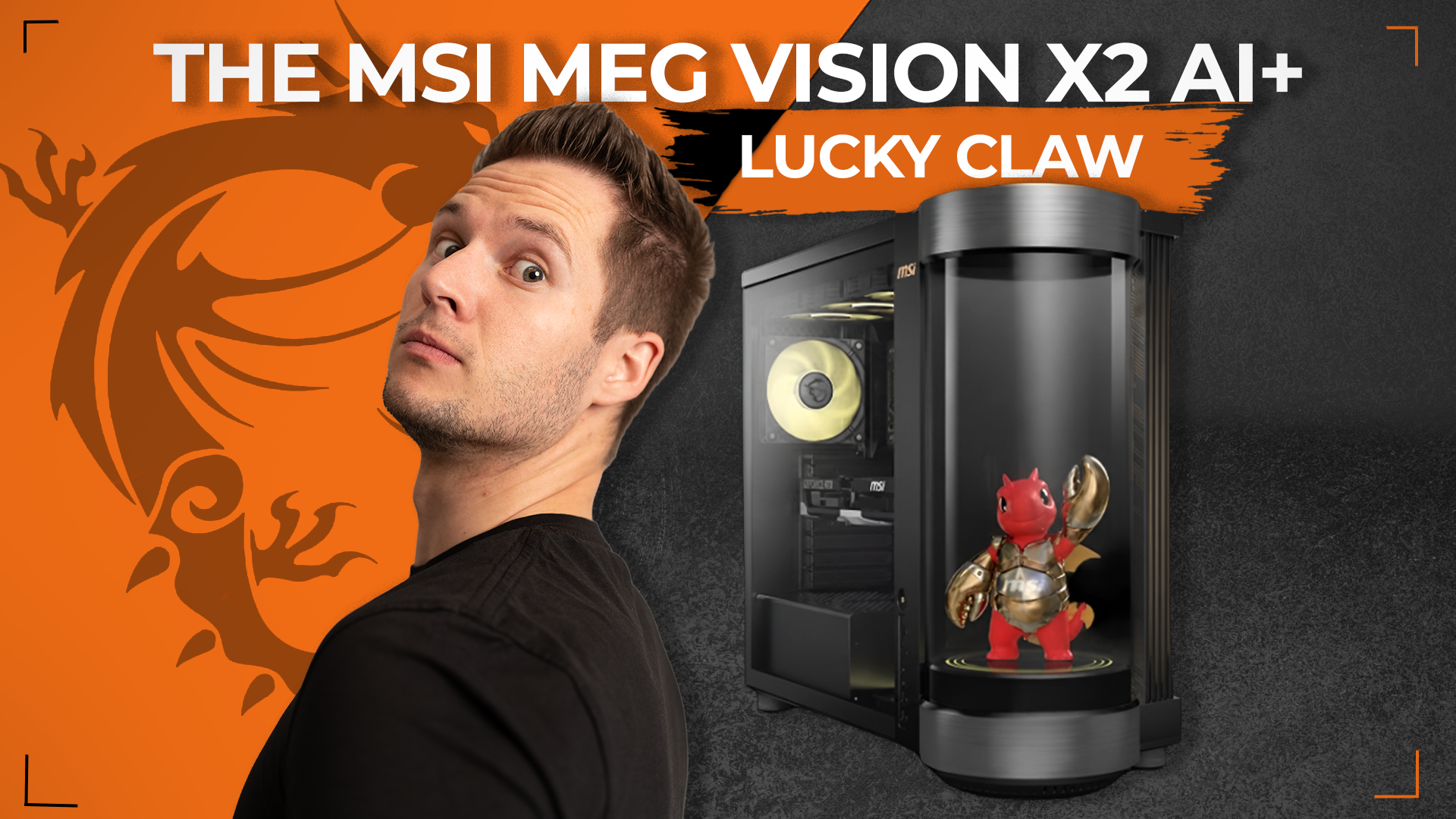

MSI MEG Vision X2 AI+: There Is a Dragon Living in Your PC Now
By Stefan @ WeDoTech
MSI Built a Gaming PC With a Physical AI Companion. It Is Weirder Than It Sounds.
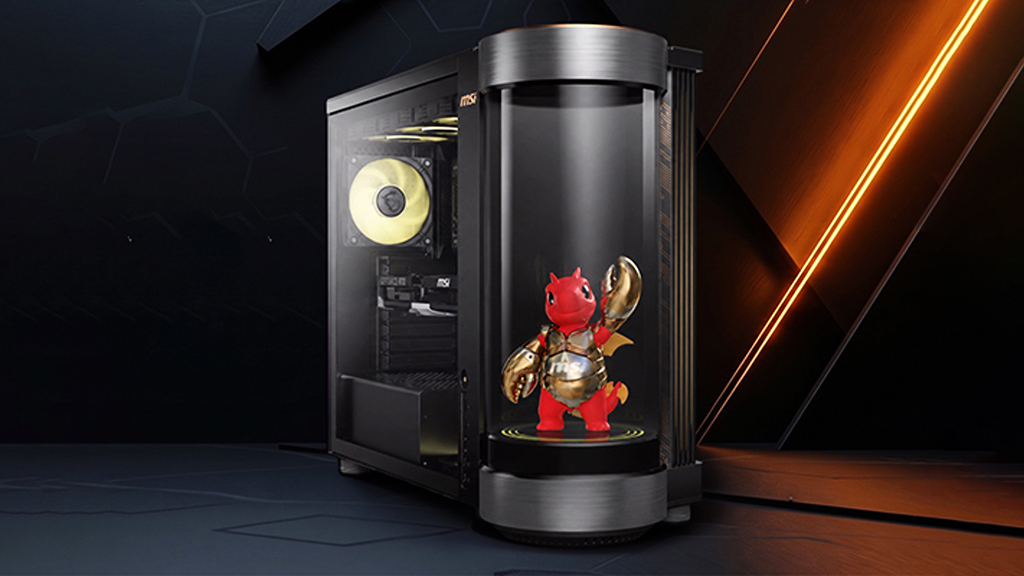
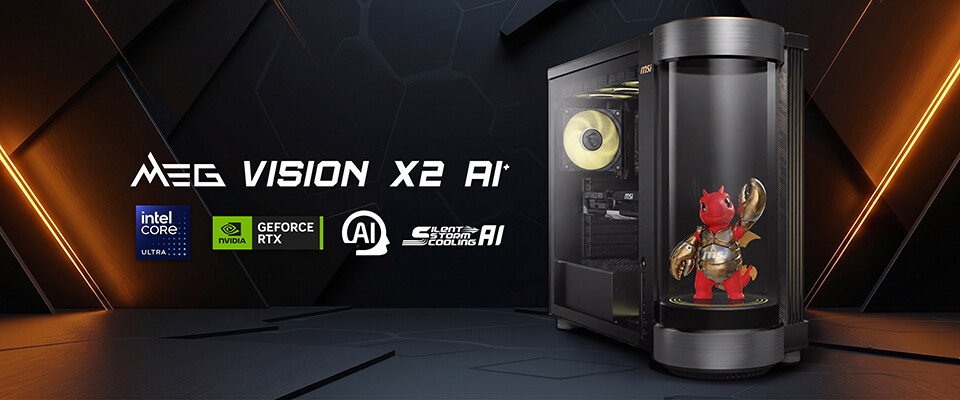
There is a glass cylinder on the front of this PC. Inside it, a red dragon in golden armour floats in three dimensions, responds to your voice, adjusts your system settings, and apparently has opinions about WeDoTech content. Its name is LuckyClaw. It lives in your computer.
The MSI MEG Vision X2 AI+ is either the most interesting gaming desktop to come out of Computex 2026 or a glimpse of a future that not everyone asked for. Possibly both at once. After spending time with it at MSI's booth, it is difficult to dismiss outright, and equally difficult to evaluate with complete seriousness.
What MSI has built here is genuinely novel. Whether novel translates to useful is the more complicated question.
What the MEG Vision X2 AI+ Actually Is
Strip away LuckyClaw for a moment and what remains is a straightforward flagship desktop.
The MEG Vision X2 AI+ is configurable with Intel Core Ultra processors up to the 285K, an RTX 5090 graphics card, DDR5 memory, and PCIe 5.0 SSD storage. A 360mm liquid cooler handles thermals under MSI's Silent Storm Cooling AI system, which uses AI-optimized thermal management to keep the machine quiet under sustained loads. A Project Zero motherboard hides cables internally for a clean aesthetic. The system reaches up to 3,400 TOPS of total AI compute. By any standard measure, this is a genuinely high-end machine.
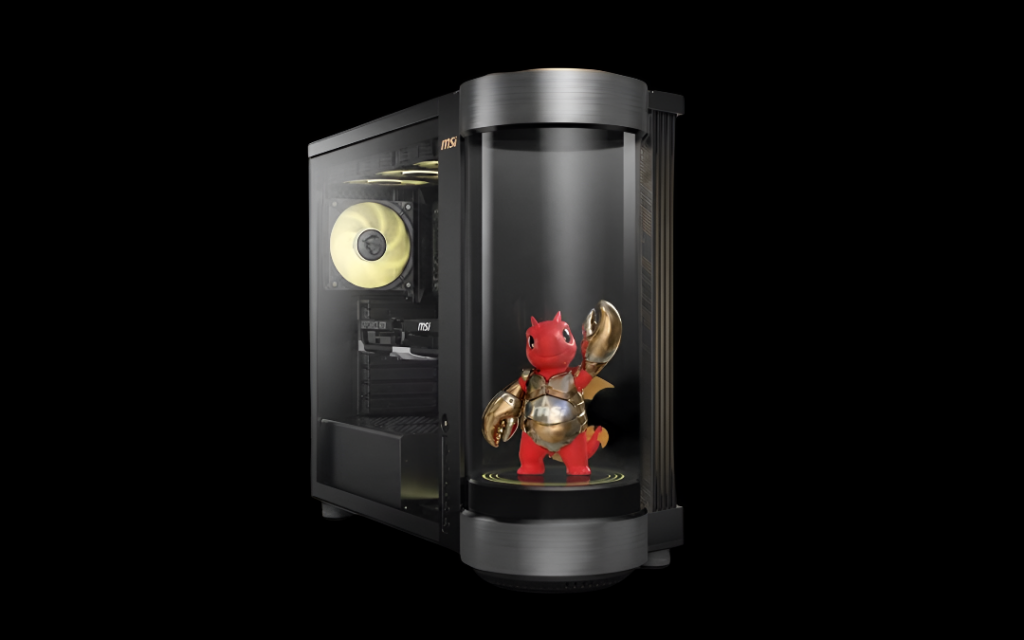
The chassis design carries elements of MSI's 40th anniversary Draco Epic aesthetic, with gold accents and a rounded top section that gives it a more sculptural quality than the previous generation Vision X AI. Where the first generation Vision X AI featured a flat touchscreen panel integrated into the front of the case for system monitoring and interaction, the Vision X2 AI+ replaces it entirely with the cylindrical AI Holostage.
That is the real story here.
The AI Holostage: What It Is and How It Actually Works
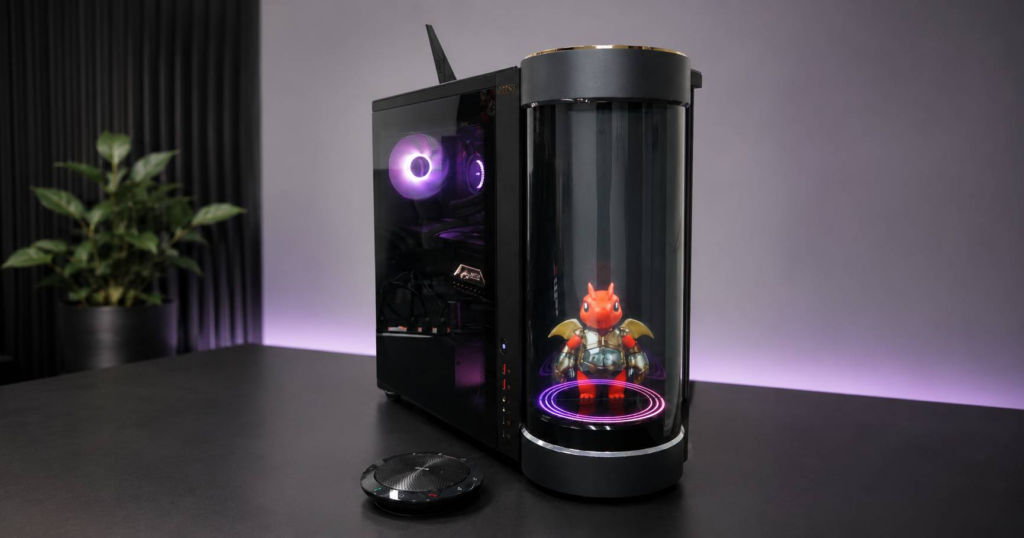
The cylindrical glass module on the front of the MEG Vision X2 AI+ is not a true holographic display in the scientific sense. The three-dimensional effect is created through a combination of precisely angled mirrors and projection, a technique similar to Pepper's ghost illusions used in stage performances, adapted into a compact cylindrical housing. The result is a floating three-dimensional figure that appears to occupy space inside the cylinder in a way that a flat screen cannot replicate.
LuckyClaw runs locally on the machine rather than through cloud servers, with MSI routing the AI processing through the system's GPU. This matters practically because it means the companion remains functional without an internet connection and keeps personal system data off external servers. Voice and text commands are both supported, and the current feature set covers adjusting performance profiles, changing monitor settings on compatible MSI displays, and controlling RGB lighting throughout the system.
MSI installs LuckyClaw on every machine from the factory, so the dragon greets you immediately on first boot. The LuckyClaw AI framework is built on OpenClaw, MSI's own AI development platform, which means future capability expansions come through software updates rather than hardware changes. MSI has also confirmed that custom third-party avatars and digital companions beyond LuckyClaw will be supported in future updates, meaning the dragon is the default rather than the only option.
The comparison to Microsoft's Office Assistant from the 1990s has already been made extensively in tech coverage of this product, and it is not entirely unfair. The difference is that Clippy was a software overlay on a standard interface. LuckyClaw has a dedicated physical presence, runs AI locally, and is designed to grow in capability over time rather than staying fixed as a novelty feature.
What the Previous Generation Got Right That This One Traded Away
This is worth acknowledging directly.
The MEG Vision X AI, the previous generation model, featured a flat touchscreen integrated into the front of the chassis. That screen served as both an interactive display and a persistent system monitoring panel showing temperatures, performance metrics, and quick-access controls at a glance. It was a genuinely practical feature that justified its presence through utility.
The AI Holostage on the Vision X2 AI+ is more visually striking and considerably more ambitious as a concept. But it replaces a practical touchscreen with a display whose primary function is presenting a three-dimensional AI companion. Whether that trade is worthwhile depends entirely on how much value you assign to the companion itself versus the utility of a persistent monitoring display.
For some users, an AI companion that manages system settings by voice while sitting visibly on the desk represents a meaningful shift in how they interact with their PC. For others, a touchscreen showing CPU and GPU temperatures at a glance is more useful than a dragon that talks back. Both positions are reasonable. MSI has clearly decided which direction they are betting on.
The Honest Assessment
The MEG Vision X2 AI+ is a concept product in the truest sense. Exact specifications, final pricing, and a launch date had not been confirmed at the time of Computex. What MSI showed was a design direction and a functioning demonstration of LuckyClaw's current capabilities, rather than a shipping product with defined retail availability.
LuckyClaw's current feature set, voice control of performance profiles, monitor settings, and RGB lighting, is impressive as a foundation but modest as a standalone reason to choose this desktop over any other high-end machine. The value proposition depends heavily on how aggressively MSI expands the AI capabilities through updates, and whether the broader OpenClaw ecosystem develops into something that justifies the hardware investment.
The holographic effect in person is more convincing than video or photographs suggest. That is a genuine observation rather than a marketing line, and it explains why the product attracts significantly more attention at a trade show than its spec sheet alone would generate. Whether that effect retains its appeal after three months of daily use in a home office is a question that shipping hardware will eventually answer.
MEG Vision X2 AI+ vs. Standard High-End Desktops
A comparable self-built desktop with an Intel Core Ultra 285K and RTX 5090 would run between $3,500 and $5,000 depending on component choices. The Vision X2 AI+ will carry a premium above that baseline for the chassis design, the integrated cooling system, and the AI Holostage hardware. Pricing has not been confirmed, but expecting a significant premium over equivalent self-build cost is reasonable given the design investment involved.
For buyers who want a premium prebuilt without the companion feature, the standard MEG Vision X AI remains available and continues to represent the more conventionally practical choice in MSI's flagship desktop lineup. The Vision X2 AI+ is specifically for buyers who want the physical AI presence as part of their setup, not just as a software feature running in the background.
Final Thoughts
The MSI MEG Vision X2 AI+ is one of those products that sounds absurd in a press release and makes considerably more sense in person. A dragon that lives in a glass cylinder on your desk, responds to your voice, and adjusts your system settings is exactly the kind of idea that gets dismissed until someone actually builds it and puts it in front of you.
Whether LuckyClaw grows into something genuinely useful or remains a sophisticated desk ornament depends on MSI's commitment to expanding the AI capabilities through software over time. The hardware foundation is there. The visual execution is striking. The practical value is still being established.
What is undeniable is that MSI built something nobody else has attempted at this scale in consumer PC hardware. At a show full of incremental upgrades and iterative improvements, that counts for something.
For a broader look at everything MSI brought to Computex 2026, check out our full MSI Computex 2026 roundup, which covers everything from the Draco Epic collection to the Strike Alloy TMR keyboard and the Claw 8 EX AI+ handheld.