

iPhone Duo Is Not a Flagship, and Pro Buyers Will Notice
By Stefan @ WeDoTech
Before launch day, our early time with Apple’s first foldable raised one big question: who is this actually for?
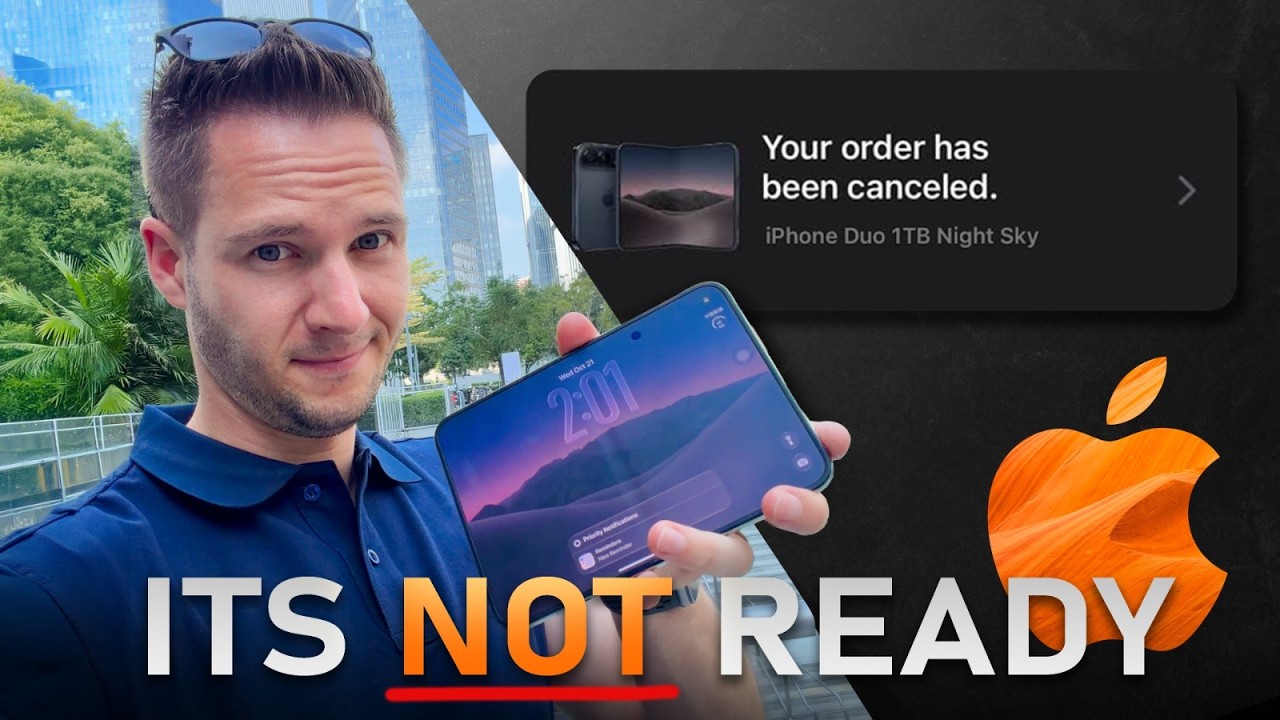
If you pre-ordered an iPhone Duo and your delivery date slipped into next year, that might not be the worst thing that could happen to you.
Here is a fair guess about who placed those pre-orders. If you jumped on the iPhone Duo, you are probably the kind of buyer who gets the iPhone Pro or Pro Max every year. You have the budget, and you expect a premium experience. Based on our time with it before launch, the iPhone Duo does not fully deliver that, and that is the problem this article is about.
We covered our full verdict after launch in iPhone Duo Review: Why We Canceled Our Pre-Order. This piece focuses on one specific issue: why the iPhone Duo feels like a step down for people coming from Apple’s Pro phones.
Early Access, Mixed Feelings
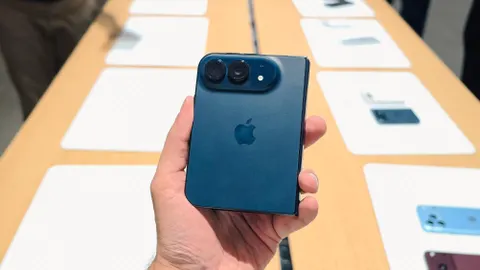
Like many reviewers, we spent time with the iPhone Duo before it reached customers. Early access comes with a job: telling the brand what is not working so problems can be fixed before launch. But no amount of reviewer feedback can fix everything in a few weeks, and some glitches were always going to reach launch day.
Much of the early online coverage focused on how good the iPhone Duo looks. The unfolding animation, the hinge and the almost invisible crease drew plenty of praise. Demand followed. Pre-orders opened on October 16, and within minutes US delivery estimates jumped to late January, with some other markets showing February.
None of this means the iPhone Duo is a bad phone. It is a good phone. It just is not the flagship many Pro buyers will expect for $1,999.
Where Apple Clearly Tried
Apple has obviously obsessed over the crease, and it shows.
The iPhone Duo ships unfolded in its box. A folded phone in a smaller box would have been cheaper to ship in bulk, so this choice suggests Apple wanted the display to spend as little time folded as possible before it reaches you.
The inner 7.6-inch display also uses a matte nano-texture finish that reduces glare and reflections around the fold. It works. The crease is almost invisible in normal use.
There is plenty to like beyond the display:
- Multitasking: you can run two apps side by side, such as a video on one half and its stats or a spreadsheet on the other.
- Laptop-style mode: prop it half open on a table and type on the lower half of the screen.
- Thin design: Apple calls it the thinnest iPhone yet when unfolded.
- Durability: IP68 dust and water resistance, which is rare among foldables.
These are real strengths, and they make the iPhone Duo the most interesting iPhone in years.
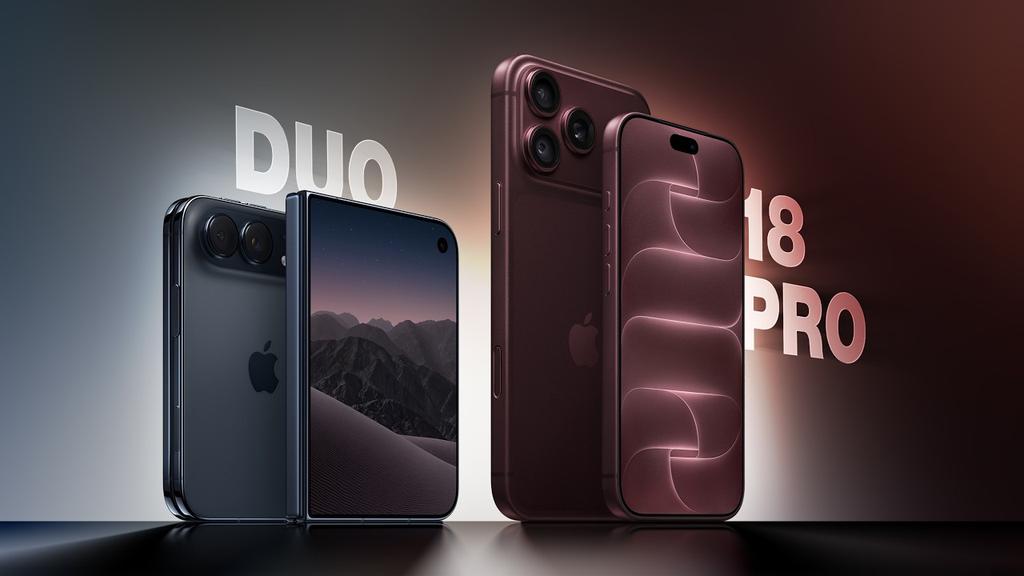
Why It Does Not Feel Like a Pro iPhone
The trouble starts when you use it like you would use a Pro Max all day.
No Face ID. This was the biggest adjustment. On an iPhone, Face ID is excellent, and losing it feels like a downgrade. The iPhone Duo uses Touch ID in the side button instead. If you hold the phone in your left hand and have something in your right, unlocking becomes awkward. The inner screen’s under-display selfie camera is also weak. In our opinion, Apple would have been better off with a conventional camera cutout that could support Face ID, rather than a hidden camera that does not produce good results anyway.
The crease gets in the way in laptop mode. In a messaging app with the phone half folded, the keyboard sits on the bottom half and the conversation on the top, but the text entry bar lands right on the crease. It looks odd and makes selecting or editing words in that area fiddly. There is no perfect fix, since moving the bar to the top or bottom creates other problems, but it shows how much work is still needed to adapt iOS to folding screens.
Sunlight visibility. The matte nano-texture finish that hides the crease also makes the inner display harder to read in direct sunlight. It is not unusable, but it is noticeably more annoying than a glossy Pro screen outdoors.
Grip. The wide passport-style shape looks great for watching content, but after spending most of the day with a phone in hand, we found it does not sit naturally. It never quite feels settled in your hand.
Not Pro hardware. There is no dedicated telephoto lens, and the camera system is a step below the Pro models. Performance and battery are good, but not Pro Max level under heavy, sustained use.
This next point is our opinion, not a confirmed fact: Apple may be holding back some Pro features to give buyers a reason to upgrade to a second-generation model. Whatever the reason, the result is a $1,999 phone that feels more like a capable experiment than a flagship.
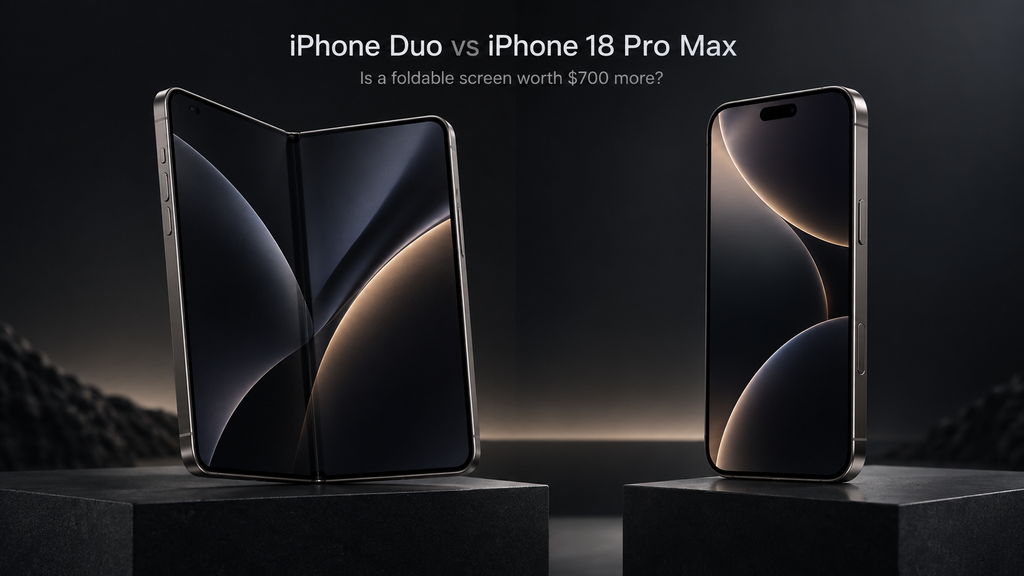
iPhone Duo vs iPhone 18 Pro Max
Apple compares the iPhone Duo to other iPhones, so that is the fairest comparison.
- Price: $1,999 vs $1,299 for the iPhone 18 Pro Max
- Unlocking: Touch ID vs Face ID
- Cameras: dual 48MP with no dedicated telephoto vs the Pro Max’s full Pro camera system with telephoto
- Screen: foldable 7.6-inch inner and 5.4-inch outer displays vs a single 6.9-inch display
- Buttons: Camera Control but no Action button vs both on the Pro Max
- Durability: both rated IP68
The iPhone Duo wins on screen size, multitasking and pure novelty. Nothing else in Apple’s lineup lets you watch a video and work on a spreadsheet side by side in your pocket.
The Pro Max wins on almost everything else: cameras, Face ID, comfort, software polish and price. For $700 less, it is the more complete phone.
Our verdict: if you care about the full Pro experience, the 18 Pro Max is the better buy. The iPhone Duo is for people who want the folding screen badly enough to accept the trade-offs.
Final Thoughts
Apple put enormous effort into the crease, the hinge and the packaging, and it shows. But the iPhone Duo is a first-generation product. It has no Face ID, no Pro cameras and software that still needs time to adapt.
That does not make it a bad phone. It makes it the wrong phone for buyers who expect a flagship. Our recommendation: if your pre-order was delayed, use that time to decide whether you want a foldable or a Pro iPhone. If it is the Pro experience you are after, cancel and get the Pro Max. If you love the idea of a folding iPhone, the second generation will likely be the one to buy.
If you are weighing Apple’s foldable against Samsung’s latest options, read Galaxy Z Fold 8 vs Fold 8 Ultra: Which One to Buy?