
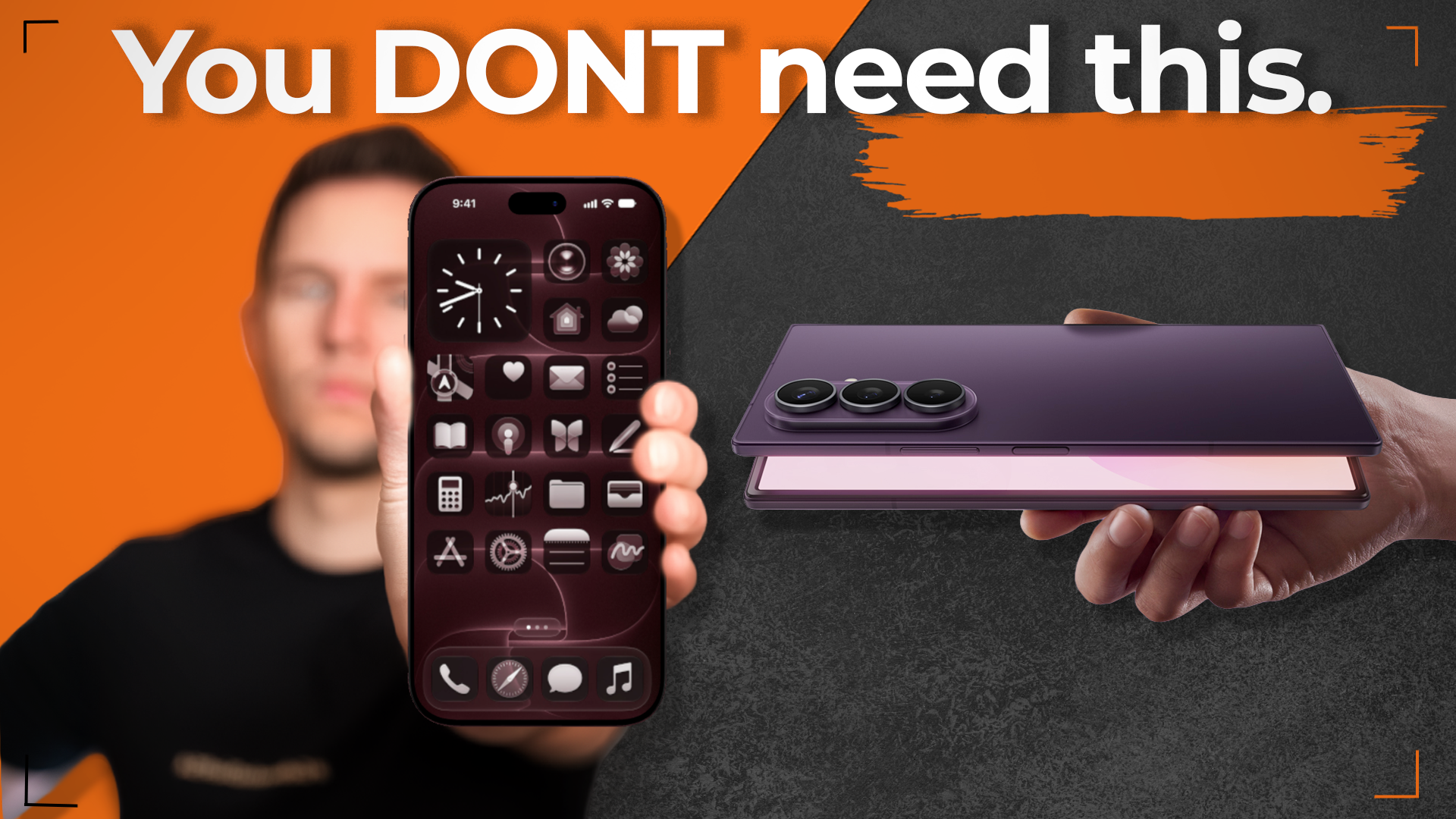

Flagship Phone Power: Why You Probably Don't Need It
By Stefan @ WeDoTech
Your phone can outrun a laptop in some benchmarks. That says a lot about the chip, and even more about how little of it most people use.
We keep saying most people do not need a flagship phone. Here is the proof.
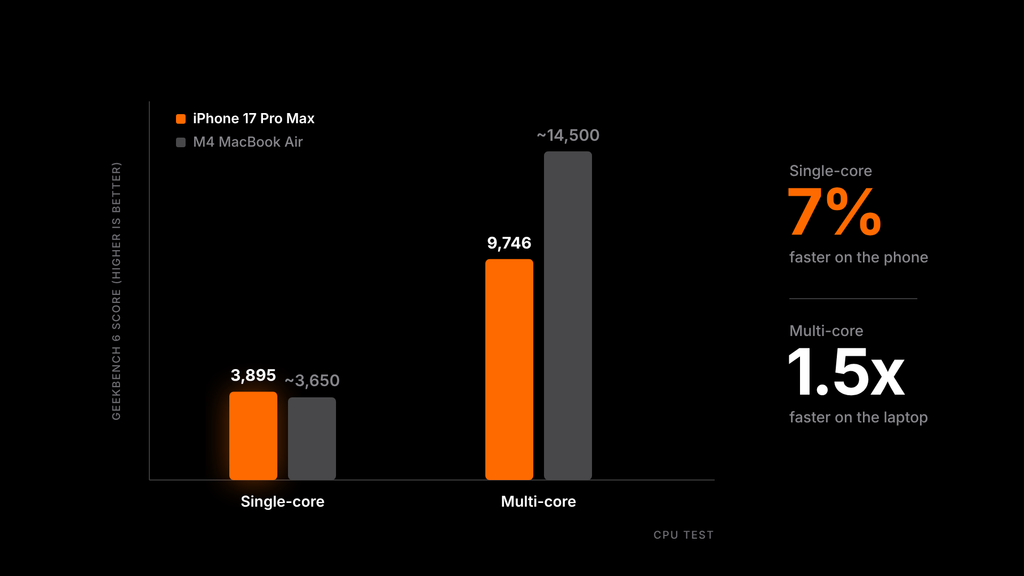
Put the iPhone 17 Pro Max next to an M4 MacBook Air in Geekbench, and something strange happens: the phone wins on single-core performance. The device in your pocket that mostly answers calls, scrolls social media and takes the odd photo has enough processing power to beat a laptop.
And in almost every case, you are nowhere near using all of it.
The Benchmark That Says It All
Geekbench 6 is one of the most common tools for comparing processors. In early results, the A19 Pro chip in the iPhone 17 Pro and 17 Pro Max scored 3,895 points in the single-core test and 9,746 in multi-core. The M4 MacBook Air typically scores around 3,650 to 3,800 in single-core.
That trend has continued. Early Geekbench 7 results for the A20 Pro, the chip in this year's iPhone 18 Pro Max, show it beating even the M5 Max in Apple's top 16-inch MacBook Pro on single-core performance.
Single-core performance measures how fast one processor core can work. It is a big part of why apps open instantly and everyday tasks feel smooth. In that one measure, Apple's phone chips have caught up with, and passed, some of its laptop chips.
What That Power Is Actually For
To be fair, a single benchmark does not tell the whole story.
- Multi-core performance: the M4 MacBook Air still wins comfortably here, scoring around 14,500 compared with the A19 Pro's 9,746. Laptops have more performance cores for heavy work.
- Sustained performance: a laptop has more room to manage heat, so it can hold high performance for longer. Phones tend to throttle during long, demanding workloads.
- Software: a laptop runs full desktop apps. Even the fastest phone is limited by what mobile apps let you do.
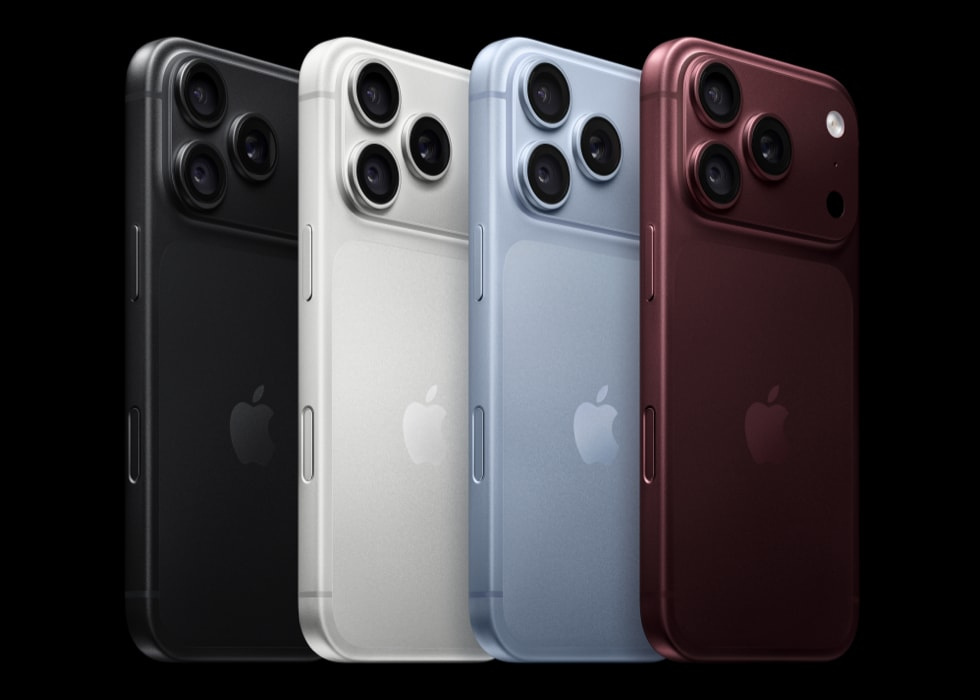
So where does all that power in a flagship phone go? Its chip helps with demanding games, 4K and ProRes video recording, on-device AI features and heavy photo editing. If you do those things often, a flagship phone makes a lot of sense.
But think about your own habits. Messaging, browsing, streaming, maps, banking apps and social media barely tax a modern processor. Those tasks feel just as smooth on a mid-range phone with a current-generation chip as they do on a flagship phone.
Who Is a Flagship Phone Actually For?
This is the uncomfortable part. Many people buy a Pro Max not because they will use everything it offers, but because it is the newest, fanciest model and it looks the part. There is nothing wrong with wanting nice things, but it helps to be realistic about what you are paying for.
There are good reasons to buy a flagship phone:
- Cameras: Pro models add a dedicated telephoto lens, better low-light performance and pro video features.
- Displays: brighter, faster screens with higher refresh rates.
- Battery: larger models usually last longer.
- Longevity: extra power can help a phone feel fast for more years.
If those features matter to you, the extra money for a flagship phone buys real benefits. If they do not, you are paying a premium for performance and features that sit unused.
It is also fair to say that prices are rising for every kind of phone, flagship phone or not. Apple raised the starting price of most of its iPhones by $100 in September, which makes choosing the right model more important than ever.
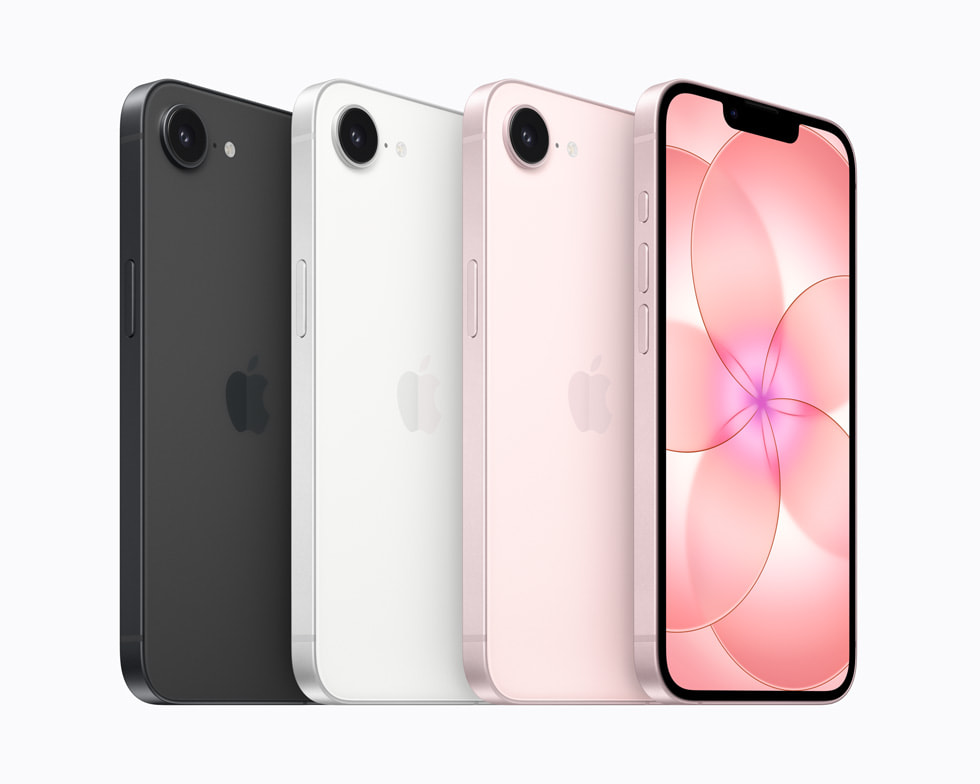
iPhone 18 Pro Max vs iPhone 17e
The iPhone 17 Pro Max has now been replaced by the iPhone 18 Pro Max, so here is how Apple's current flagship compares with its most affordable model.
- Price: $1,299 vs $699
- Chip: A20 Pro vs A19
- Display: 6.9-inch ProMotion OLED vs 6.1-inch OLED
- Cameras: triple rear camera system with telephoto vs a single 48MP Fusion camera with 2x optical-quality zoom
- Shared basics: Face ID, the Action button, Apple Intelligence and IP68 water resistance on both
The iPhone 17e costs a little over half the price of the 18 Pro Max, and it still delivers a fast, current-generation chip, a sharp OLED screen, a good main camera and the same core iPhone experience. For calls, messages, social media and everyday photos, most people would struggle to feel the difference.
The 18 Pro Max wins on cameras, display, battery and raw power. It is the better phone. The question is whether it is $600 better for the way you actually use it.
Our verdict: buy the Pro Max if you shoot a lot of photos and video, game heavily or keep phones for many years. Otherwise, the iPhone 17e or the standard iPhone 17 at $899 is the smarter buy.
Final Thoughts
Every modern flagship phone is an incredible piece of technology. The fact that a phone can beat a laptop in single-core performance is a remarkable engineering achievement.
But most people are not using anywhere near what these chips can do. Unless you rely on pro cameras, demanding games or heavy creative work, a phone that costs around half the price will handle your day just as well. It just will not look quite as flashy.
Our recommendation: before you buy your next flagship phone, look at how you really use your current one. If it is mostly messages, browsing and social media, skip the flagship and put the savings toward something you will actually use.
For a look at a phone that offers flagship power for less, read Honor 600 Pro Review: Pro Max Power, iPhone 17 Price.