
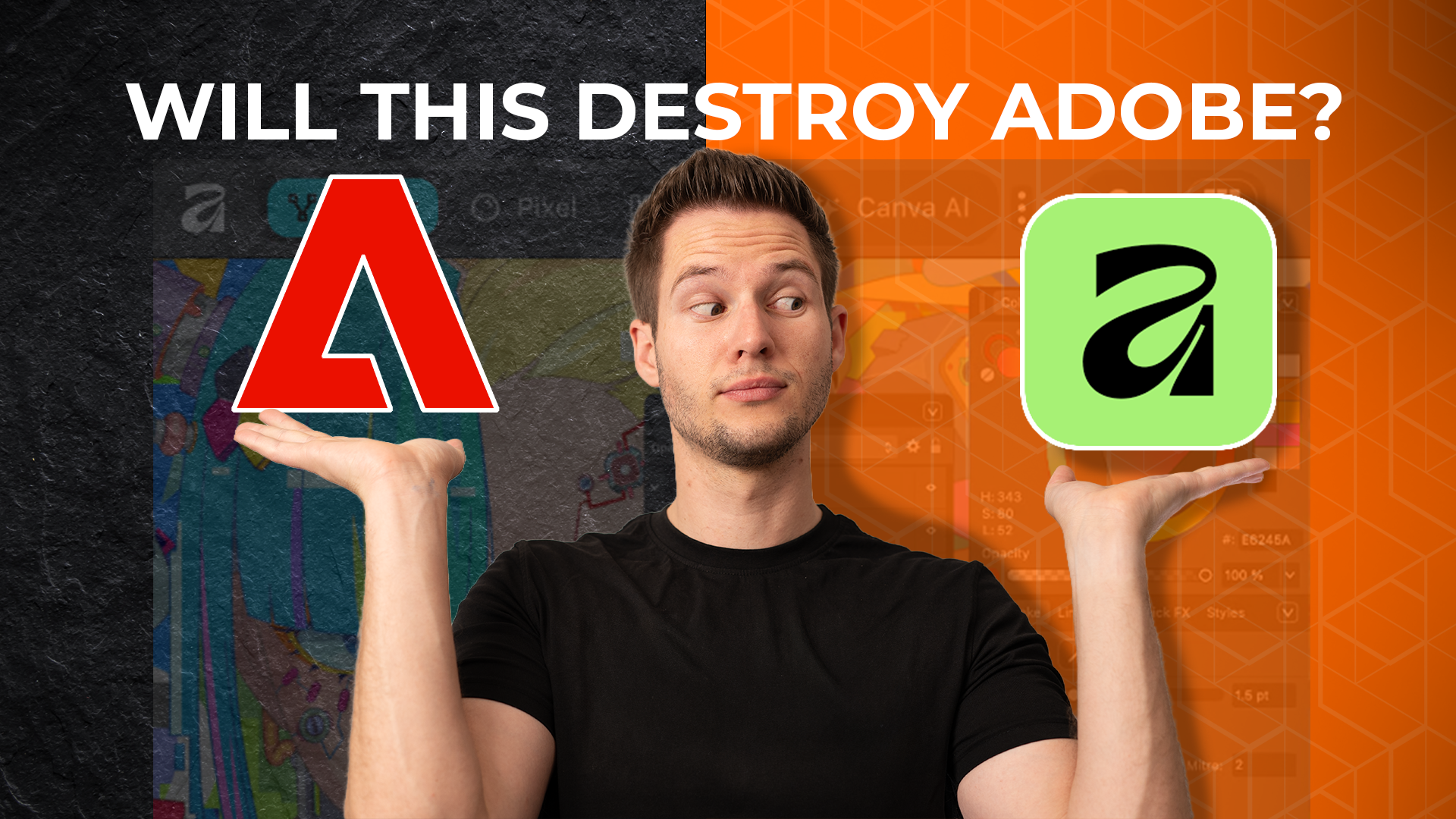

Affinity: The Free Adobe Rival
By Stefan @ WeDoTech
When you think of professional design tools, Adobe has long been the default answer — expensive, powerful, and often essential. But now, Canva has thrown a serious curveball into the mix with its new suite of tools called Affinity.
The shocking part? It’s completely free, no strings attached — unless, of course, you want to access Canva’s AI tools, which still require a paid Canva subscription. Otherwise, you get full access to powerful apps for vector design, image editing, and publishing, all at no cost. It’s the kind of move that could seriously shake up the creative industry.
So, What Just Happened?
Canva’s acquisition of Affinity earlier this year was already a big deal. But the company just announced that it’s making Affinity Designer, Affinity Photo, and Affinity Publisher — previously paid alternatives to Adobe’s Illustrator, Photoshop, and InDesign — entirely free to use. That means professional-grade design software now sits behind zero paywalls. No trials. No limited features. Just download and go.
This is more than a marketing stunt. Canva’s move seems aimed squarely at creators, students, and small businesses who’ve long been priced out of Adobe’s ecosystem. It’s an open declaration: professional tools shouldn’t cost a fortune.
The Creative Arsenal
What it brings to the table:
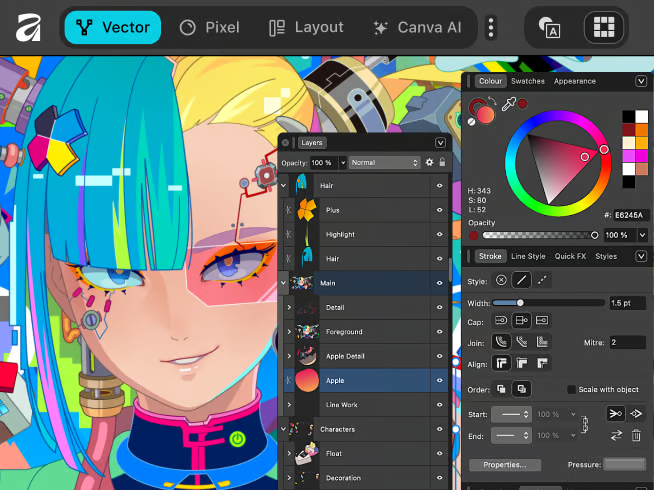
- Affinity Designer: A direct rival to Adobe Illustrator, offering advanced vector editing, precise control points, and smooth performance — all without the lag or bloat.
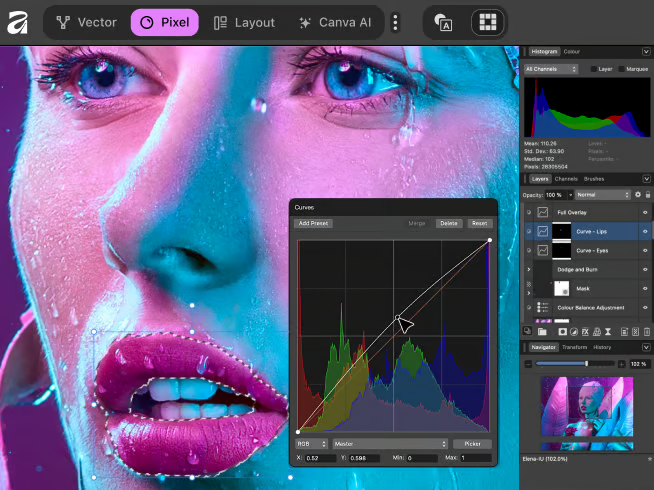
- Affinity Photo: Competes head-to-head with Photoshop. Expect professional-grade editing, RAW support, retouching tools, and full layer control. It’s fast, light, and surprisingly stable.
- Affinity Publisher: A clean, efficient alternative to InDesign, perfect for layout work, print media, and digital publishing. It integrates beautifully with the other Affinity apps for seamless workflow.
Together, these apps cover nearly every corner of the creative spectrum — from illustration and branding to photography and print production. They even share a unified interface design, which means jumping between them feels natural and fluid.
The Big Comparison: Affinity vs Adobe
Let’s be clear: Adobe still rules the professional scene. It has decades of polish, countless integrations, and is deeply embedded in the creative industry. But Affinity’s appeal lies in its efficiency, accessibility, and now — its price. You can create, edit, and publish with professional precision for free, while Adobe still locks its suite behind a monthly paywall.
- Illustrator vs Designer: Designer might not have Illustrator’s full feature depth, but for 90% of users — from logo creators to illustrators — it delivers everything they need.
- Photoshop vs Photo: Affinity Photo is shockingly close in power, especially for photographers and content creators. Its performance on modern hardware even outpaces Photoshop in some areas.
- InDesign vs Publisher: Publisher offers a streamlined, intuitive experience that gets the job done faster — especially for smaller teams and independent designers.
In short, Affinity doesn’t try to out-muscle Adobe — it just offers a smarter, leaner alternative that makes sense for most users.
Cracks in the Canvas?
Of course, it’s not all perfect. There’s still the question of longevity. Canva says Affinity will stay free forever — but as we’ve seen before, “free forever” can change fast once a product gains traction. The real test will come in how Canva manages updates, integrations, and cloud storage. Adobe’s dominance isn’t just about software; it’s about the massive ecosystem of assets, plugins, and collaboration tools that surround it.
Then there’s the industry adoption curve. Creative agencies and studios often move slowly — they’ll wait to see if Affinity can truly hold up under the pressure of large-scale workflows before switching over.
Why This Could Change Everything
Still, this move from Canva could mark a turning point in the design world. It’s rare to see a major company prioritize accessibility over profit, and this puts real pressure on Adobe to innovate and reconsider its pricing. If Affinity keeps growing — and Canva stays true to its promise — this could usher in a new era where creativity isn’t gated by cost.
At the end of the day, Affinity’s success will depend on how well it keeps up with professional demands and whether Canva maintains its community-first mindset. But for now, one thing’s clear: designers finally have a true free alternative, and Adobe’s monopoly just got its biggest wake-up call in years.
If you found this interesting, maybe check out one of our most recent blogs about the best graphics cards at each price bracket.
Stefan | WeDoTech
“We spend the money, sometimes waste it. So you don’t have to.”
Amazing blog! Do you have any tips and hints for aspiring writers?
I’m hoping to start my own site soon but I’m a little lost on everything.
Would you propose starting with a free platform like
Wordpress or go for a paid option? There are so many
choices out there that I’m totally confused ..
Any ideas? Thank you!
Very good post. I definitely love this site. Stick with it!
Thank you