
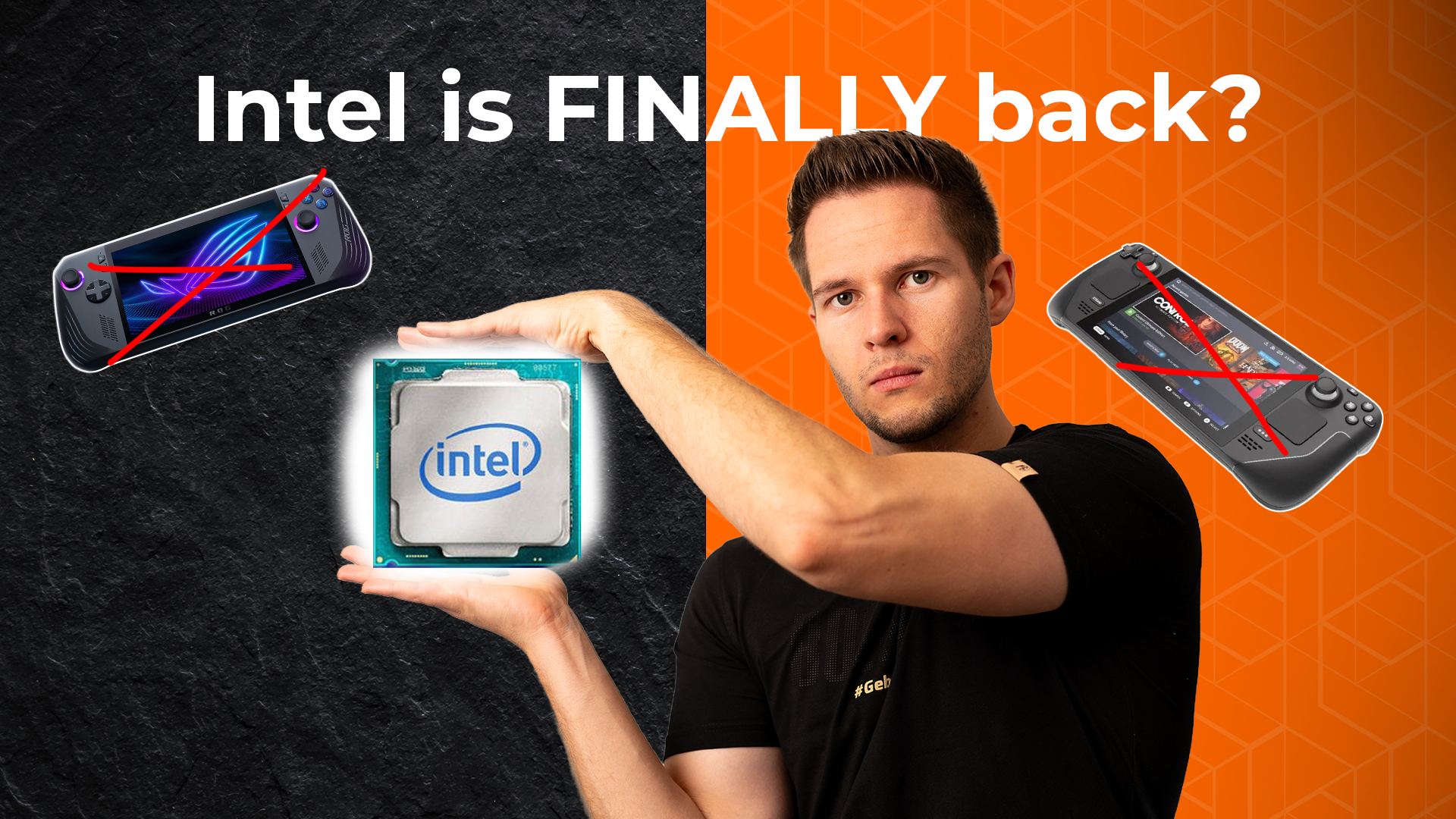

CES 2026: Intel Ultra Series 3 Enters Gaming Handheld Battle
By Stefan @ WeDoTech
Who Started This Comeback?
Intel Ultra is the phrase Intel wants gamers to remember after CES, and for the first time in a long while, it actually feels justified. Intel has officially stepped into the gaming handheld conversation with its new Ultra Series 3 processors, positioning them not just as incremental upgrades, but as a potential turning point for thin-and-light gaming devices and portable consoles. With AMD dominating handheld PCs for years, Intel Ultra entering this space raises a serious question: is this the comeback moment Intel has been chasing?
Gaming handhelds have exploded in popularity thanks to devices like the Steam Deck, ROG Ally, and Legion Go. Until now, Intel largely watched from the sidelines while AMD fine-tuned power efficiency and integrated graphics performance. Intel Ultra changes that narrative, at least on paper.
What Actually Happened at CES
At CES, Intel unveiled Ultra Series 3 with some bold claims. According to Intel, these chips deliver a 15% improvement in performance per watt, up to 30% better chip density, and the headline-grabbing figure: up to 77% faster gaming performance alongside 60% improved multithreaded performance. Intel Ultra is being pitched as the company’s best processor lineup yet for thin-and-light laptops, but the subtext is clear. These chips are ready for handhelds.
This is significant because gaming handhelds live and die by efficiency. Raw power means nothing if the battery drains in under an hour or the device becomes uncomfortably hot. Intel Ultra aims to close the efficiency gap that has historically favored AMD, while pushing higher frame rates and smoother gameplay.
Intel’s messaging also suggests confidence. Calling Ultra Series 3 their “best ever” for this category isn’t marketing fluff, it’s a signal that Intel believes its architecture is finally competitive where it matters most.
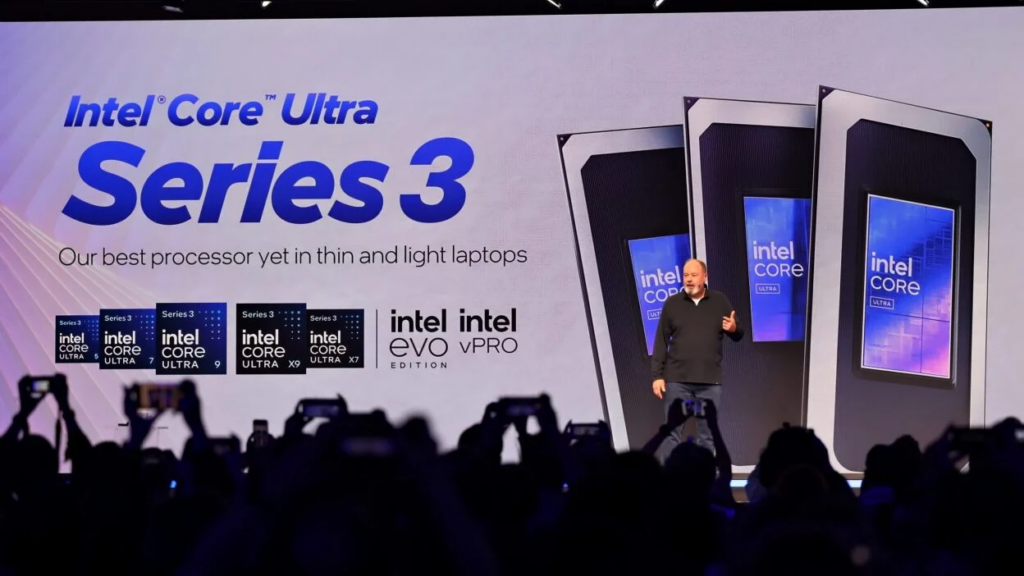
Why Intel Ultra Series 3 Is a Big Deal
The most important feature of Intel Ultra isn’t one spec, it’s balance. Performance per watt is the holy grail of handheld gaming, and a 15% uplift is no small feat. Combine that with higher chip density and Intel is effectively saying it can do more work in less space, using less power.
Gaming performance improvements of up to 77% suggest major gains in integrated graphics, an area where Intel historically struggled. If Intel Ultra delivers consistent frame pacing at 1080p or even 800p, the sweet spot for handhelds, it could finally give device manufacturers a real alternative to AMD APUs.
Multithreaded gains of 60% also matter more than most people realize. Handhelds aren’t just gaming machines anymore; they’re full Windows PCs. Streaming, background downloads, emulation, and content creation all benefit from stronger CPU performance, and Intel Ultra appears to target exactly that use case.

The Skeptic’s Corner
Of course, bold claims don’t always translate into real-world dominance. Intel Ultra still has to prove itself in shipping devices. Driver stability, thermals, and sustained performance under load will determine whether these chips can truly compete.
Intel’s past issues with graphics drivers haven’t been forgotten, especially by gamers burned by inconsistent performance. AMD’s advantage isn’t just hardware, it’s years of refinement in portable gaming scenarios. Intel Ultra entering this space is exciting, but it’s not a guaranteed victory.
There’s also the question of adoption. Will handheld manufacturers trust Intel Ultra over AMD’s proven solutions? And will pricing remain competitive enough to justify the switch?
Intel Ultra vs AMD’s Handheld Dominance
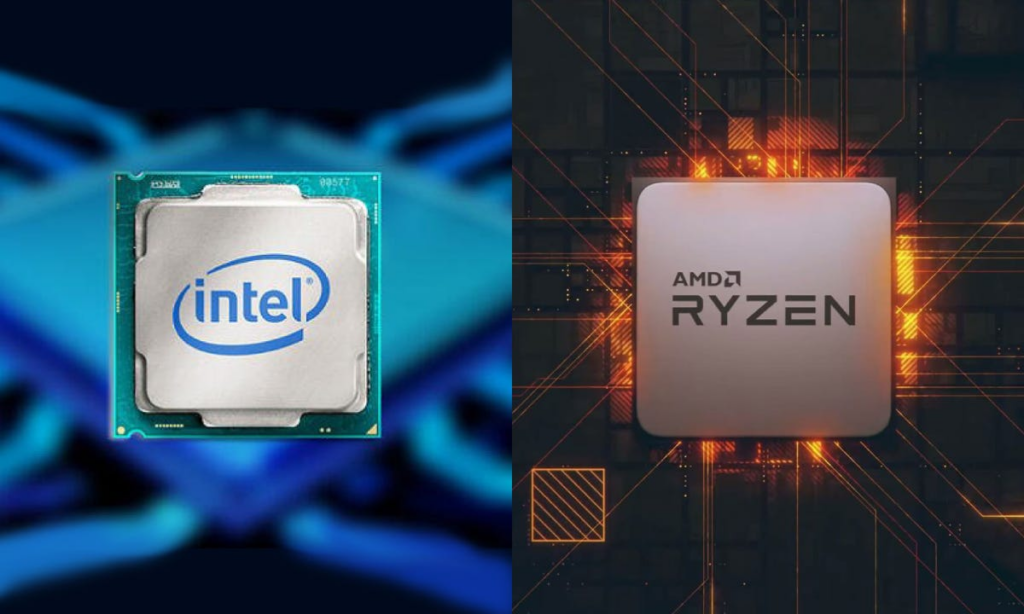
When comparing Intel Ultra to AMD’s current handheld-focused APUs, the battle becomes clear. AMD still leads in ecosystem maturity and proven efficiency, but Intel Ultra is aiming to outperform in peak gaming performance and multithreaded workloads.
If Intel Ultra delivers close to its promised 77% gaming uplift, AMD could be forced to respond faster than expected. Competition at this level benefits everyone. Better battery life, higher frame rates, and more choice for consumers.
Where AMD has been the safe bet, Intel Ultra is positioning itself as the bold alternative. The real winner here may not be Intel or AMD, but gamers who finally get genuine competition in the handheld PC space.
Final Thoughts: A Real Comeback or Just Hype?
Intel Ultra feels different. This isn’t Intel throwing specs at a problem, it’s Intel directly targeting the exact weaknesses that kept it out of gaming handhelds for years. Efficiency, graphics performance, and multithreaded gains all point toward a serious attempt at relevance.
Is AMD suddenly in trouble? Not yet. But for the first time in a long time, Intel Ultra makes that question reasonable. If real-world benchmarks align with Intel’s claims, we could be looking at the most competitive era of gaming handhelds yet.
For now, Intel Ultra represents potential and a warning shot. The handheld war just got a lot more interesting.
If you found this interesting take a look at the MSI Cubi NUC AI+: Compact Performance for Professionals