
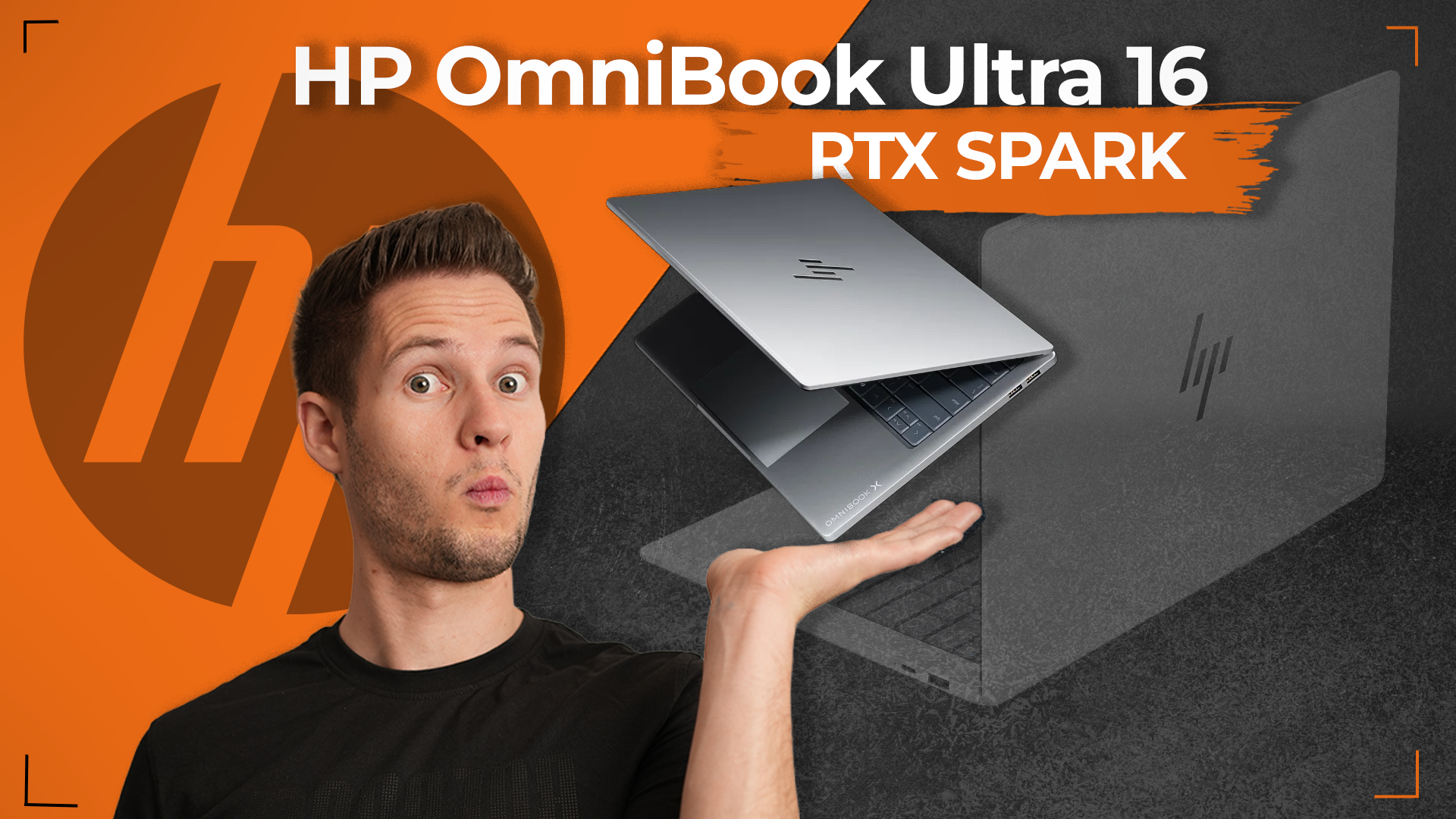

HP OmniBook Ultra 16: The Smartest RTX Spark Laptop Nobody Is Talking About
By Stefan @ WeDoTech
Every RTX Spark Laptop Has the Same Chip. Cooling Is How They Will Be Different.
When every manufacturer is using the same RTX Spark superchip, the obvious question becomes what actually separates one laptop from another. The answer, in the long run, is thermal design. And HP may have thought about that more carefully than anyone else at Computex 2026.
The HP OmniBook Ultra 16 is one of the first RTX Spark laptops announced, and its approach to the heat problem is the most interesting thing about it. At 15.73mm thick, it is actually HP's claim to being the thinnest RTX Spark laptop on the market, which makes the cooling story more impressive rather than less. Getting serious heat dissipation into a 15.73mm chassis without turning it into a noise machine is harder than it looks, and HP's engineering decisions here are worth understanding before the full RTX Spark laptop wave arrives later this year.
What HP Actually Built
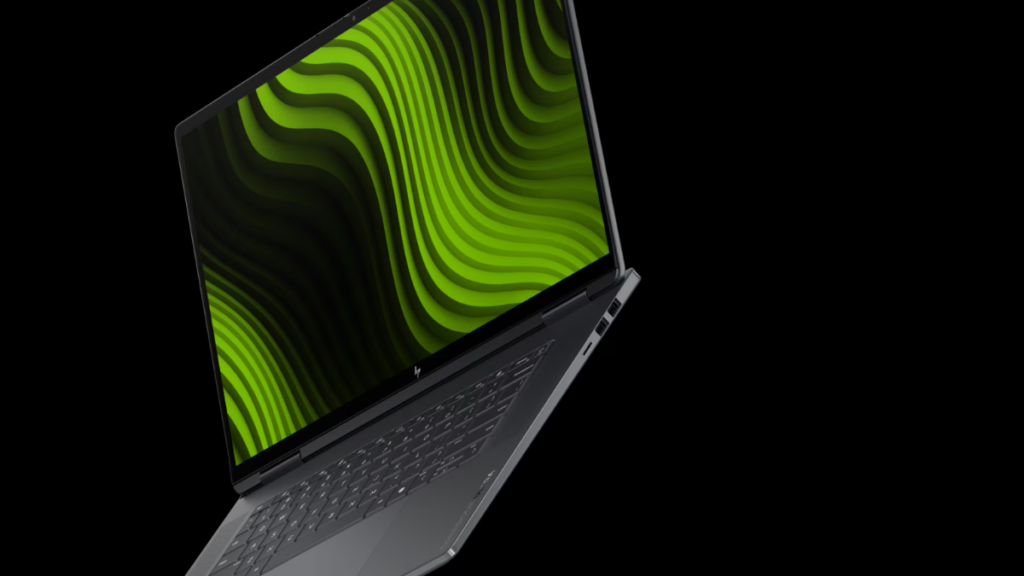
The OmniBook Ultra 16 is a 16-inch creator laptop running Nvidia's RTX Spark superchip, the same platform powering machines from Dell, Microsoft, ASUS, MSI, and Lenovo. The chip combines a 20-core ARM-based Grace CPU with a Blackwell RTX GPU, up to 128GB of unified LPDDR5X memory, and 1 petaflop of AI compute. That is the foundation every RTX Spark laptop shares.
What HP has done differently is the thermal architecture. The OmniBook Ultra 16 uses a vapor chamber cooling system with dual blower fans featuring liquid crystal polymer blades, a design carried over from HP's Spectre line. Two large heatpipes make direct contact with the RTX Spark chip itself rather than relying on indirect heat transfer. The exhaust is positioned at the rear of the chassis, pushing hot air away from the keyboard and the user rather than venting it sideways or upward. The result, HP claims, is quiet operation even under sustained AI workloads.
The display is a 3K OLED panel with DisplayHDR True Black 1000 certification, which places it among the better screens in the RTX Spark laptop category. A quad speaker array, a haptic trackpad, and a latticeless keyboard design round out the hardware. A 140W GaN USB-C charging adapter is included, which is a practical inclusion for a laptop targeting creators who travel.
The smaller OmniBook X 14 companion model brings a similar 3K OLED display at 13.53mm thickness, making it HP's even thinner option for buyers who prioritise portability over screen size. Both models support up to four 4K displays simultaneously via Thunderbolt 4, which matters for studio setups.
Why Cooling Is the RTX Spark Wildcard
Here is the argument the script makes, and it is a good one.
Every RTX Spark laptop ships with the same superchip. Nvidia rates it at performance equivalent to an RTX 5070 laptop GPU, which is a serious claim for a chip running in a thin chassis. But chip ratings are measured at specific power and thermal conditions. In practice, how close a laptop actually gets to that rated performance under sustained workloads depends almost entirely on how well the cooling system can maintain chip temperatures over time.
A laptop that throttles its RTX Spark chip to 60W under a sustained Blender render because the chassis cannot dissipate heat fast enough will deliver noticeably worse real-world performance than one that holds 80W or higher across the same session. The chip is identical. The difference is the engineering around it.
This is what makes HP's thermal focus worth paying attention to. On paper every RTX Spark laptop looks similar. In extended creative workloads, the machines with better sustained thermal performance will pull ahead, and the gap could be meaningful for users doing long video exports, large 3D scene renders, or extended AI model inference. Whether the OmniBook Ultra 16's cooling system actually delivers on that advantage is something only extended independent testing will confirm, but the design intent is clearly aimed at the right problem.
The Honest Unknowns
Pricing has not been confirmed. Based on where other RTX Spark laptops are expected to land, the OmniBook Ultra 16 is likely to start somewhere above $2,000, with fully configured 128GB models pushing higher. HP has confirmed availability for later in 2026, with late Q3 or early Q4 the current expectation.
Full specifications beyond the display, cooling design, and chip have not been released publicly. Memory configurations, storage options, battery capacity, and exact port layout are still pending announcement closer to launch.
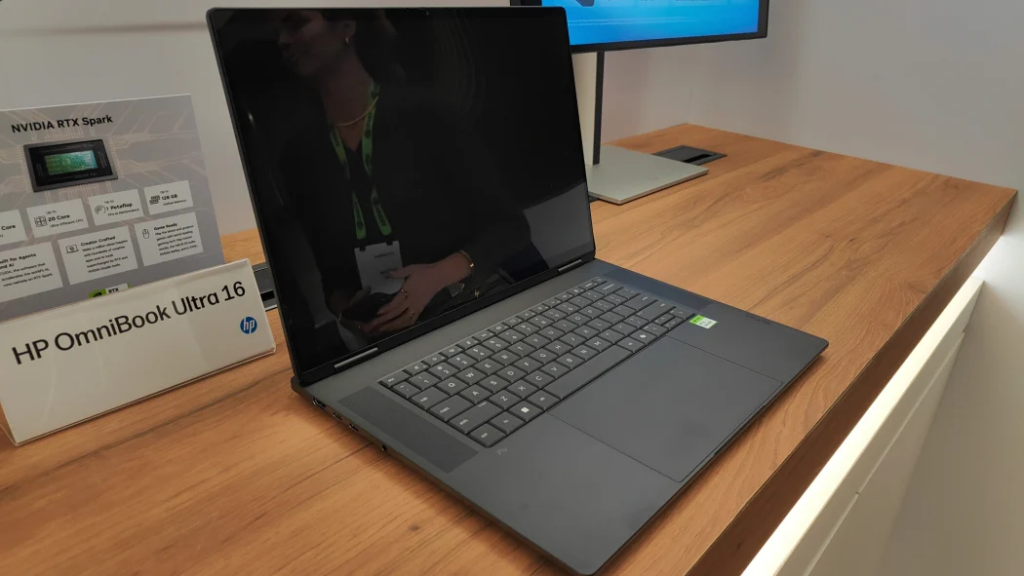
Real-world performance has not been independently verified. The only RTX Spark device that was actively running demos at Computex was the Microsoft Surface Laptop Ultra, which showed multi-camera 4K 10-bit editing, real-time Unreal Engine scene manipulation, and local AI workflows in controlled conditions. The OmniBook Ultra 16 was not switched on for public demos. Whether HP's thermal design actually maintains higher sustained clock speeds than competing RTX Spark laptops is the central question, and it will only be answered once review units ship.
HP OmniBook Ultra 16 vs. the RTX Spark Field
The RTX Spark laptop market arriving later in 2026 includes the Microsoft Surface Laptop Ultra, the Dell XPS 16 Creator Edition, the ASUS ProArt P16, the MSI Prestige N16 Flip AI+, and the Lenovo Yoga Pro 9n, among others. Nvidia expects more than 30 laptops based on the platform by end of year.
Each takes a different approach to the form factor question. The ASUS ProArt P16 sits at 12.9mm with a 99.9Wh battery. The MSI Prestige N16 Flip AI+ adds a touchscreen and 360-degree hinge. The Surface Laptop Ultra prioritises Microsoft ecosystem integration and repairability. The Dell XPS 16 brings the refined XPS design language and tandem OLED display.
The HP OmniBook Ultra 16's argument is that at 15.73mm it delivers better sustained thermal performance than the thinner competition without requiring buyers to accept an obviously thick or heavy chassis. That 15.73mm sits in reasonable middle ground between the ultra-thin aspirations of the ASUS and the more traditional thickness of machines optimising purely for cooling capacity.
Final Thoughts
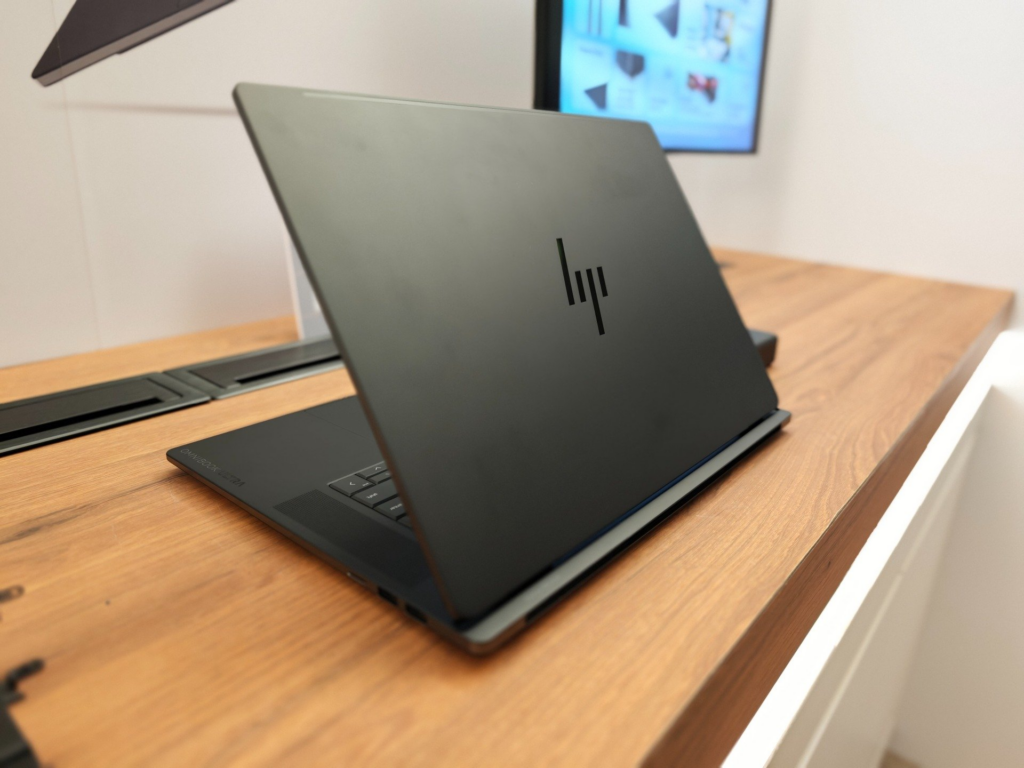
The HP OmniBook Ultra 16 is not the flashiest RTX Spark laptop announced at Computex 2026. It does not flip. It does not have a holographic AI companion. It does not carry an F1 team's design collaboration on the lid.
What it has is a considered thermal design in a chassis that is not trying to win a thinness contest at the expense of performance. In a category where every laptop shares the same chip and performance differentiation comes down to sustained real-world output rather than spec sheet numbers, that is a meaningful position to take.
Whether it executes on that position is a September question. But the thinking behind it is sound, and the OmniBook Ultra 16 deserves more attention than it has received in the RTX Spark conversation so far.
For more on the RTX Spark laptop field arriving later this year, check out our hands-on coverage of the Dell XPS 16 Creator Edition and the Microsoft Surface Laptop Ultra, two of the other machines making the strongest cases for this generation of Windows creator laptops.