
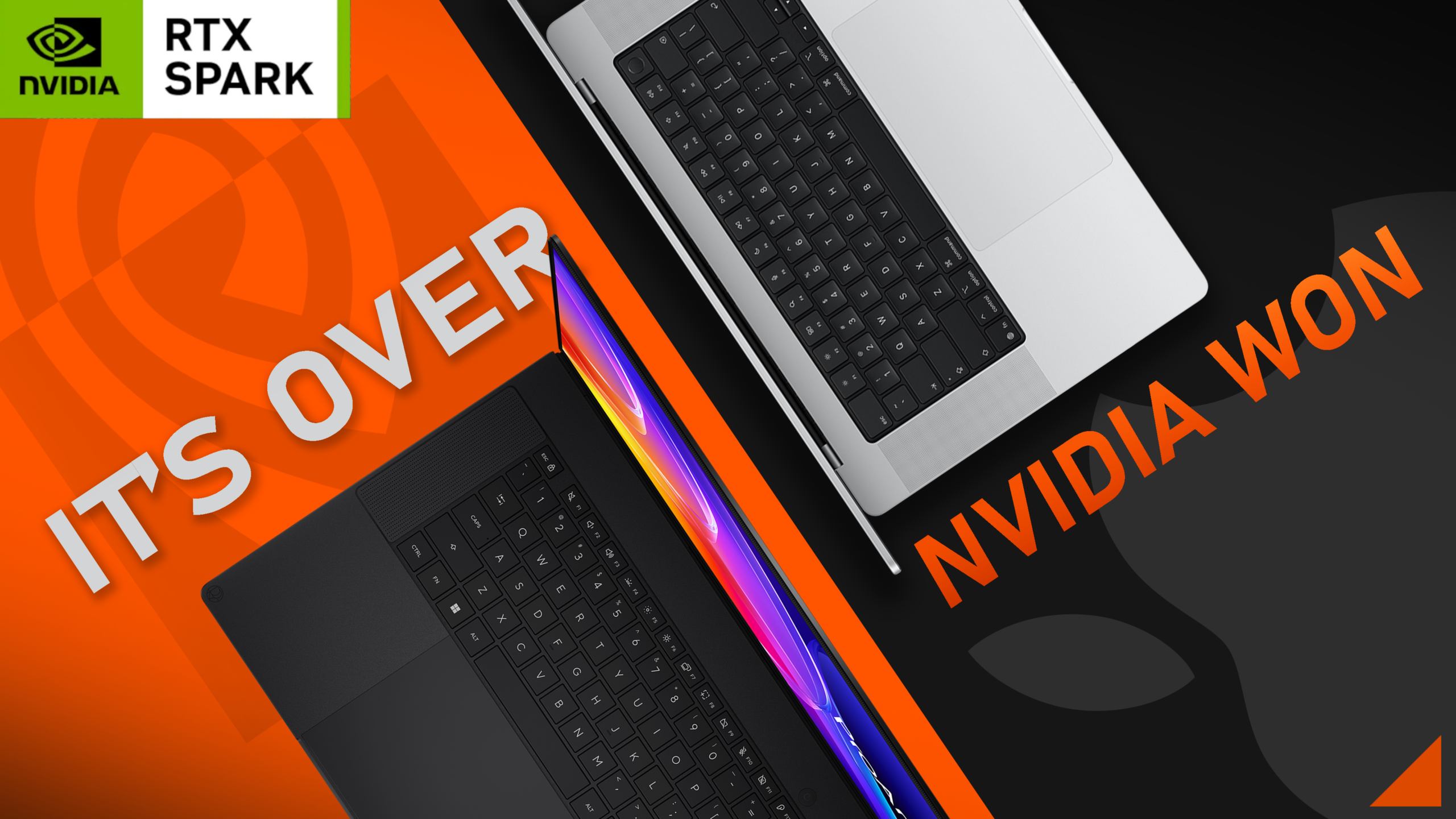

ASUS ProArt P14 vs MacBook Pro M5: Is It Finally Over for Apple?
By Stefan @ WeDoTech
A MacBook Pro Daily Driver Spent a Week With the ProArt P14. Here Is the Honest Result.
This comparison comes with relevant context. The person writing it daily drives not one but two MacBook Pros. This is not a Windows enthusiast trying to find reasons to abandon Apple. It is someone who has built their entire creative workflow around macOS looking at the ASUS ProArt P14 with RTX Spark and asking a genuine question: does this change things?
The short answer is yes. How much depends on who you are and what you need.
The MacBook Pro with M5 Pro starts at $2,199 for the 14-inch and $2,699 for the 16-inch, having launched in March 2026. The ASUS ProArt P14 with RTX Spark starts at $2,599.99 with 24GB of unified memory. These two machines are now in direct competition in a way that would have seemed like an exaggeration two years ago.
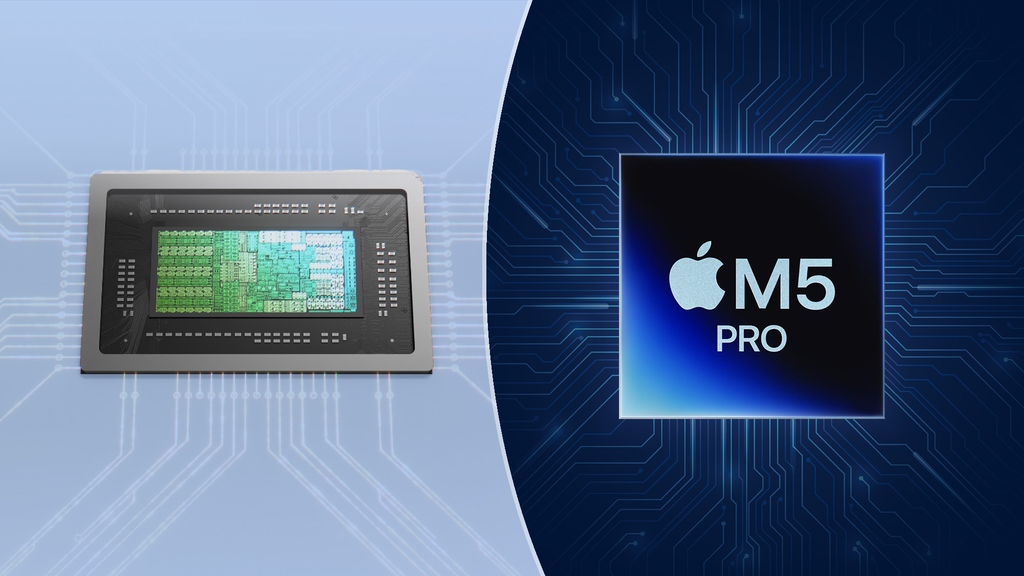
The Chip Comparison That Actually Matters
Start with numbers, then immediately explain why the numbers are not the story.
The best MacBook Pro M5 Max delivers up to 84 TOPS of AI processing performance. The RTX Spark inside the ProArt P14 delivers 1 petaflop, meaning 1,000 TOPS. That is not a marginal gap. It is a difference of over ten times in dedicated AI compute capability, which matters for generative AI workflows, local model inference, and AI-assisted creative tools in a way that is increasingly relevant to professional creative work.
But 1,000 TOPS versus 84 TOPS does not mean the ProArt P14 is ten times faster at video editing or twelve times better in Lightroom. These numbers reflect the chips' AI inference capacity specifically, not general creative performance. On a 12K timeline scrub in DaVinci Resolve, both machines are fast. The difference is in the headroom available for AI-assisted tools layered on top of that workflow.
What the RTX Spark also brings that the M5 Pro and M5 Max do not: CUDA cores, DLSS, Ray Tracing, and the full Nvidia GPU software ecosystem. The chip combines an Nvidia Blackwell RTX GPU with up to 6,144 CUDA cores and an Nvidia Grace CPU with up to 20 cores, with fifth-generation Tensor Cores and NVLink-C2C interconnect technology. For applications built around Nvidia's GPU compute stack, including many professional AI tools, 3D renderers, and simulation software, the ProArt P14 accesses capabilities the MacBook Pro cannot replicate through Metal alone.
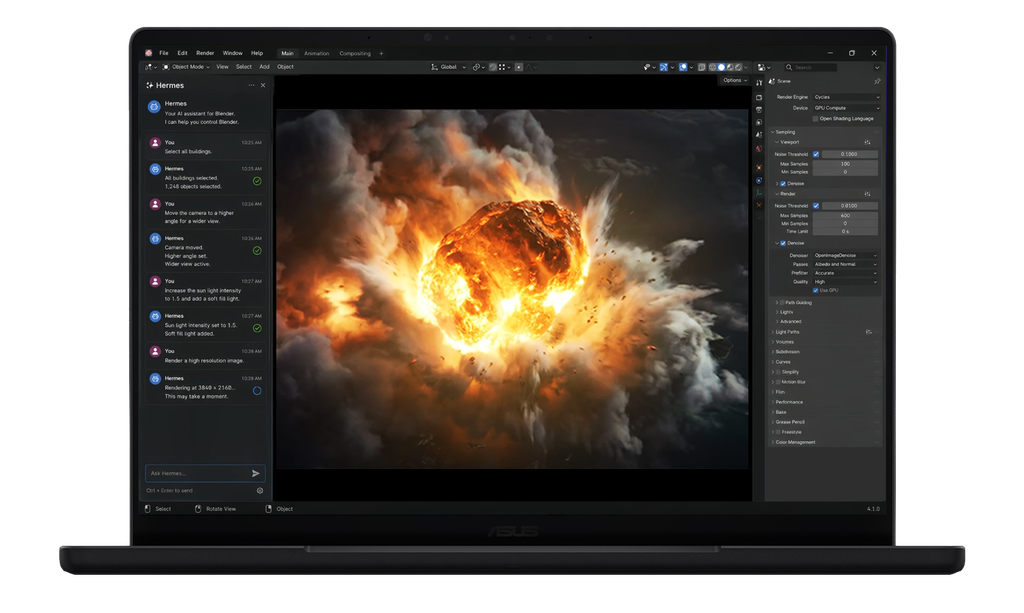
The Performance Test That Surprised
The 12K timeline test is where things got interesting.
Scrubbing through a 12K timeline with four simultaneous 4K clips, on battery, without proxies, at full playback quality. The ProArt P14 handled it without hesitation. The fan kicked in, audible but not aggressive, and the timeline played back smoothly throughout.
The export test ran a match-source export to avoid any downscaling variables. It completed in nine minutes on the RTX Spark, on battery. That result sits competitively against the MacBook Pro M5 Pro in comparable export scenarios, which is notable because consistent on-battery performance has historically been one of Apple Silicon's clearest advantages over Windows laptops. RTX Spark's power delivery removes that distinction. Plugged in or on battery, the performance is the same.
The gaming results were more complicated. Tested at 3K on ray tracing overdrive preset with no frame generation, performance was below expectation. The honest context: this was raw, day-one testing on a machine with potentially incomplete driver and game optimization. Nvidia and the game studios have both indicated ongoing optimizations for RTX Spark's ARM-based architecture. What was seen on test day is likely not representative of where gaming performance lands once proper driver optimization catches up. The early Computex demos suggested the hardware is capable. The launch-day gaming results require a caveat, not a verdict.

Fan Noise: The Windows Stigma Gets Challenged
The reputation of Windows laptops for fan noise is earned and long-standing. The ProArt P14's behavior under load is meaningfully different from that reputation.
During everyday tasks, the fans are off or imperceptibly quiet. Under heavier workloads, the fan curve activates earlier than a MacBook Pro would, because Nvidia and ASUS have prioritized sustained performance over acoustic comfort at the expense of a few extra degrees of processor temperature. The MacBook Pro will run hotter for longer before the fan activates. The ProArt P14 responds to thermal load sooner with a quieter fan.
At maximum output, both machines sound similar. The difference is when they get loud, not how loud they get. For a creative professional running sustained exports or renders, the ProArt P14's approach of cooling aggressively to maintain sustained clock speeds is actually the more sensible strategy. Thermal throttling is a far more disruptive problem than a fan that runs a little earlier.
The RAM Reality Check
One thing worth being clear about for anyone coming from Windows: the RTX Spark's unified memory is soldered onto the motherboard and cannot be upgraded after purchase. This mirrors Apple Silicon exactly. Unlike a traditional Windows laptop where RAM upgrades are possible, the memory you buy with the ProArt P14 is the memory you will have for the life of the machine.
What RTX Spark does differently from a standard Windows laptop is how that memory is shared. CPU and GPU workloads draw from the same pool dynamically, meaning a complex Blender render can pull from the full 128GB when the scene requires it rather than being constrained by separate GPU VRAM. For the 24GB base configuration, this shared architecture makes those 24GB more flexible than 24GB on a machine with separate CPU and GPU memory pools.
The SSD, however, can be upgraded. Asus designed the ProArt P14 to be opened without requiring a technician, and the M.2 slot is accessible for storage upgrades. That is a practical advantage over the MacBook Pro where storage is also soldered and non-upgradeable.
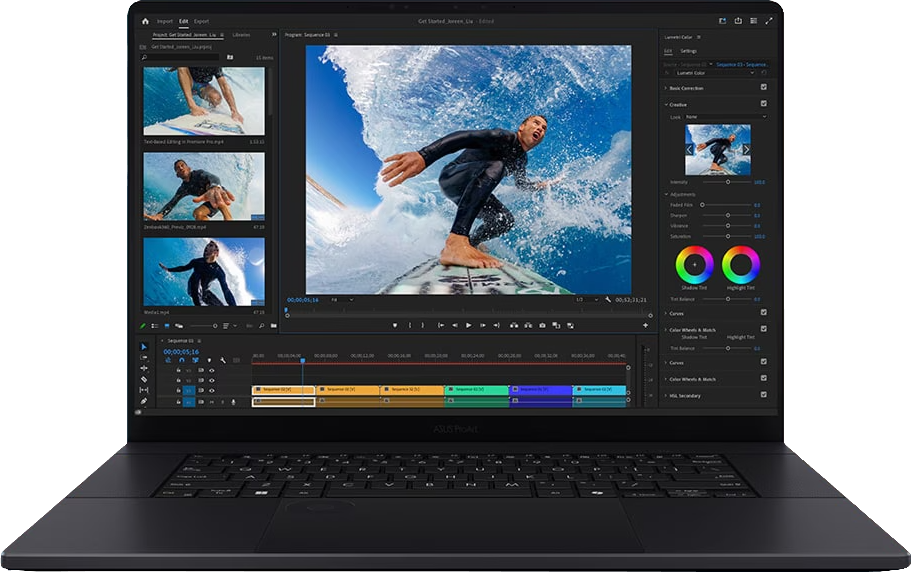
The Software Question Nobody Has Fully Answered Yet
The RTX Spark platform runs on ARM-based Windows, which brings the same application compatibility questions that arose with Qualcomm's Snapdragon X. The situation has improved significantly since those early ARM Windows days. Emulation overhead has been reduced. Major creative applications have been recompiled for ARM or run competently under emulation. Anti-cheat support now works for a broader range of games. Microsoft has actively prioritized compatibility fixes with Nvidia as a co-stakeholder in the platform's success.
The honest reality is that first-generation platforms have gaps. Some specialized professional software will not behave as expected. Some plugins and creative tools will need updates before performing optimally. Most major creative applications, Premiere Pro, DaVinci Resolve, Blender, Photoshop, and Lightroom, are either native or well-optimized. The long tail of specialized tools is where testing before committing to a purchase is worthwhile.
The MacBook Pro M5 Pro, with its 18-core CPU and up to 20-core GPU, has the advantage of mature software optimization that Apple has built over several years of Apple Silicon. macOS applications have been tuned against this architecture for long enough that most edge cases are resolved. That software maturity is real and represents a genuine advantage for the first year of RTX Spark's existence.
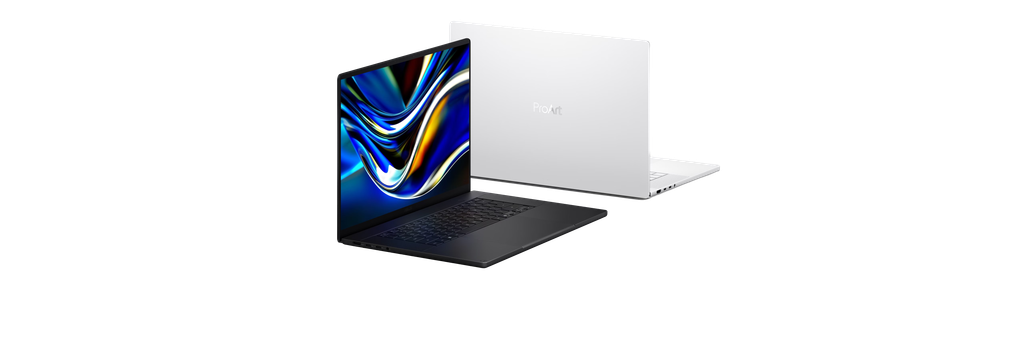
ProArt P14 vs MacBook Pro M5 Pro: The Numbers
The 14-inch MacBook Pro M5 Pro starts at $2,199 with 24GB of unified memory and a 512GB SSD. The ProArt P14 starts at $2,599.99 with the same memory and a 512GB SSD. The $400 premium for the ProArt P14 buys CUDA GPU compute, RTX-class Blackwell graphics with 5,120 cores, and 1 petaflop of AI performance against the MacBook Pro's 84 TOPS.
The MacBook Pro M5 Max, Apple's highest-performance laptop chip, supports up to 128GB of unified memory with up to 614 GB/s of memory bandwidth and starts at $3,599 for the 14-inch. The ProArt P14 128GB configuration sits at around $6,500 at the top end, a significant premium that reflects the manufacturing cost of the RTX Spark N1X platform at maximum specification rather than component parity.
One important note for anyone buying now: Apple is reportedly expected to announce a redesigned MacBook Pro around October 27, 2026, with customer availability potentially beginning November 6, 2026. If that launch materialises on that timeline, a purchasing decision made today should factor in what Apple announces within the next two weeks.
Is It Over for Apple?
Not yet. But the gap has genuinely closed in ways that matter.
The ProArt P14 matches the MacBook Pro in display quality, trackpad feel, audio performance, and build quality, areas where Windows laptops have consistently fallen short for years. It exceeds the MacBook Pro in GPU compute capability, AI inference performance, and memory flexibility for workloads that scale across the unified pool. It trails in software maturity, ecosystem integration, and the accumulated years of optimization Apple Silicon has received from developers.
Whether it is enough depends on your workflow. For creative professionals whose tools depend on Nvidia's GPU stack, CUDA, DLSS, and the broader Nvidia software ecosystem, the ProArt P14 is the more capable machine for those specific workloads. For professionals deeply integrated into Apple's ecosystem, relying on macOS-exclusive tools, or prioritising the seamless cross-device experience that comes from using Apple hardware with Apple software, the MacBook Pro M5 Pro remains the stronger overall choice.
What has changed is that the choice now requires genuine consideration rather than defaulting to Apple by process of elimination.

Final Thoughts
The ASUS ProArt P14 is the most serious challenge to the MacBook Pro's dominance in the creative professional laptop market that Windows has ever produced. That is not hyperbole. The hardware executes across every dimension that has historically separated MacBooks from Windows alternatives, and RTX Spark's AI compute advantage is real and growing in relevance as creative tools continue moving toward AI-assisted workflows.
The MacBook Pro is not finished. Software maturity, ecosystem integration, and the potential announcement of a redesigned model within the next two weeks mean Apple still has meaningful advantages for a significant portion of professional buyers.
But the conversation has changed. For the first time, a Windows creator laptop earns the comparison rather than just inviting it.
Check out our full ASUS ProArt P14 standalone review on WeDoTech for the complete hardware breakdown, including the keyboard cooling system that makes the thermal performance possible.