

SQD Mini-LED Explained: Can TCL’s Panels Really Beat OLED?
By Stefan @ WeDoTech
We flew to China to see where TCL builds its panels, and came home thinking the TV debate has shifted.
Two TVs stood side by side. One was OLED, the other was TCL’s SQD Mini-LED. Most people would point at the wrong one when asked which was which.
That moment sums up why TCL is so confident right now. Its new SQD Mini-LED technology is being pitched as something that can go head to head with OLED on color and contrast, without burn-in worries and without OLED’s price premium. That is a big claim, so we went to the source to see how it works.
A Trip to Where the Panels Are Made
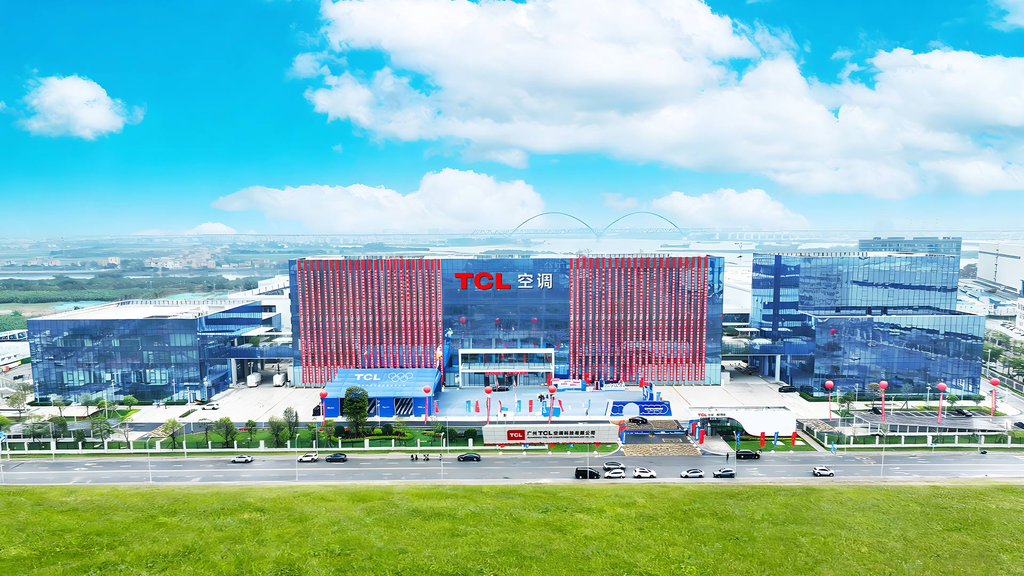
The visit took us to TCL CSOT, short for China Star Optoelectronics Technology. It is TCL’s display manufacturing arm and one of the largest panel makers in the world. It does not just supply TCL TVs either. Its panels end up in screens sold under plenty of other brand names.
The entrance hall alone gives you a sense of scale. This is a company that makes glass, backlights and full panels at enormous volume, and that is exactly why it can push new display technology into TVs faster than most rivals.
The purpose of the trip was simple: see what is happening behind the panel, not just what it looks like on a showroom wall. A good picture is easy to admire. Understanding why it looks good is what tells you whether it will hold up in your living room.
How SQD Mini-LED Builds Its Picture
SQD stands for Super Quantum Dot, and the idea is easier to follow than the name suggests.
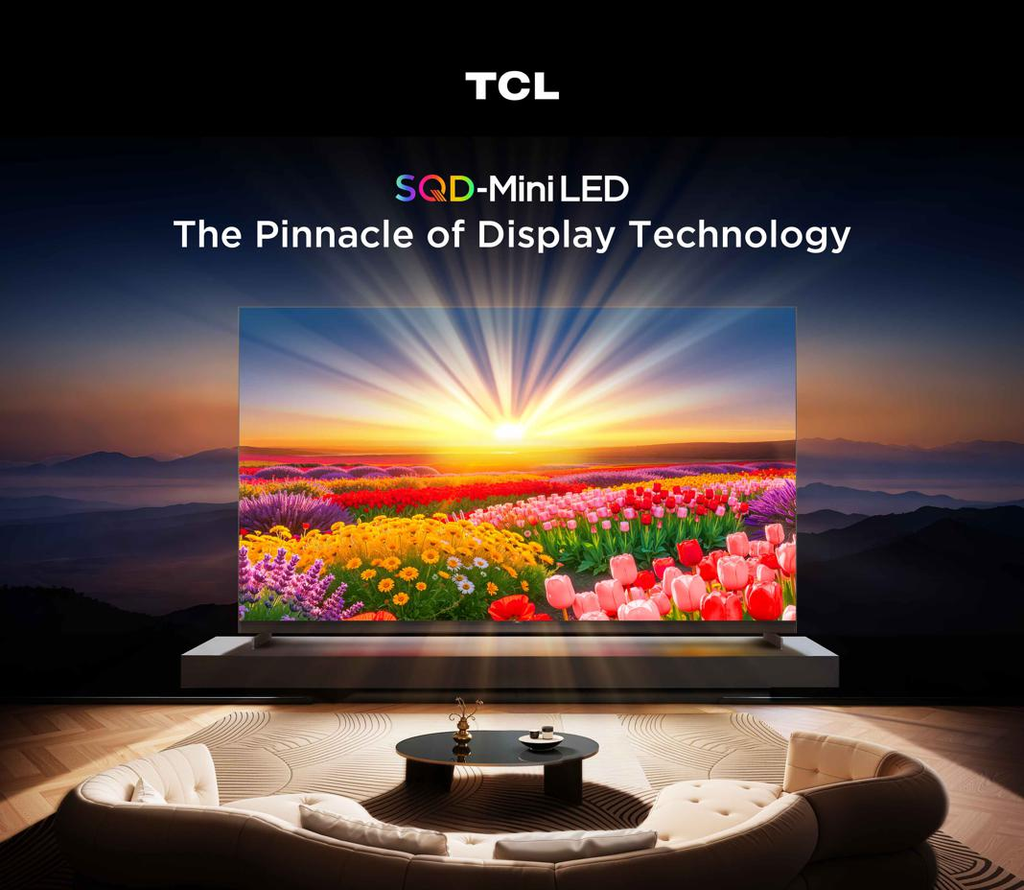
A regular LCD TV shines a backlight through filters to create color. SQD Mini-LED changes the recipe. Thousands of tiny blue LEDs sit behind the screen and fire blue light into a thin quantum dot layer. Blue is used because it carries more energy than other colors, which is what excites the quantum dots into producing very pure red and green light. Some of the blue passes straight through, and the result is three clean primary colors to build every image from.
TCL pairs those Super Quantum Dots with its CSOT UltraColor filter and a color purity algorithm. Together, TCL calls this its Deep Color System. The headline claim is up to 100% coverage of BT.2020, the very wide color standard used for HDR mastering. In plain terms, that means colors closer to what the camera captured on set.
The side-by-side demo made the difference obvious. The SQD Mini-LED panel looked noticeably more vivid than the OLED next to it, and both TVs were set to their standard picture modes, not a showroom vivid preset.
Brightness is the other half of the story. The flagship TCL X11L is rated for up to 10,000 nits of peak brightness. One nit is one candela per square meter, so at that level, a small bright area of the screen puts out roughly the light of 10,000 candles per square meter. That headroom matters most in bright rooms, where reflections and sunlight from a window can wash out a dimmer screen.
The catch with that much light is control. Push more power through LEDs and you get blooming, where light leaks around bright objects, lowers contrast and smears color into dark areas. TCL says it tackled this in three places:
- Dimming zones: up to 20,736 local dimming zones on the 98-inch X11L, so the backlight can switch off precisely where the image goes dark.
- Optics: reworked lenses and light paths over the Mini-LEDs to stop light spreading into neighboring zones.
- Processing: updated software that pulls more detail out of shadows, where the previous generation tended to crush dark scenes into flat black.
Then there is burn-in. OLED pixels are organic and can wear unevenly when a static image, such as a news ticker or game menu, sits on screen for long periods. Temporary image retention usually fades within minutes, but years of the same static elements can leave permanent ghosting. SQD Mini-LED uses inorganic LEDs, so it is not prone to that kind of burn-in, even at 10,000 nits. TCL ran a burn-in demonstration during the visit to make that point.
The Fine Print Behind the Big Numbers
Impressive demos deserve some skepticism, especially when the company that built the panel also set up the room.
The 100% BT.2020 figure comes from TCL’s own lab testing. Independent reviewers have measured less. Tom’s Guide recorded 91% BT.2020 on the X11L, which is still excellent and ahead of most rivals, but it is not the 100% printed on the box.
The 10,000-nit rating is a peak figure for small highlights. Reviewers have noted that the X11L does not hit that number in its accurate picture modes, and no TV sustains that level across the whole screen.
Contrast is the bigger question. OLED switches off each pixel individually. Even with more than 20,000 zones, Mini-LED is still dimming groups of pixels, so a perfectly black background around a small bright object remains OLED’s home turf. TCL’s halo control has narrowed that gap, but it has not erased it.
Finally, OLED is not standing still. Samsung’s S95H, one of the brightest OLED TVs tested this year, measured around 2,500 to 2,800 nits depending on the lab. That is far below TCL’s peak claim, but enough for most living rooms.
What SQD Mini-LED Costs Right Now
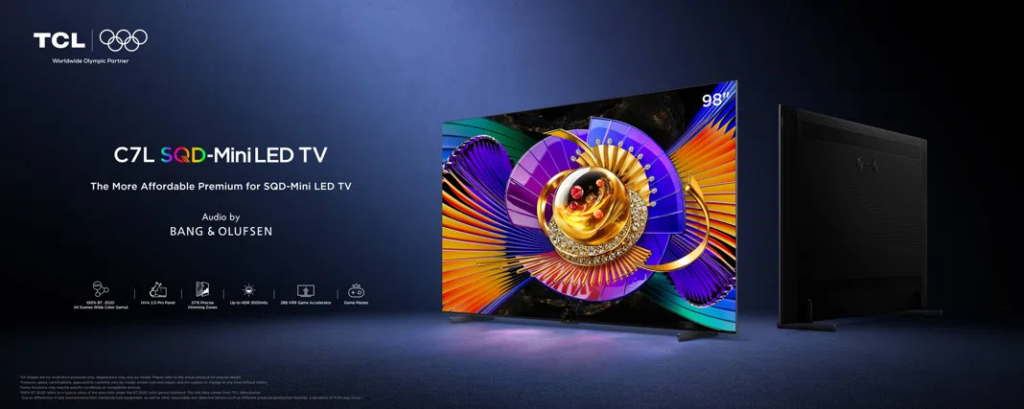
SQD Mini-LED is no longer limited to the flagship. TCL sells it across three US series:
- X11L: launched at $6,999 (75-inch), $7,999 (85-inch) and $9,999 (98-inch). The 75-inch has since dropped to $3,999.99 on TCL’s US store.
- QM8L: launched from $2,499.99 for the 65-inch, with sale prices well below that.
- QM7L: launched from $1,199.99 for the 55-inch and $1,499.99 for the 65-inch, and is often discounted further.
The QM7L is sold as the C7L in other markets, which we covered in TCL C7L SQD Mini-LED: The OLED Killer We Didn’t Expect.
SQD Mini-LED vs OLED
The fairest comparison is TCL’s QM8L against Samsung’s S95H at 65 inches. The QM8L launched at $2,499.99, while the S95H launched at about $3,400.
The SQD Mini-LED set wins on peak brightness, color volume in bright scenes, burn-in peace of mind and value per inch, especially at 85 inches and above, where OLED prices climb quickly. It is the better pick for bright living rooms, sports and anyone who leaves static content like news channels or game HUDs on screen for hours.
OLED still wins on per-pixel contrast, near-black detail without any blooming, and viewing angles. For a dark home theater and movie-first viewing, a high-end OLED remains the safer choice.
Our verdict: rather than copying OLED, SQD Mini-LED takes a different route that beats it in some areas and trails it in others. The claim that the OLED era is ending is our opinion, not a settled fact, but the gap has never looked this small, and on price, TCL is clearly ahead.
Final Thoughts
Seeing SQD Mini-LED up close at TCL CSOT made one thing clear: this is a real step forward for LCD, built on smarter backlights, purer quantum dots and better processing rather than marketing alone. Some of TCL’s numbers are best-case lab figures, and OLED still holds the contrast crown, but the overall package is remarkably close at a much lower price.
If you want the brightest, most colorful picture for a bright room and do not want to think about burn-in, an SQD Mini-LED TV is the one to shortlist, with the QM7L or QM8L offering the best value. If you watch mostly movies in the dark, OLED is still worth the premium.
For our first look at the flagship running in person, read TCL X11L Hands-On: 10,000 Nits and AI Home Appliances.