

Siri AI at WWDC 2026: Apple's Assistant Finally Grew Up
By Stefan @ WeDoTech
Apple Just Rebuilt Siri From the Ground Up
For years, asking Siri to do anything beyond setting a timer or sending a basic text felt like a negotiation with something that was only half listening. That era appears to be ending.
At WWDC 2026, Apple announced Siri AI, a complete rebuild of its digital assistant built on new Foundation Models developed in collaboration with Google's Gemini technology. The result is not an incremental update. Apple described it as a profoundly more capable assistant with personal context understanding across all on-device content, on-screen awareness, image understanding, and broad world knowledge through web access. Cross-device agentic action across iPhone, iPad, Mac, Apple Watch, CarPlay, and AirPods is now part of the package.
Whether it actually works the way Apple demoed it is the question everyone should be asking. But the ambition on display at WWDC 2026 is more convincing than anything Apple has shown in the Siri category in years.
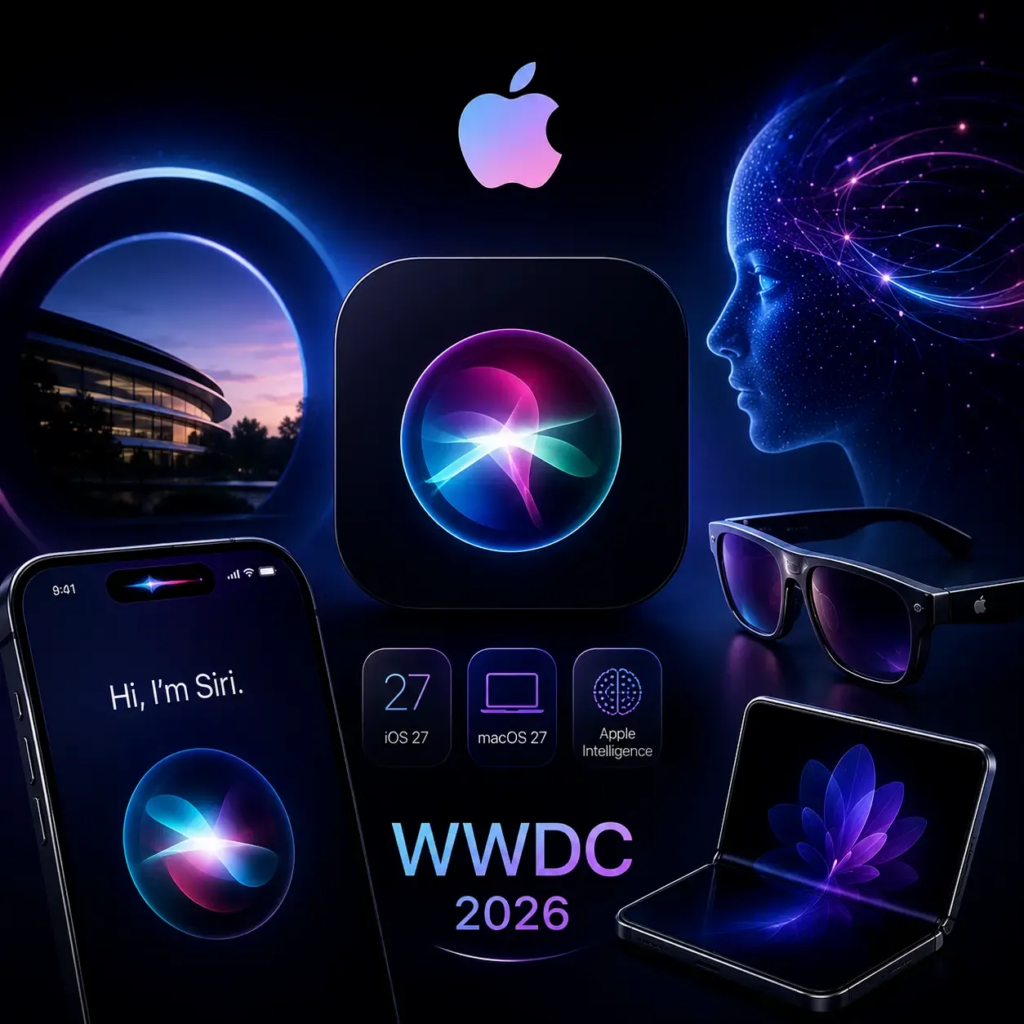
What Siri AI Can Actually Do
The most significant change is contextual awareness across your entire device.
Siri AI can now understand what is on your screen in real time and act on it without you having to manually switch apps or copy information. The demo example from WWDC illustrates this well: if you are looking at a photo on Instagram of a bridge and you ask Siri whether a friend lives nearby, it can cross-reference your messages, emails, and other communications to answer accurately. From there, you can ask it to draft an email referencing that photo, and Siri will open Mail, compose the message, and present it for you to review and send. One instruction, multiple steps, no manual switching.
This kind of multi-step cross-app action is what makes Siri AI genuinely different from what came before. Previous versions of Siri operated mostly in isolation, answering a question or triggering a single app function. Siri AI understands the broader context of what you are doing and can chain actions together toward a goal.
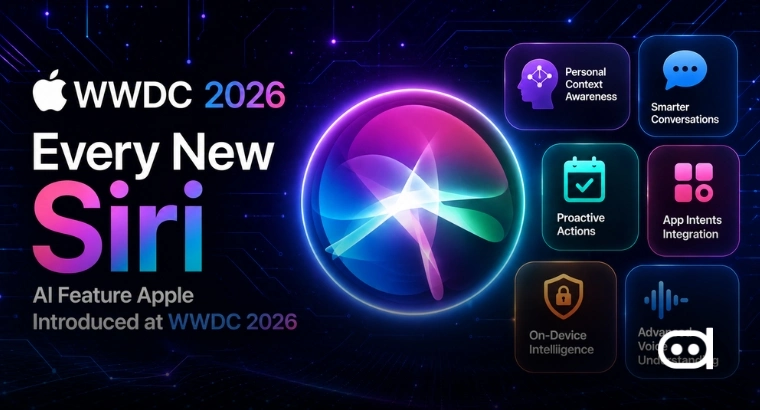
The agentic capabilities extend into system-level tasks in ways that feel immediately practical. The Passwords app can now navigate websites, sign in, and update weak or compromised passwords automatically with a single tap. Calendar understands plain language input well enough to create and edit events from natural conversation. Messages can suggest one-tap actions like creating a reminder or locating a specific photo based on what is being discussed. Phone introduces Call Context, which surfaces relevant information from your apps when you call a business, including pulling your flight confirmation from Mail automatically when you call an airline. All of this runs on-device, with no call content sent to Apple's servers.
A new standalone Siri app brings a full conversational interface to iPhone, iPad, and Mac, with previous conversations syncing across devices via iCloud. On iPhone it sits in the Dynamic Island. On Mac it lives inside Spotlight. Visual Intelligence, which lets Siri understand and respond to images through the camera, has been folded into a dedicated Siri mode in the Camera app with expanded capabilities including reading nutritional information from a food photo or splitting a restaurant bill from a receipt.
The Privacy Story Is Genuinely Important
The way Siri AI handles personal data is one of the more compelling parts of the announcement, and it deserves more attention than it typically gets in the coverage of new AI features.
The majority of Siri AI's contextual processing, including everything related to your personal messages, emails, photos, and on-screen content, happens on-device through the Neural Processing Unit built into Apple Silicon. This means your private data is not being sent to a cloud server for processing. Apple cannot access it. It is not sitting in a data center waiting to be breached.
The tradeoff is hardware requirements. Full Siri AI capability runs properly on devices with sufficiently powerful NPUs, which means newer chips deliver the best experience. That said, Apple confirmed the update rolls out from iPhone 11 onwards, which represents an unusually generous support window compared to what Android manufacturers typically offer. Most Android devices receive four to five years of security updates and significantly less in terms of feature advancement. Apple is extending meaningful AI functionality to hardware that is several years old, which is a genuine differentiator.
For broader web-based queries, Siri AI uses cloud access, but personal data stays on device throughout. The combination of local processing for sensitive context and cloud access for general knowledge is a reasonable architecture for a mass-market assistant.
What Has Changed Across the Ecosystem
Siri AI is the headline but WWDC 2026 had more to note across Apple's platforms.
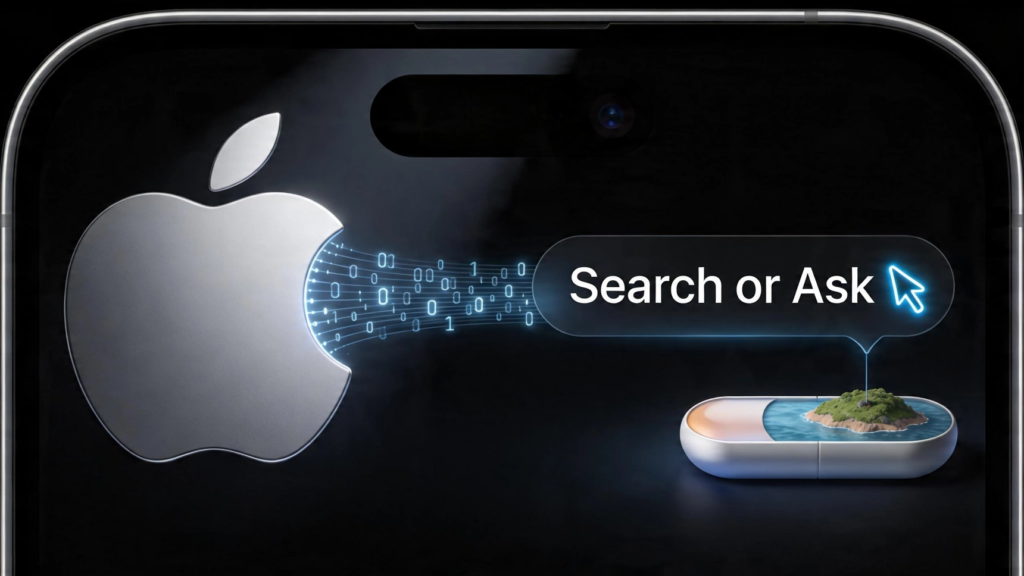
iOS 27 and macOS 27 Golden Gate both arrive with a focus on optimisation rather than visual overhaul. App launches are reportedly up to 30% faster. Photo previews load up to 70% faster. Search has been rebuilt with a new hybrid interface Apple calls Search or Ask, where Siri AI processes requests with personal context factored in. Safari adds tab topic grouping based on content analysis and a Notify Me feature that monitors pages for changes such as a product coming back in stock.
macOS 27 drops Intel support entirely and now runs exclusively on Apple Silicon. For anyone still on an Intel Mac, this is the line in the sand Apple has been drawing toward for years. The performance and efficiency advantages of Apple Silicon make the decision logical, but it closes the door on older hardware definitively.
Xcode 27 gains built-in coding agents from Anthropic and Google, allowing software development assistance directly on iPad. The Photos app adds generative tools including an Extend feature that expands images beyond their original frame and an improved Clean Up tool with more realistic object removal. Image Playground upgrades to a photorealistic generative model with targeted editing capabilities.
WWDC 2026 is also Tim Cook's final one as CEO, with Senior Vice President of Hardware Engineering John Ternus taking over on September 1.
The Honest Caveats
Apple's track record on Siri promises is a reason to temper expectations until the software ships and independent testing begins.
Apple Intelligence was announced at WWDC 2024 with significant fanfare and arrived in a state that underwhelmed most users. The contextual awareness and cross-app action features promised then took considerably longer to materialise than the keynote suggested. Siri AI at WWDC 2026 is a much more complete demonstration, but demonstrations are controlled environments.
The dependency on developer adoption also matters. Many of the most useful agentic features require app developers to integrate with Apple's App Intents framework. The capabilities Apple demoed using its own apps will work from day one. The same depth of integration across third-party apps will arrive gradually, depending on how quickly developers build support.
The Google Gemini collaboration powering the Foundation Models is also an unusual arrangement for Apple, a company that has historically preferred full control of its technology stack. How that partnership evolves, and what it means for Apple's long-term AI independence, is worth watching.
Siri AI vs. Google Gemini and Samsung Galaxy AI
Google Gemini on Android has had contextual and on-screen awareness features in various forms for the past two years. Samsung's Galaxy AI has similarly offered cross-app intelligence on Galaxy devices. Apple's advantage is not being first.
What Apple offers that neither Android competitor currently matches is the depth of on-device processing for sensitive personal data, the breadth of OS-level integration across a unified hardware and software platform, and the support window that extends meaningful features to hardware going back to iPhone 11. For users already in Apple's ecosystem, the combination of privacy, performance, and longevity is a compelling package. For users on Android, the honest assessment is that Gemini has been doing parts of this for longer, though often with more cloud dependency and less consistent integration across devices.
Final Thoughts
Siri AI at WWDC 2026 is the most substantive upgrade Apple's assistant has ever received. The contextual awareness, cross-app agentic actions, on-device privacy architecture, and breadth of ecosystem integration are all meaningful improvements over what existed before.
The caveat is that this has to actually work when it ships. Apple's credibility on AI feature promises has taken damage over the past two years, and Siri AI will be judged on whether daily use matches the keynote. If it does, Apple has built something genuinely useful that most of its installed base can access. If it does not, the gap between promise and product will be the story again.
The foundation is more convincing than it has ever been. Now Apple needs to deliver on it.
For more on the AI features shaping the devices most people use every day, check out our look at the Honor 600 Pro, a phone that shows just how quickly AI-assisted camera and processing capabilities are moving in the Android space too.