

TCL: The Company Behind Every Screen You Own
By Stefan @ WeDoTech
The Brand You Know Is Not the Company You Think
There is a reasonable chance you have a TCL product in your home right now. A television, an air conditioner, a refrigerator. Maybe all three. And there is a reasonable chance you think of TCL as a solid, affordable electronics brand, the kind of company that makes decent products at good prices without making too much noise about itself.
That description is not wrong. It is just extraordinarily incomplete.
After spending time at TCL's Global Partners Conference in China, visiting their manufacturing facilities and sitting with their engineers, one thing became clear. TCL is not a consumer electronics company that also makes panels. It is a display infrastructure company of a scale that is genuinely difficult to comprehend, that also happens to sell you a television.
The Numbers That Do Not Feel Real
Start with the televisions, because that is what most people know.
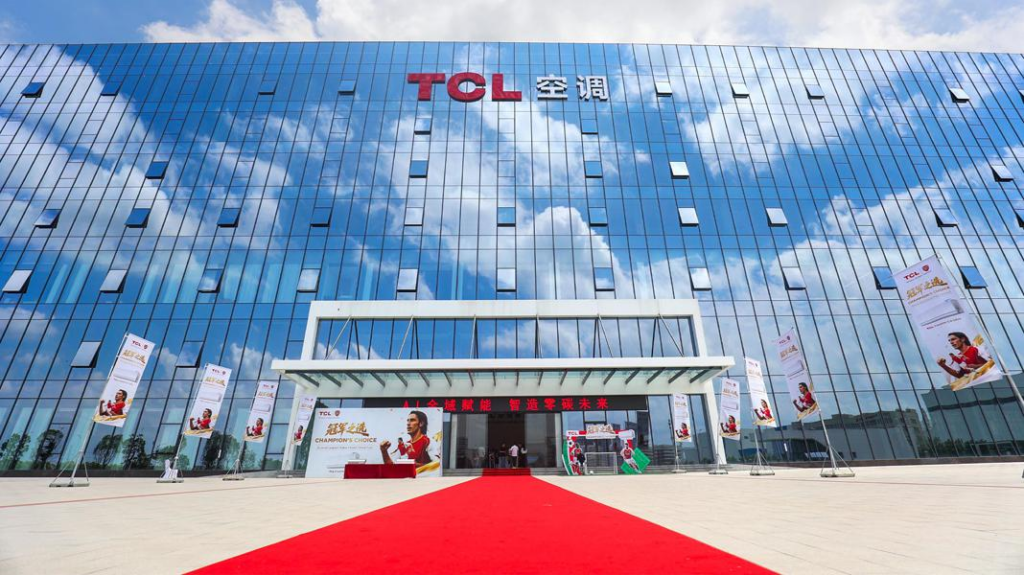
They produces around 26 million televisions per year. At that volume, they are rolling a new TV off a production line approximately every two seconds, around the clock, every day of the year. In December 2025, TCL reached number one in global TV shipments for the month, taking a position that had been owned by Samsung for years. For the full year 2025 they sit at number two globally, with roughly 16% market share and forecasted shipments of close to 31 million units. The trajectory is unmistakable.
But the television business is, in their own words, almost the least interesting thing they do.
TCL is the world's number two exporter of air conditioners, moving around 20 million units per year across every continent. They have held the position of world's largest refrigerator exporter for 16 consecutive years. Their appliance manufacturing operates at a scale that sits comfortably alongside the biggest industrial producers on the planet, not just in consumer electronics.
Across all of this, they operate 38 manufacturing bases on four continents. TCL CSOT, their display panel division, posted operating revenue of $14.97 billion in 2025, up 17.4% year on year. TCL Technology's net profit for 2025 surged by 188.8% in a single year. These are not the numbers of a company quietly competing. They are the numbers of a company that has been systematically building toward dominance while the industry was looking somewhere else.
The Part Nobody Talks About
Here is where the story gets genuinely strange.
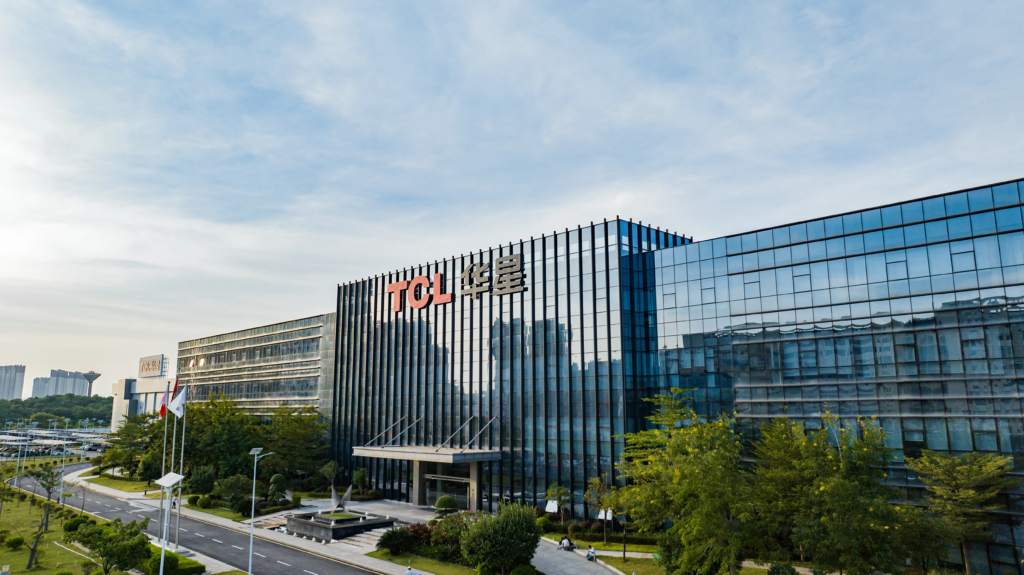
Most people who buy a television understand they are buying a TCL product. What almost nobody understands is that they also own CSOT, China Star Optoelectronics Technology, one of the most powerful display panel manufacturers on earth. CSOT operates the world's largest Gen 11 LCD panel fabrication facility in Shenzhen, and those panels do not only go into Their televisions.
CSOT supplies display technology across the industry. The screen you are watching right now, whatever brand name is printed on the bezel, may well be running on a panel that TCL manufactured. You would have no way of knowing. CSOT is currently number one globally in gaming monitor panels, number one in panels above 98 inches, and number two overall in TV panels worldwide. In 2025, their laptop panel shipments grew 64% in a single year. Mobile phone panels grew 29%.
This is not a side business. They are selling screens to the rest of the industry while the rest of the industry sells you their products. The logo on your device and the company that made the display inside it may be entirely different things.
The Moves That Should Get More Attention
Two specific decisions illustrate how aggressively TCL is positioning itself.
In September 2024, TCL acquired LG Display's Gen 8.5 LCD manufacturing facility in Guangzhou for $1.47 billion. LG spent years and billions building that factory. TCL wrote a cheque and absorbed it. LG Display no longer owns a large-area LCD factory. TCL does.
The second move is arguably more significant. TCL is currently building the world's first Generation 8.6 inkjet-printed OLED factory, also in Guangzhou, representing a $4.1 billion investment. This is a manufacturing technology that Samsung and LG, the two brands the world most closely associates with OLED, do not yet have a large-scale production line for. TCL broke ground in November 2025. The main structure was completed in 151 days.
For context: CSOT is already producing 27-inch 4K inkjet-printed OLED panels and is targeting consumer products later in 2026. Samsung, whose OLED panels define the premium smartphone display market, has reportedly ordered 15 million OLED panels from TCL CSOT for its 2026 smartphone lineup. The company supplying the panels to Samsung's phones is the same one whose logo is on the TV in your living room.
Where TCL Falls Short
Fair coverage requires honesty about where TCL still has ground to make up.
In the ultra-premium television segment, Samsung and LG retain a meaningful brand and quality advantage. TCL's push into SQD Mini-LED technology is genuinely impressive, and their C7L and X11L panels compete seriously at the spec level, but brand perception in the flagship tier still lags behind the Korean manufacturers.
There are also legitimate questions around data privacy. In December 2025, the Texas attorney general filed a lawsuit against TCL alleging that the company illegally collects and shares viewer data with the Chinese government. TCL disputes those claims, but the issue has not been resolved and is worth being aware of as a consumer.
The scale of their operation also raises supply chain concentration questions. When one company provides panels across the industry at this volume, disruptions at the manufacturing level have the potential to ripple in ways that are hard to predict.
TCL vs. Samsung and LG
Samsung and LG have spent decades building brand equity in the premium display market, and that does not disappear quickly. In OLED specifically, both companies have a years-long head start in established production and consumer trust.
What TCL has is vertical integration, manufacturing scale, and a cost structure that allows it to offer competitive technology at price points that the Korean manufacturers struggle to match. The C7L at $1,400 for a 75-inch SQD Mini-LED panel is the most obvious expression of that advantage. The inkjet-printed OLED factory, if it delivers on its technical promises at scale, represents a potential inflection point that Samsung and LG are clearly watching closely.
The competition here is not symmetric. TCL is trying to take ground. Samsung and LG are trying to hold it.
Final Thoughts
TCL is not playing in the market. At this scale, in displays, appliances, and panel supply, they are closer to the infrastructure underneath the market.
The television on your wall, the monitor on your desk, the air conditioning unit in your office, and potentially the screen in your phone may all trace back to a company most people think of as a budget TV brand. That gap between perception and reality is what makes TCL one of the most interesting companies in consumer technology right now, and one of the least understood.
They are not the underdog. They just prefer you to keep thinking they are.
For a closer look at TCL's display technology in practice, check out our breakdown of the TCL C7L SQD Mini-LED, the panel that started to make the OLED question genuinely complicated.