
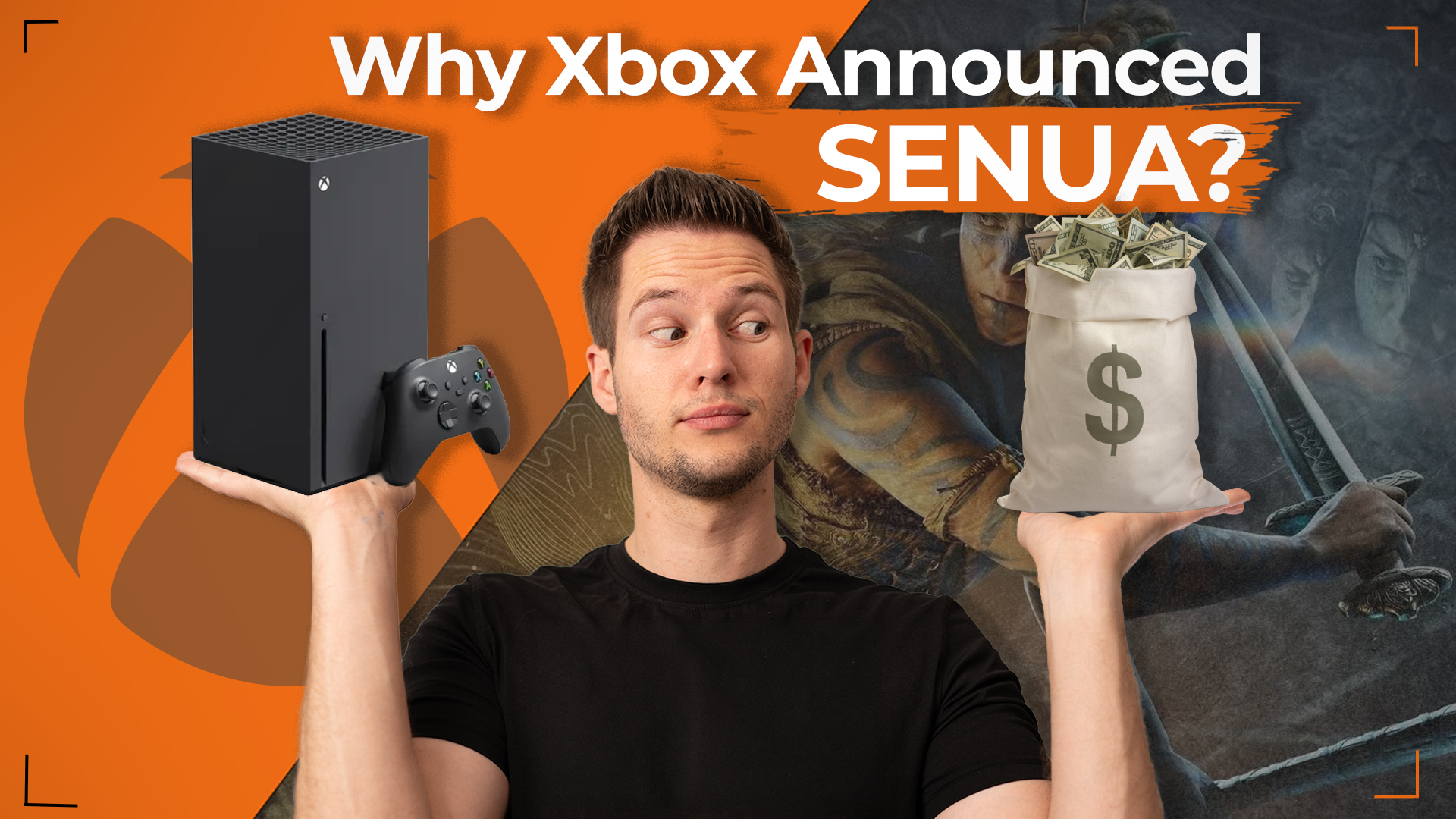

Xbox Announced Senua to Sell the Studio, Not the Game
By Stefan @ WeDoTech
Microsoft Used Its Own Showcase to Set Up a Studio Sale
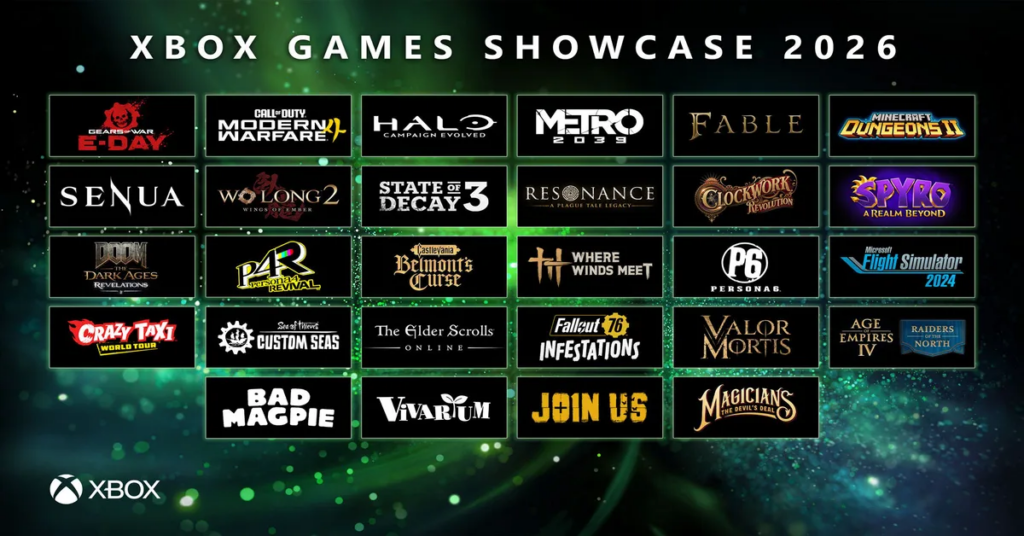
At the Xbox Games Showcase on June 7, 2026, Ninja Theory walked on stage and announced Senua, the third entry in the Hellblade franchise. The crowd reacted well. A 2027 release window suggested the game was well into development. Studio head Dom Matthews talked about broader gameplay, more combat depth, and an interconnected world. It looked like one of the better moments of the show.
Nine days later, Ninja Theory employees were called into a meeting and told the studio was closing.
That nine-day gap is not an accident or a coincidence. According to reporting from Game File, corroborated by The Verge, Bloomberg, and Windows Central, Microsoft had already decided to spin off or shut down Ninja Theory before the showcase took place. The Senua announcement went ahead anyway, and the reason is not complicated once you understand it: a studio with a publicly announced game targeting 2027 is worth more to a potential buyer than a studio with nothing on the shelf.
Xbox announced Senua to sell the studio. Not the game.
The Broader Xbox Reset
Ninja Theory is not the only casualty. Double Fine Productions and Compulsion Games, the studios behind Psychonauts and South of Midnight respectively, are simultaneously in closure or buyout negotiations. June 16, 2026 became the most concentrated single-day contraction in Xbox first-party history.
The closures are happening under what Xbox is calling a Reset, a restructuring framework outlined in a memo co-signed by new CEO Asha Sharma and chief content officer Matt Booty and published publicly on Xbox Wire on June 10. The memo acknowledged that Xbox had over-extended and that the business model needed to refocus on its largest franchises. Excluding Activision Blizzard King, Xbox spent more than $20 billion over five years on content, platform, and hardware subsidies and saw annual revenue decline by nearly $500 million over the same period.
The studios now facing closure share a profile that makes the structural logic visible. Critically acclaimed, mid-tier in budget, and entirely dependent on Microsoft's willingness to treat Game Pass licensing as adequate compensation for games that will never generate traditional unit sales. When Call of Duty: Black Ops 6 landed on Game Pass day one, Microsoft reportedly absorbed an estimated $300 million in buy-to-play revenue that would otherwise have appeared as direct sales. That approach scales poorly when applied across an entire portfolio of studios making games for a subscription base rather than a paying audience.
What the Timing Actually Means
The question a lot of people are asking is whether Ninja Theory's developers knew about the closure plans when they announced Senua on stage. Reporting suggests they did not. The studio was told on June 16, nine days after the showcase, and employees were described as hoping the studio would find a buyer.
That context makes the situation considerably worse. The developers who stood on stage, talked about their creative vision, and announced a game they had been building with their full 85-person team were almost certainly unaware that Microsoft had already decided their future. The announcement was not made for their benefit or their players' benefit. It was made to make the asset more attractive to prospective buyers.
That calculation is understandable from a purely corporate standpoint. A studio actively developing a named franchise title with a real release window is easier to sell than a studio between projects. Announcing Senua publicly created urgency and legitimacy for any acquisition conversation happening behind closed doors. It is, as the original script puts it, actually quite brilliant in a deeply cynical way.
Whether it worked is still unclear. Ninja Theory is reportedly still searching for a buyer. The fate of Senua itself, including whether the game continues under new ownership or gets quietly cancelled, has not been confirmed. Microsoft owns the Hellblade IP regardless of what happens to the studio, which means the franchise could continue under a different developer even if the team that built it does not survive.
Why This Pattern Keeps Happening at Xbox
The Ninja Theory situation is not new behaviour. Xbox has closed or restructured multiple studios in the past several years, often following periods where the same studios were publicly celebrated. The acquisition spree that followed the Activision Blizzard deal brought enormous scale but also enormous pressure on studios to justify their place in a portfolio that suddenly had to sustain itself differently.
Game Pass created a structural tension that has never been fully resolved. The pitch to subscribers is a vast library of day-one releases at a flat monthly rate. The reality for studios is that their games need to generate enough engagement to justify continued development spend in a model where the traditional signal, individual game sales, no longer exists. Studios making critically acclaimed but commercially modest games are exactly the kind of asset that looks underperforming by subscription metrics even when they are doing exactly what they set out to do.
Hellblade: Senua's Sacrifice and Senua's Saga: Hellblade II are exactly those games. Well regarded, narratively ambitious, modest in commercial scale. The kind of games that build a studio's reputation over time rather than generate immediate returns. Under a subscription model where immediate engagement drives platform value, that profile becomes a liability rather than an asset.
What Happens to Senua Now
The honest answer is that nobody knows yet.
If Ninja Theory finds a buyer who can keep the team together, Senua presumably continues under new ownership. Microsoft's reported insistence that any acquired studio must ship its current game day one on Game Pass could complicate those negotiations significantly, since that condition could deter buyers who want traditional sales revenue from the game.
If no buyer materialises before the closure is finalised, Senua is almost certainly cancelled. The IP stays with Microsoft. Whether another studio picks up the concept, or whether Hellblade as a franchise simply ends with Hellblade II, depends on decisions that have not been made publicly yet.
For the 85-plus developers who spent years building Senua and watched it get announced at a major showcase nine days before their jobs ended, the outcome of those corporate negotiations is not an abstract question.
Final Thoughts
The Ninja Theory situation is a clean illustration of how corporate strategy and creative culture can operate in completely separate planes without anyone explicitly lying. Microsoft needed to make a studio more sellable. They announced a game. The developers believed in the game. The audience was excited about the game. All of that can be simultaneously true while the decision to close the studio had already been made.
That is not a conspiracy. It is just how large organisations make decisions when the people making them are several layers removed from the people building the thing.
Whether Xbox's Reset ultimately produces a healthier, more sustainable first-party business is a genuinely open question. What is not open is whether the way Ninja Theory's closure was handled was good for the people who worked there. It was not.
For more on the gaming industry and the platforms shaping it, check out our coverage of the Steam Machine, another product where the gap between corporate promise and consumer reality is worth reading carefully.