
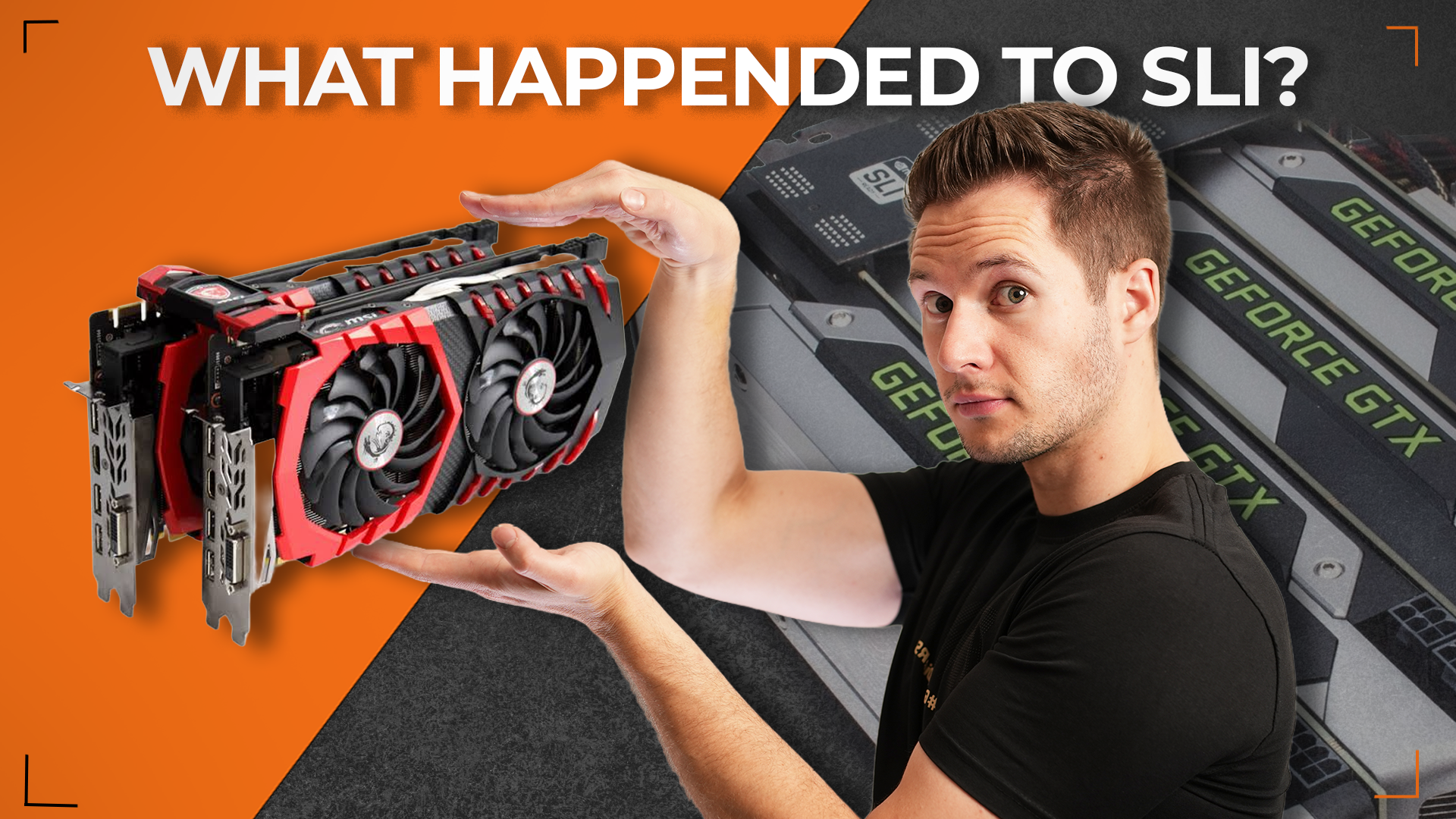

Why SLI Died: The Story of PC Gaming's Biggest Broken Promise
By Stefan @ WeDoTech
Two Graphics Cards Should Mean Double the Power. It Almost Never Did.
There was a time when the dream of SLI felt genuinely compelling.
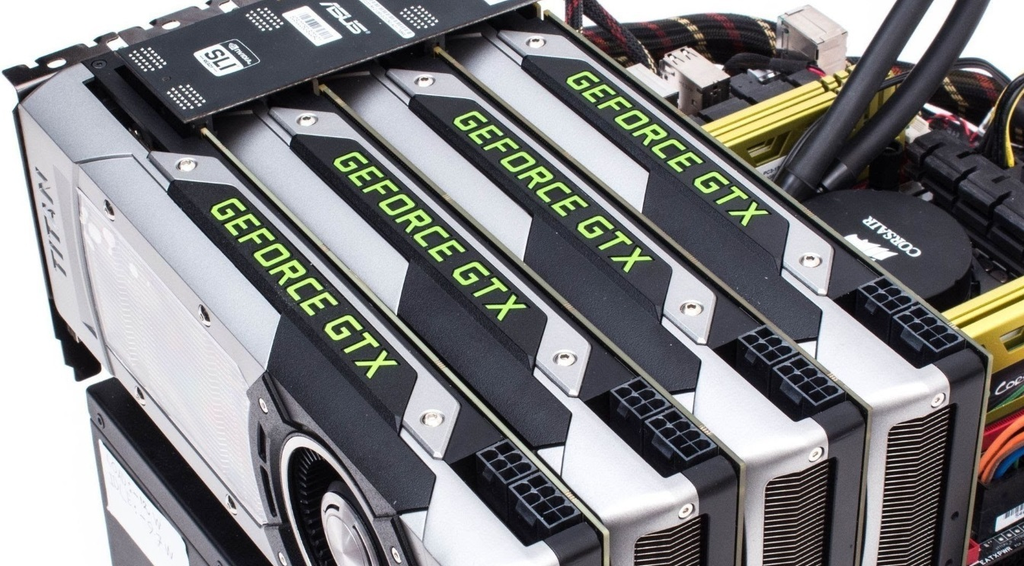
Two graphics cards. Two GPUs rendering your games simultaneously. Double the frames, double the performance, the most powerful gaming PC money could buy sitting inside your case. For a certain generation of PC builders, SLI was the ultimate expression of what the platform could do. It was expensive, impractical, and slightly unhinged, which in the enthusiast PC world has historically been a strong recommendation.
Then it quietly disappeared. No dramatic announcement. No farewell. Just a gradual narrowing of support until one day you realized that nobody was doing it anymore, nobody was talking about it, and the graphics cards being released no longer even had the connector for it.
So what actually happened?
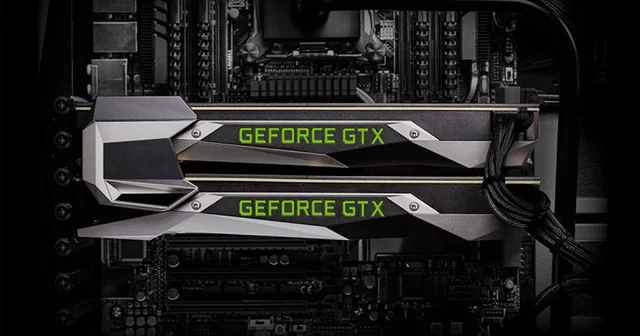
What SLI Was and How It Worked
SLI, Scalable Link Interface, was originally developed by 3dfx in the late 1990s under the name Scan-Line Interleave, which connected two Voodoo2 cards and split the rendering workload between them horizontally. Nvidia acquired the technology along with 3dfx in 2000 and brought it back in 2004 under the SLI name, eventually evolving it into a system that used Alternate Frame Rendering, where two cards took turns rendering sequential frames rather than splitting each frame down the middle.
On paper the approach made sense. More GPU horsepower, applied to the same game, producing more frames. AMD ran a parallel program called CrossFire that worked on similar principles across their card lineup. During the mid-2000s through the early 2010s, both technologies had genuine enthusiast followings, and the benchmarks in supported games could look impressive.
The problems started almost immediately.
Why More GPUs Did Not Mean More Performance
The fundamental issue with SLI was that it required games to actively support it to work properly. Nvidia's driver team maintained a database of SLI profiles, essentially game-specific instructions telling the drivers how to split and coordinate the rendering workload between two cards. Without a profile, the second card either contributed nothing or actively hurt performance by introducing rendering inconsistencies.
This meant SLI performance was entirely dependent on whether Nvidia's engineers had created a profile for your specific game. New game releases often launched without SLI support and sometimes received profiles weeks or months later, occasionally never. Studios had little incentive to prioritise multi-GPU support for a technology that only a tiny fraction of their players were using. The percentage of Steam users running multi-GPU configurations never exceeded single digits, and for most of that period sat well below one percent. Developers building for the 99% of players on single GPUs had limited motivation to spend engineering time on the fringe case.
Even when profiles existed, the results were inconsistent. Alternate Frame Rendering introduced frame pacing problems, where the time between frames was uneven even when the average frame rate looked good. The result was gameplay that could feel stuttery or inconsistent even when the benchmark numbers suggested it should not. Micro-stuttering became the term most closely associated with multi-GPU configurations, and it was a problem that was never fully solved throughout SLI's lifespan.
The hardware overhead compounded everything. Two cards meant double the power draw, double the heat output, more noise from additional cooling, and the NVLink bridge required to connect them. A single high-end card in a well-cooled case was simpler, quieter, more reliable, and in many titles actually faster than two mid-range cards in SLI due to driver inefficiency.
The Slow Decline
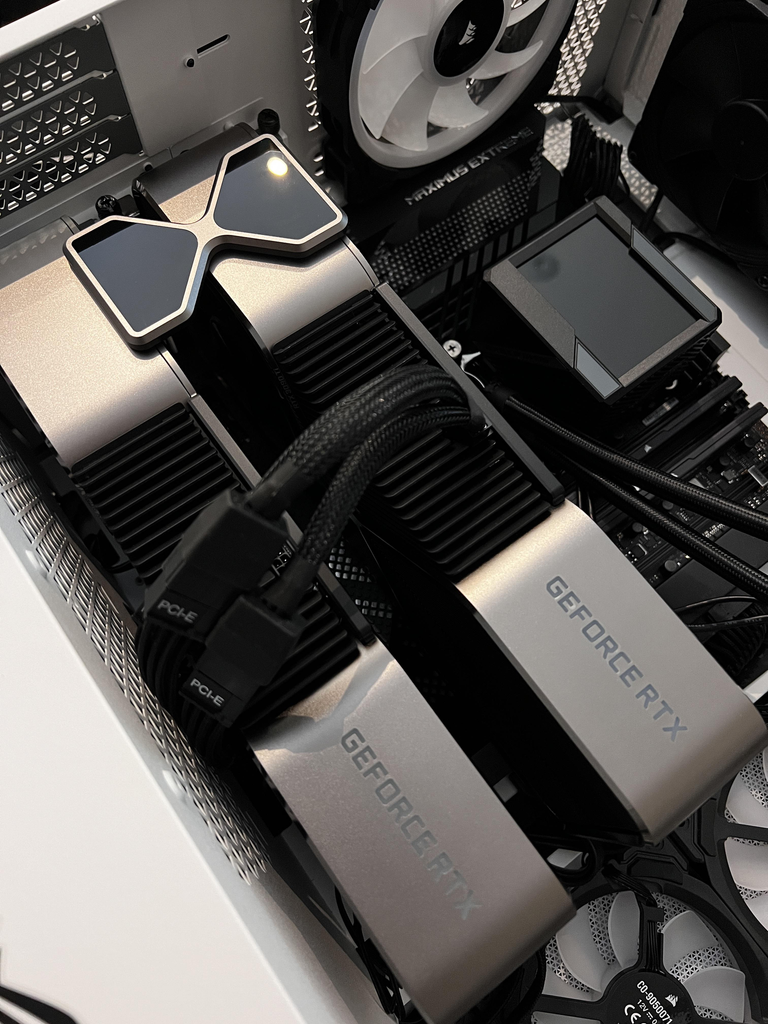
Nvidia began quietly strangling SLI support with the Pascal generation in 2016, restricting three-way and four-way configurations to benchmark use only. The Turing generation with the RTX 20 series narrowed support further, limiting SLI to RTX 2080-class cards and above. By the time Ampere arrived with the RTX 30 series in 2020, Nvidia confirmed that only the RTX 3090 would support SLI connectivity via NVLink, and even then no new driver profiles would be provided for any RTX 30 series card at all.
The RTX 3090's SLI support was therefore limited exclusively to games that had native multi-GPU support built directly into the engine, a list that at the time of launch included fewer than ten titles. Nvidia's statement was clear: SLI existed on the RTX 3090 only to enable the fastest possible gaming configurations for the small number of titles that could use it natively, not as a broadly supported feature for the general gaming library.
AMD wound down CrossFire support on a similar timeline, with the technology effectively ending active development around the same period. Both companies reached the same conclusion independently: the engineering resources required to maintain multi-GPU driver support were not justified by the number of users who actually used it.
Nvidia formally discontinued SLI as a technology in 2021. The RTX 40 series launched in 2022 with no multi-GPU support of any kind. The connector was gone. The bridges were gone. The profiles were gone. SLI was over.
Where the Performance Went Instead
The interesting coda to the SLI story is that the performance gains its users were chasing did not disappear. They arrived through different means.
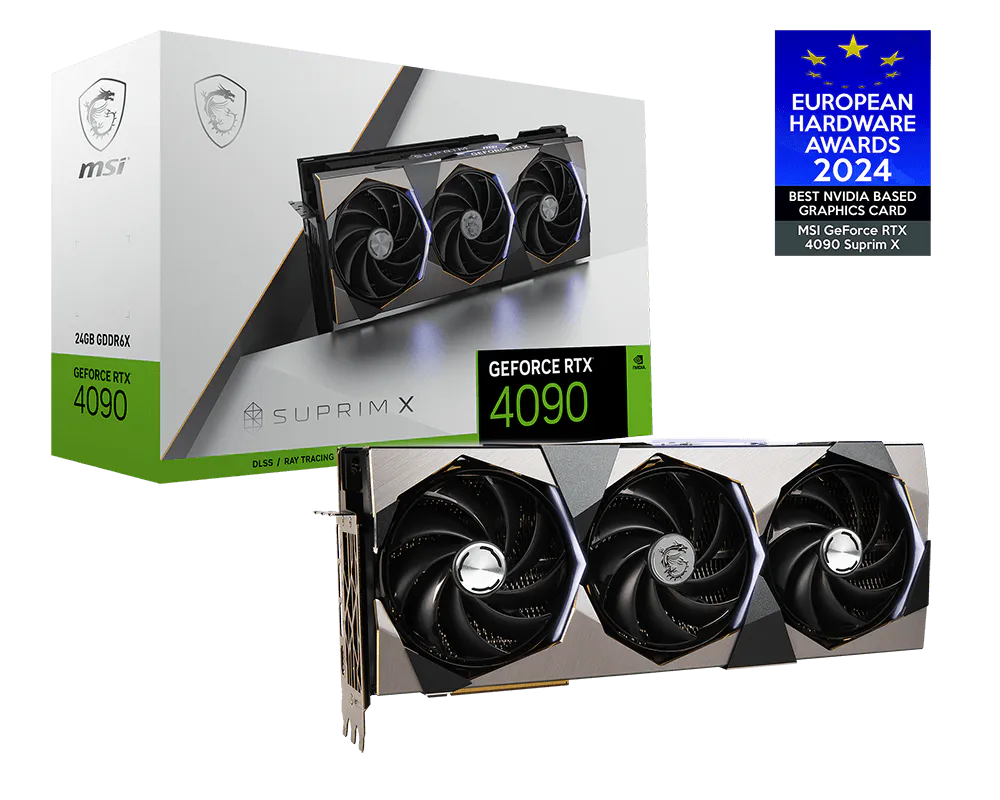
Single GPU performance improved dramatically generation over generation in a way that made the SLI proposition less attractive even during the years it technically worked. An RTX 3090 in 2020 delivered more consistent real-world gaming performance than two RTX 2080 Ti cards in SLI across most titles. An RTX 4090 in 2022 did the same relative to anything the multi-GPU era could offer.
DLSS, Frame Generation, and AI-assisted upscaling technologies have since added another layer of effective performance scaling that requires no second card, no bridge, no driver profiles, and no frame pacing compromises. What SLI promised through brute force, modern rendering technology has largely delivered through intelligence.
The multi-GPU architecture did survive in a different form. Nvidia's NVLink technology, which evolved from the same underlying connectivity as SLI, is used extensively in professional and data center GPU configurations. Running multiple A100 or H100 cards in parallel for AI training is a direct descendant of the SLI concept, applied to workloads where the rendering challenges that killed gaming SLI do not exist. The idea was sound. The gaming application of it was not.
Why SLI Matters to Remember
The SLI story is a useful reminder of the difference between theoretical performance and practical performance.
Two cards with twice the compute should produce twice the output. In controlled conditions running the right workload with correct driver support on properly profiled software, it sometimes did. In the real world of new game releases, variable driver support, frame timing inconsistencies, heat management, and the day-to-day reality of PC gaming, the gap between theory and experience was wide enough that most people who tried SLI eventually went back to a single card.
The lesson applied to more than graphics cards. It applied to any hardware technology where the performance promise is conditional on a chain of support from developers, driver teams, and software ecosystems that have limited incentive to maintain it. When that chain breaks, the hardware underperforms regardless of what the spec sheet says.
SLI was a genuinely interesting idea that the gaming ecosystem was never quite structured correctly to support. It died not because the hardware was wrong but because the software world never caught up to it.
For more on graphics hardware and where GPU performance is heading next, check out our breakdown of the RTX Spark platform, the technology Nvidia is betting will finally deliver on the kind of performance scaling that SLI always promised and rarely delivered.