
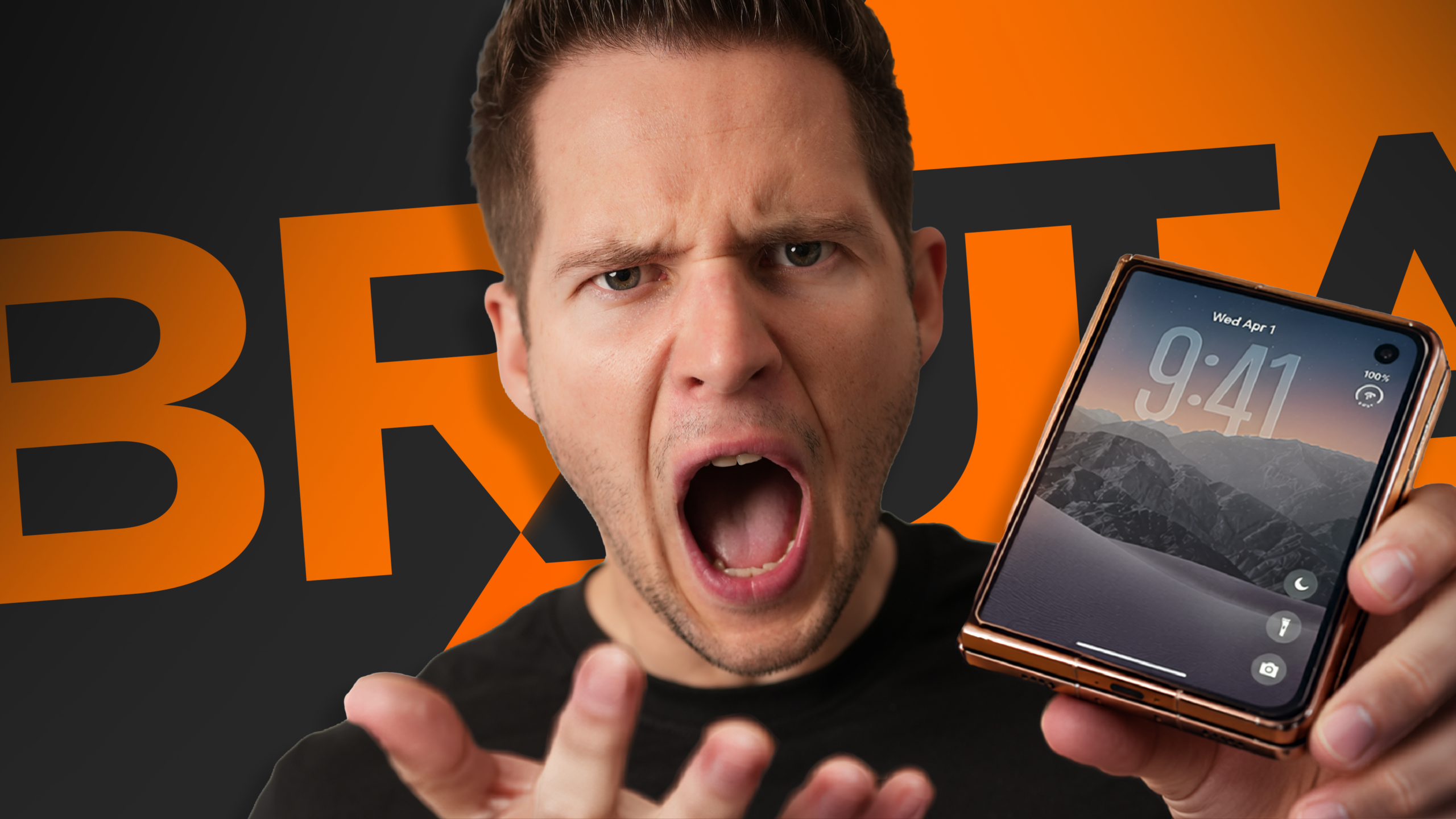

iPhone Duo Review: Why We Canceled Our Pre-Order
By Stefan @ WeDoTech
Apple’s first foldable is beautifully engineered and almost impossible to buy. It is also not ready, and that matters at $1,999.
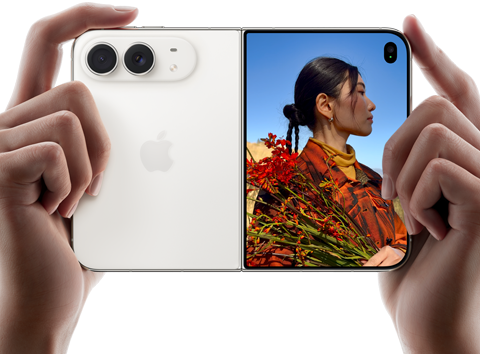
The iPhone Duo costs $1,999. It has no Face ID, no dedicated telephoto lens and no Action button. Folded, it feels chunkier than an iPhone 18 Pro Max. And it still sold out almost instantly.
This is a brutal review, but it is meant to be a fair one. WeDoTech runs on Apple gear every day: MacBook, iPhone Pro Max, Apple Watch and iPad. We wanted the iPhone Duo to be great. After living with it, we canceled our own pre-order, and here is why.
Sold Out in Minutes
Apple announced the iPhone Duo on September 9 and opened pre-orders on October 16 at 5 a.m. Pacific. Within minutes, US delivery estimates jumped from the October 23 launch date to late January 2027 for every configuration. Resale listings quickly appeared well above Apple’s prices.
So demand is clearly not the problem. The real question is whether the iPhone Duo is worth the money and the wait. We judged it as it stands today, not on what Apple promises to fix later. After the slow rollout of Apple Intelligence, we think that is the only fair way to review an Apple product.
What Apple Got Right
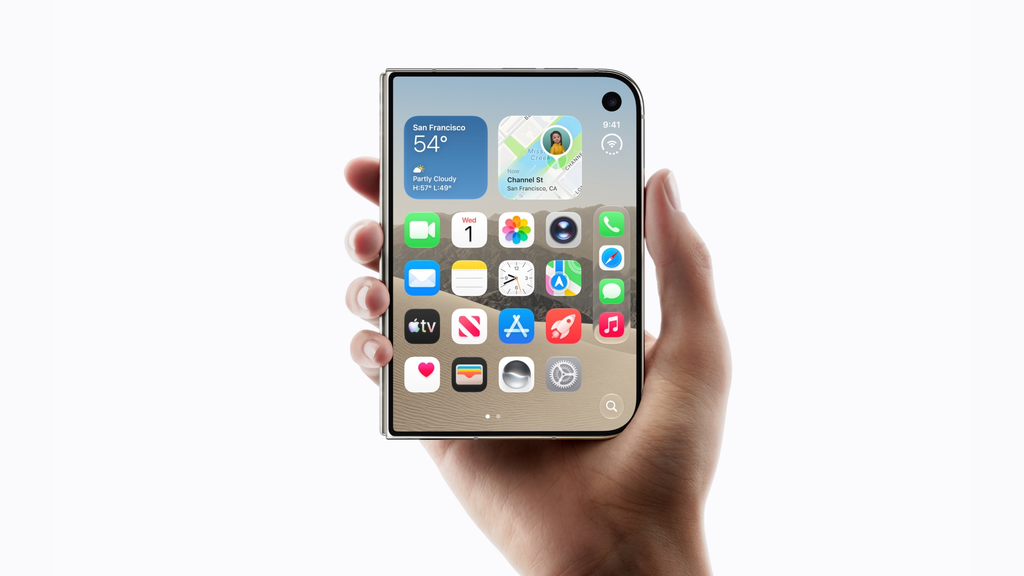
Credit where it is due, because several parts of the iPhone Duo are excellent.
- Inner display: 7.6-inch OLED with ProMotion up to 120Hz and a nano-texture matte finish
- Outer display: 5.4-inch OLED, also 120Hz
- Chip: A20 Pro, the same chip family as the iPhone 18 Pro models
- Build: titanium foldable design, IP68 dust and water resistance
- Cameras: 48MP Fusion Main and 48MP Ultra Wide
- Unlocking: Touch ID built into the side button
- Weight: 254g
- Price: from $1,999 (256GB) up to $3,199 (2TB)
The nano-texture finish on the inner screen is the star. It feels silky and smooth rather than sticky, it hides fingerprints remarkably well, and it does a great job of disguising the crease. The crease is still there if you look for it or run a finger across it, but in normal use it barely registers. The trade-off is color. The matte coating softens the image, so it looks a little washed out, closer to a Kindle than a vivid OLED. Some people will love that comfort. Anyone expecting punchy, high-contrast colors may not.
The iPhone Duo hinge is also excellent. It feels firm and magnetic when closed, glides smoothly through the middle and snaps open at the end. It holds its position at most angles from roughly 15 to 160 degrees. Add IP68 dust and water resistance, something Samsung’s Fold line still has not matched (the Galaxy Z Fold8 Ultra is rated IP48), and you can see Apple’s patience paying off in the hardware.
Small touches add up too. The speakers sit in opposite corners for good stereo sound, the standby clock mode is a nice extra, and there is a clever camera trick: you can flip to the outer screen and take selfies with the main rear cameras. It produces far better selfies than either front camera, as long as you look at the lens rather than the screen.
Battery life on the iPhone Duo also impressed us. It comfortably lasts a full day, which we would place above the 18 Pro and just below the Pro Max, though it depends heavily on how much you use the inner screen.
The Compromises Stack Up
The problem is a long list of small flaws rather than one big one, and you will keep running into them.
Cameras: The iPhone Duo is the most expensive iPhone, but it does not have the best iPhone camera. There is no dedicated telephoto lens or variable aperture. Zoom tops out at 10x digital for photos and 6x for video. In good light, the main camera is close enough to a Pro Max that most people will not notice. In low light, the gap shows. The under-display selfie camera on the inner screen is poor, fine for a quick video call and not much else.
Heat and performance: Same A20 Pro family, different results. The foldable design leaves less room for cooling. In our use, it slowed down under heavy loads, especially while gaming and charging at the same time. Thermal testing by YouTuber Mr Who’s The Boss suggested the heat stays trapped inside rather than escaping through the body, which leads to throttling sooner. Most people will not push it that hard, but Pro buyers might.
Charging: A full wired charge of the iPhone Duo took us around two hours. Tip: charging it unfolded shaved more than 10 minutes off in our testing.
Buttons and grip: The volume buttons have moved to the top edge, and the Action button is gone. There is no obvious comfortable way to hold the phone.
Touch ID instead of Face ID: There is no Face ID, so you rely on Touch ID in the side button. In our testing it was slower than expected, awkward to reach in portrait mode, and unreliable with sweaty fingers. You can unlock it with an Apple Watch, but that is an expensive workaround.
The outer screen: It is advertised as having only about 10% less screen area than an 18 Pro. In practice, the on-screen controls take up a big chunk on the right side, so typing a message leaves room for roughly two lines of conversation. That right-side layout also makes the phone awkward for left-handed users.
The Real Deal-Breaker: Apps
This is the main reason we canceled. Apple’s reputation is built on user experience, and right now the iPhone Duo does not deliver it.
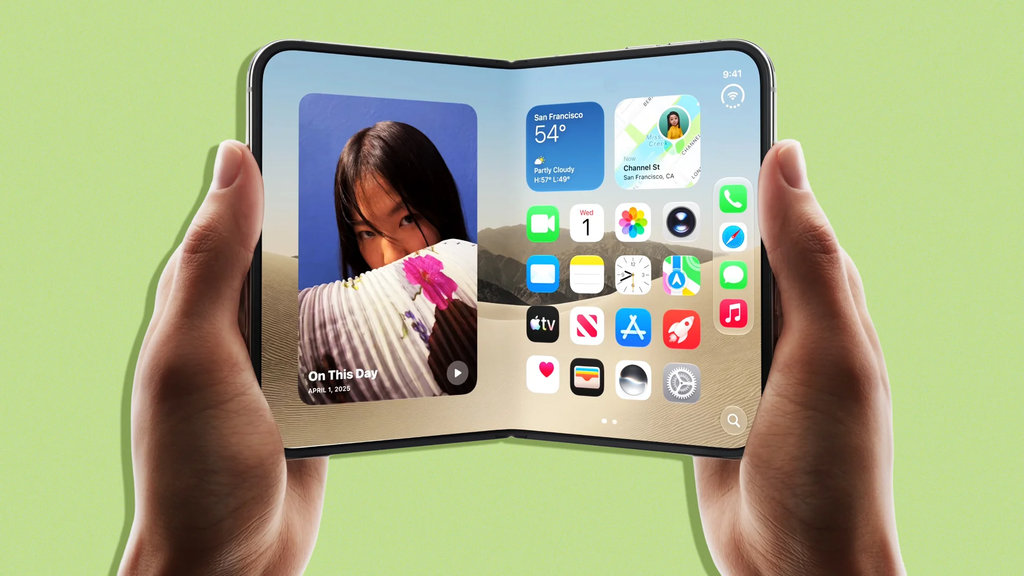
Open an app on the iPhone Duo’s inner screen and you get one of three results:
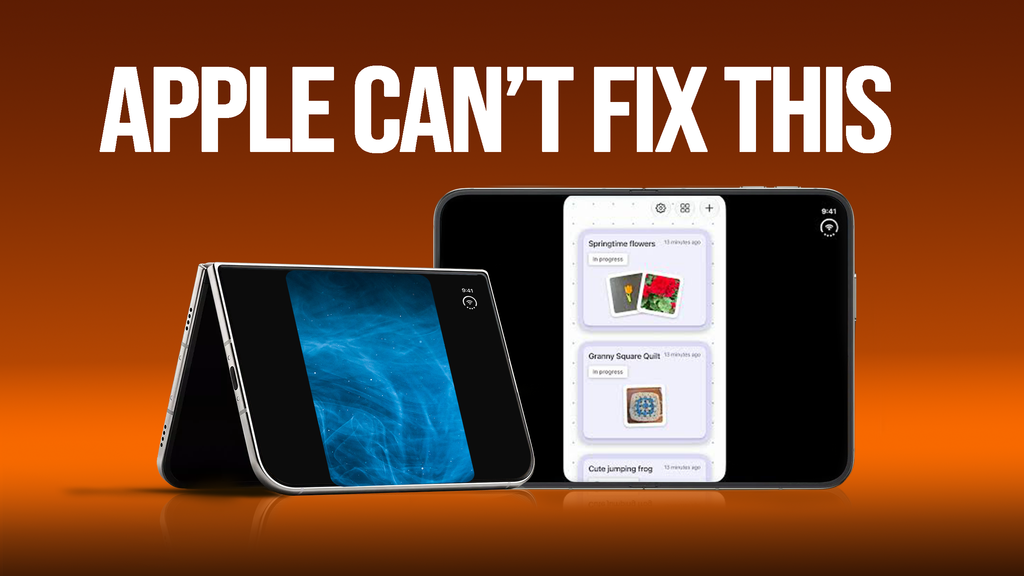
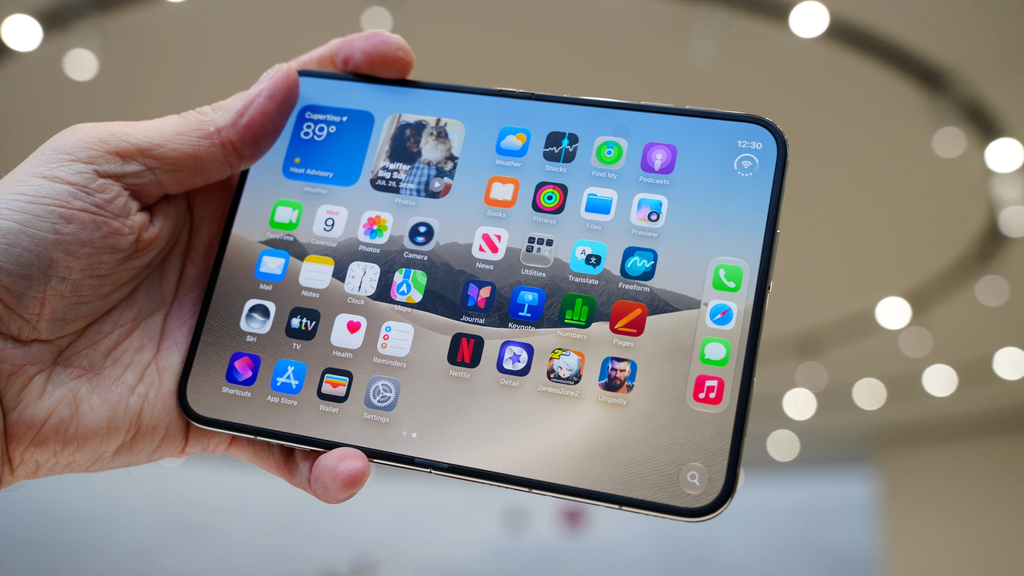
- Compatibility mode: the app sits in the middle with black bars around it, sometimes tiny on that huge display.
- Stretched layout: the app fills the screen but leaves an awkward black bar around the controls. Usable, but not good.
- Properly optimized: the app uses the extra space to become better. At launch, this was rare.
Developers will catch up, and plenty of app updates landed on launch day. But a foldable needs layouts for the outer screen, inner screen, book mode, portrait, laptop-style use and tent mode. That is a lot of work for a small share of the market. Samsung’s Fold line is eight generations in and some apps still do not behave properly. This will take months, maybe years, and apps that are no longer maintained may never be fixed.
Multitasking is limited too. Split-screen finally arrives on iPhone, which is a real productivity boost, but you are limited to two apps plus picture-in-picture video. Samsung’s foldables let you run more apps at once with flexible floating windows.
iPhone Duo vs Galaxy Z Fold8 Ultra and iPhone 18 Pro Max
- Price: $1,999 for the iPhone Duo vs $2,099.99 for the Fold8 Ultra vs $1,299 for the 18 Pro Max
- Weight: 254g vs 215g for the Fold8 Ultra
- Durability: IP68 on the iPhone Duo vs IP48 on the Fold8 Ultra
- Cameras: dual 48MP vs the Fold8 Ultra’s 200MP main with a 10MP 3x telephoto
- Outer screen: 5.4 inches vs 6.5 inches on the Fold8 Ultra
- Unlocking: Touch ID vs side fingerprint plus face recognition on the Fold8 Ultra
The Fold8 Ultra wins on software maturity, multitasking, cameras and weight, and its cover screen works as a normal phone. The iPhone Duo wins on durability, hinge feel, the nano-texture display and the Apple ecosystem.
The iPhone 18 Pro Max is the safest choice. It costs $700 less, has better cameras, Face ID and an interface that just works, though without a big folding screen.
Our verdict: if you are an Apple user who wants a large screen today, the Pro Max is the better buy. If you want a mature foldable right now, Samsung is further along.
Final Thoughts
The iPhone Duo is the most interesting iPhone Apple has ever made. The engineering is impressive: a titanium hinge, an almost invisible crease, IP68 protection and excellent battery life. But it is held back by a long list of small compromises and, above all, apps that are not ready for it yet.
That is why we canceled our pre-order. In a few months, once developers catch up, it may be more than good enough for most people. Right now, it feels like a first-generation product at a premium price.
Our recommendation: if you love being first and accept early adopter trade-offs, go for it. You will probably enjoy it. Everyone else should either buy an iPhone 18 Pro Max or wait for the second-generation iPhone Duo, when more apps will work properly out of the box.
For more on why Apple’s software promises deserve some patience, read Siri AI at WWDC 2026: Apple’s Assistant Finally Grew Up.