

What Is Good Mini LED? Why Dimming Zones Make the Difference
By Stefan @ WeDoTech
Two TVs can carry the same Mini LED label and look completely different. Here is what separates good Mini LED from the rest.
Our trip to China was an eye-opener. On the outside of the box, two TVs can both be sold as a Mini LED TV with what looks like the same technology. On the inside, they can be completely different, and the person who pays for that difference is you.
So what is good Mini LED? It comes down to one feature that rarely gets explained properly on the box: local dimming zones. If you are shopping for a new TV, this is the spec worth understanding before you spend a cent.
What We Saw Inside the TVs
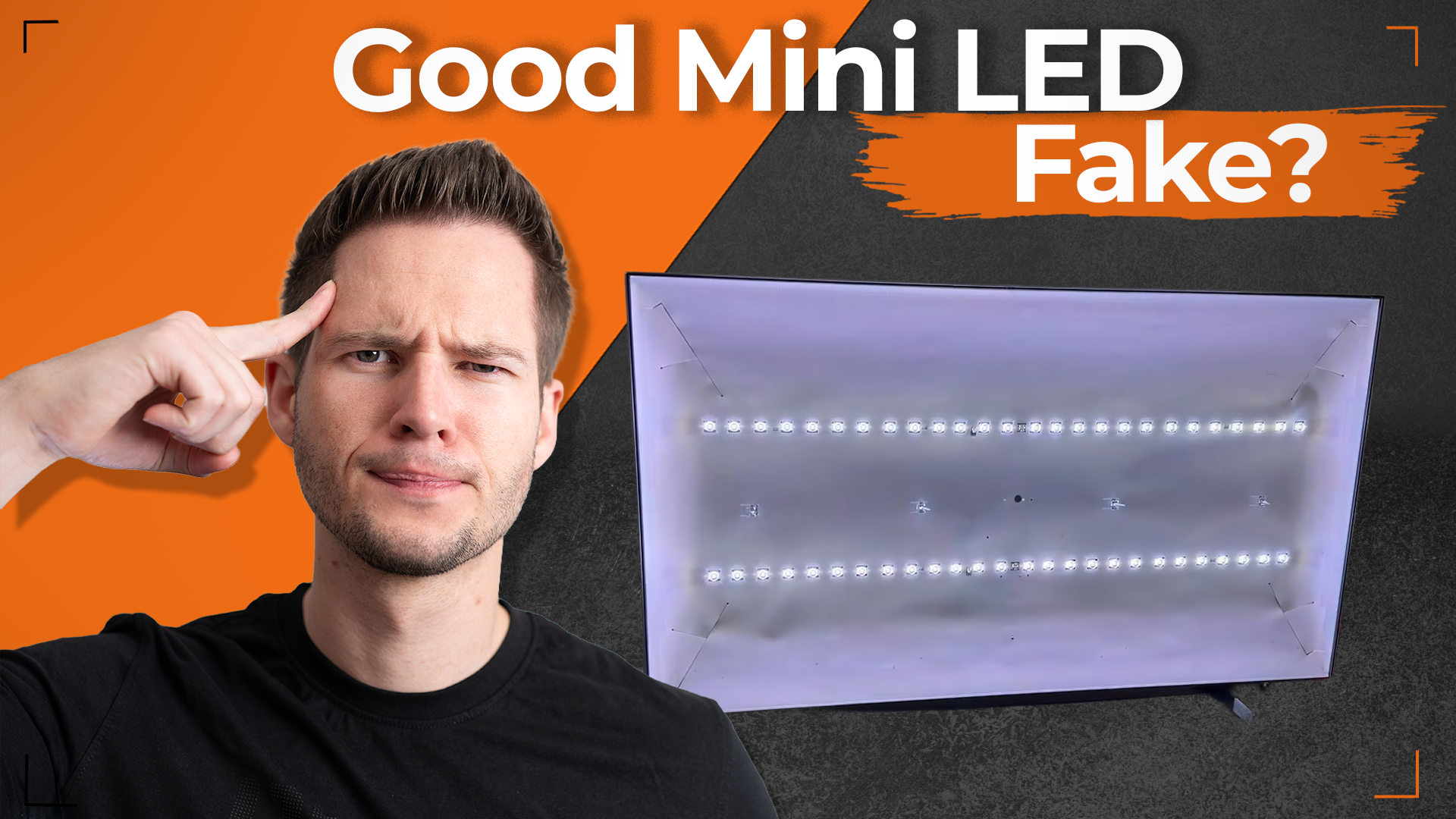
During our visit, TCL opened up its TVs to show us what happens behind the screen. Two sets stood side by side, and both could legally carry the same label.
On the first TV, you could see the backlight switching on and off in small sections as the image moved across the screen. Dark areas went dark, and bright areas stayed bright. On the other, the backlight simply stayed on.
The difference on screen was obvious. The TV with active dimming zones produced much darker blacks and brighter highlights, with far more contrast and clarity. The other looked flatter and grayer in dark scenes.
Full credit to TCL for opening up its hardware and showing what is inside, something few TV makers do. The principle it demonstrated is also well established and backed up by independent testing: good Mini LED puts light where it belongs, and keeps it away from where it does not.
How a Mini LED TV Actually Works
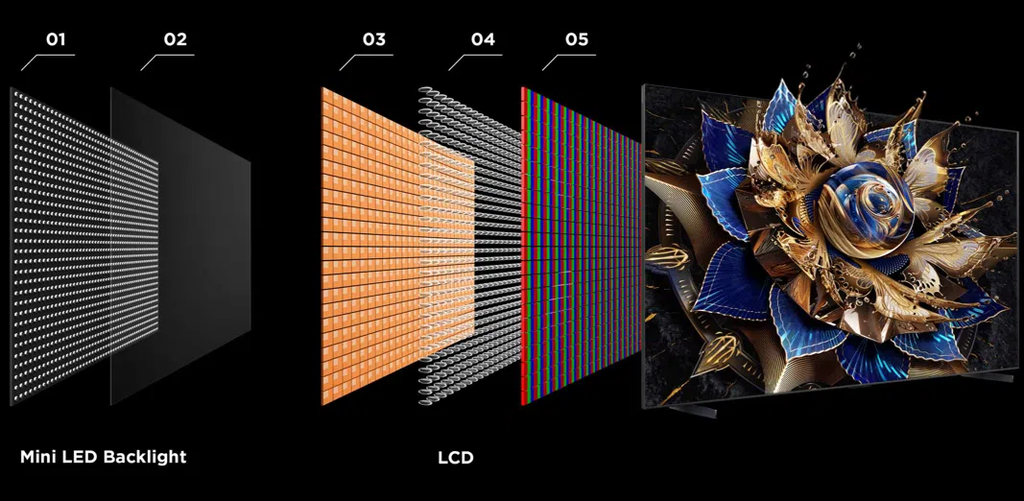
A Mini LED TV is still an LCD TV. The LCD panel does not make its own light, so a backlight shines through several layers, including the panel and color filters, to create the picture you see.
The label simply means the backlight uses many very small LEDs instead of a few dozen larger ones. That is it. There is no official standard for the term, and it says nothing on its own about how well those LEDs are controlled.
The control is where local dimming comes in. A dimming zone is a section of the backlight that can brighten, dim or switch off independently. Imagine turning off the lights behind a dark part of the image to get deeper blacks, while keeping the lights behind a bright part fully on. The more zones a TV has, the more precisely it can match the backlight to the picture.
There are three main backlight approaches:
- Edge-lit: LEDs sit along the edges of the screen. Local dimming, if any, is very limited.
- Direct-lit without local dimming: LEDs sit behind the screen, but they cannot be controlled in separate zones, so blacks look grayish.
- Full-array local dimming (FALD): LEDs behind the whole screen are split into many independently controlled zones. This is what you want.
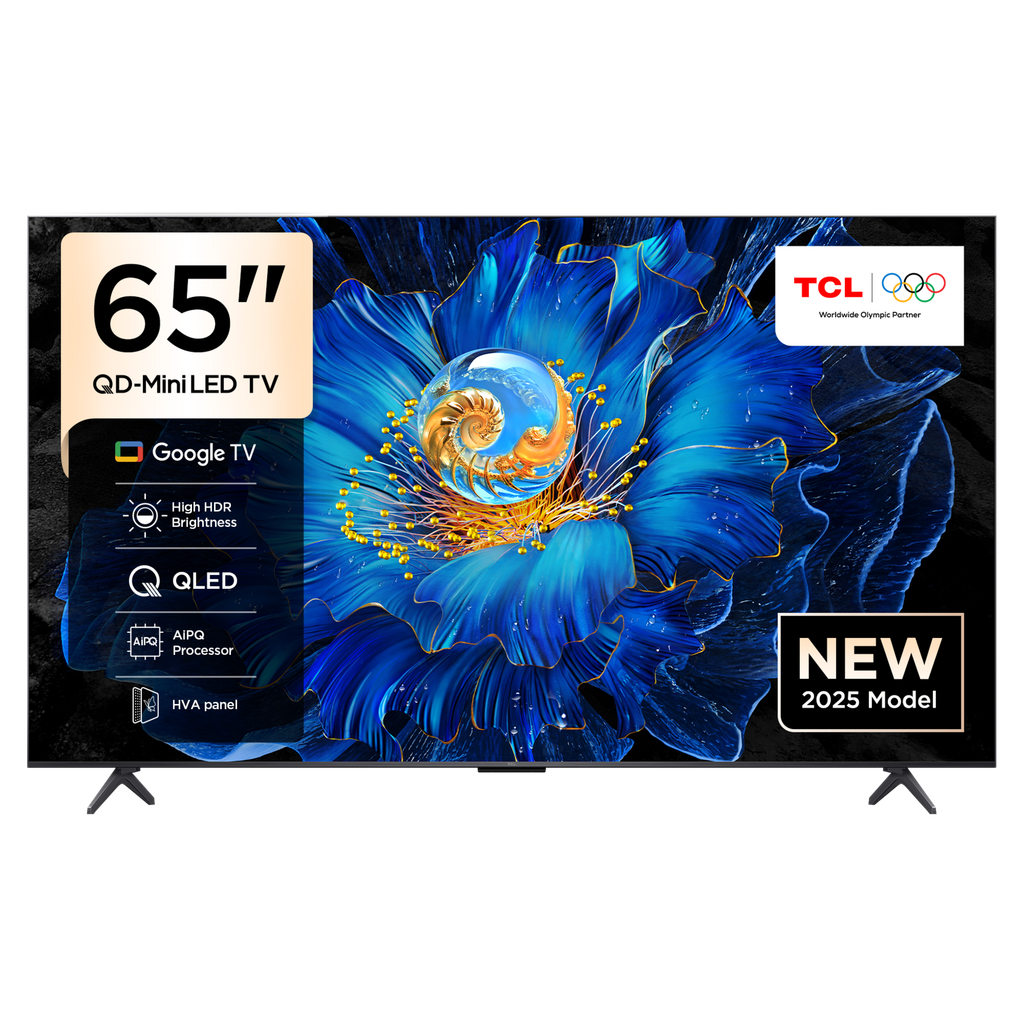
Zone counts vary enormously. Budget sets may have a few dozen to a few hundred zones. TCL’s QM7L ranges from about 800 to 2,176 zones depending on size, with 1,152 on the 65-inch model. The step-up QM8L claims more than 4,000 zones on its largest sizes, and the flagship 98-inch X11L reaches 20,736.
Why the Mini LED Label Can Mislead
Because there is no fixed definition of a Mini LED TV, a set can use small LEDs with few zones, or rely mostly on software processing to imitate local dimming, and still wear the same badge as a TV with thousands of hardware zones.
TVs without real dimming zones lean heavily on software processing to get their picture quality. Processing can help, but it cannot fully make up for a backlight that stays on. Having the hardware to control the light is what makes the real difference.
There are two other traps to watch for:
- “Up to” zone counts: brands often quote the zone count of the biggest screen in a series. A 55-inch or 65-inch model may have far fewer zones than the headline number.
- Zone count is not everything: a TV with 2,000 zones is not automatically twice as good as one with 1,000. The dimming algorithm, the optics over the LEDs and the panel type all affect blooming, which is the glow you see around bright objects on dark backgrounds.
How to Check Before You Buy
You do not need to open a TV to know what is inside it. A few quick checks go a long way:
- Look for “full-array local dimming” in the specifications, not just “Mini LED” or a branded dimming name.
- Find the per-size zone count for the exact screen size you plan to buy, not the series maximum.
- Read independent reviews that test blooming, contrast and brightness, such as RTINGS or Tom’s Guide.
- Check the panel type. Most strong performers use VA panels for better native contrast, while some budget models use IPS panels.
- Watch a dark scene in store if you can. Star fields, subtitles on black and dark movie scenes expose weak dimming quickly.
Full-Array Dimming vs Software-Dimmed Mini LED
- Black levels: deep and controlled with full-array dimming vs grayish with little or no hardware dimming
- HDR highlights: bright highlights next to dark areas vs either washed-out darks or dimmer highlights
- Blooming: controlled, depending on zone count and processing, vs often less visible blooming but much lower overall contrast
- Price: higher vs lower
- Best for: movies, HDR and dark rooms vs bright rooms, casual viewing and tighter budgets
A budget Mini LED TV with minimal dimming is not useless. In a bright living room with daytime TV and sports, the difference is less obvious, and the lower price may be worth it. But if you watch movies at night or care about HDR, full-array dimming with a healthy number of zones makes a big difference.
Our verdict: treat the Mini LED label as the starting point, not the answer. Good Mini LED means real local dimming, and that is what you are paying for.
Final Thoughts
A Mini LED TV can deliver excellent picture quality, but the label alone does not guarantee it. Good Mini LED comes down to the hardware behind the screen: full-array local dimming, a meaningful number of zones for your screen size, and good processing to control them.
Our recommendation: before you buy, ignore the badge on the box and check the per-size dimming zone count and independent reviews. A TV that spends its budget on real dimming hardware will look better in dark scenes than one that relies on software to fill the gap.
To learn more about the company that opened its TVs to show us what is inside, read TCL: The Company Behind Every Screen You Own.