
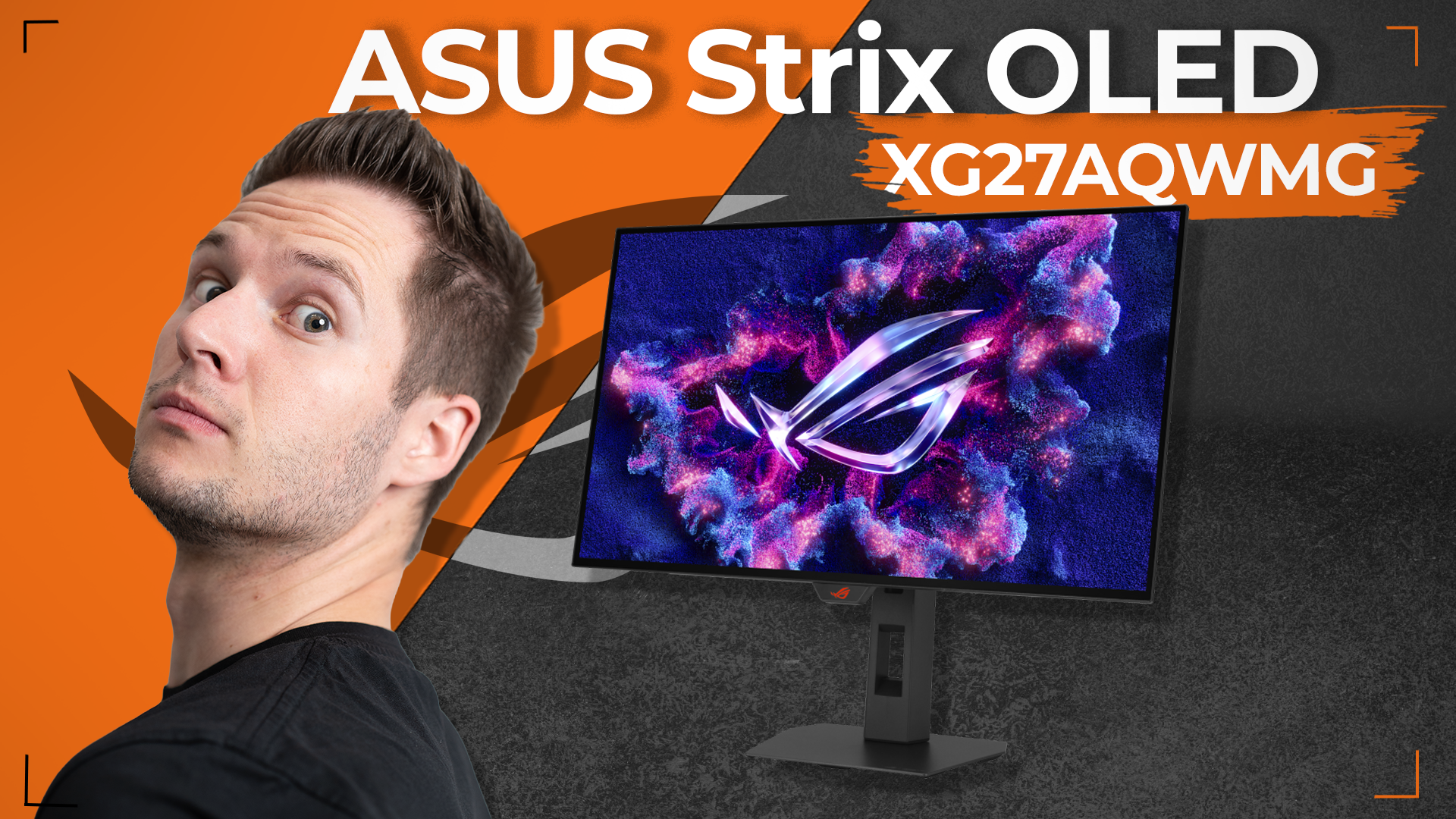

ASUS ROG Strix OLED XG27AQWMG: Our Favorite Monitor of 2026
By Stefan @ WeDoTech
The name, like most monitors is a mouthful, but ASUS's Tandem OLED gaming monitor nails the 1440p sweet spot in a way few screens do.
Monitor names are getting out of hand, and the ASUS ROG Strix OLED XG27AQWMG might be the worst offender yet. But get past the alphabet soup and the Strix OLED is our favorite monitor of the year.
In plain English, it is a 27-inch, 1440p OLED gaming monitor with a 280Hz refresh rate. For most PC gamers, that combination is the sweet spot: sharp enough for a 27-inch screen, fast enough for competitive play, and far easier to drive than 4K. What makes this one special is the panel underneath.

Why This Monitor Stands Out
The Strix OLED is built around LG's 4th-generation Primary RGB Tandem WOLED panel, the same panel found in a handful of rival monitors. ASUS pairs it with its own TrueBlack Glossy coating and a set of burn-in protection features.
It launched in the US at $599.99, one of the lowest prices for a new Tandem OLED monitor, and ASUS currently lists it at $649 on its US store. Reviewers have been impressed. KitGuru gave it a 9 out of 10, and RTINGS rated it fantastic for PC gaming.
What Tandem OLED Actually Means
Every OLED pixel produces its own light, which is why OLED screens deliver perfect blacks and incredible contrast. The downside is that pushing OLED pixels hard to get high brightness wears them out faster and raises the risk of burn-in.
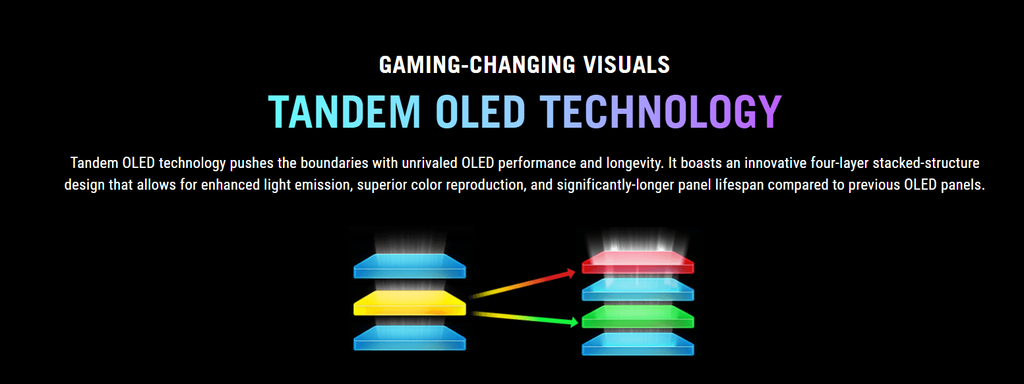
Tandem OLED tackles that by stacking multiple light-emitting layers on top of each other. Instead of driving one layer to its absolute limit, the work is shared across several. ASUS describes it as a four-layer stacked structure.
ASUS claims this gives the Strix OLED three advantages over previous-generation WOLED panels:
- 15% higher peak brightness
- 25% larger color volume
- 60% longer OLED lifespan
Those are ASUS's figures, but independent testing backs up the brightness claim. Tom's Hardware measured a 22% brightness advantage over the next-best monitor in its comparison, higher than the 15% ASUS promises.
The Features That Make It the Full Package
Here are the key Strix OLED specs:
- Screen: 27-inch (26.5-inch viewable) Tandem WOLED, 2560 x 1440
- Refresh rate: 280Hz
- Response time: 0.03ms gray-to-gray
- Brightness: up to 1,500 nits peak in HDR, with VESA DisplayHDR True Black 500 certification
- Color: 99.5% DCI-P3 coverage, factory calibrated to Delta E under 2
- Adaptive sync: NVIDIA G-SYNC Compatible and AMD FreeSync Premium Pro
- Ports: HDMI 2.1, DisplayPort 1.4 with DSC and a USB hub
- Price: $649 on the ASUS US store
The Strix OLED's glossy finish is a love-it-or-hate-it choice. For us, it is a big win. Glossy screens look clearer and more vivid than matte ones, and blacks stay deeper. The trade-off is reflections, so if your desk faces a bright window, think carefully.
Our favorite ROG Strix OLED feature might be the Neo Proximity Sensor. It detects when you step away from your desk and switches the screen to black, then wakes it when you return. On an OLED, where static images are the enemy, that is a brilliant addition. ASUS backs it up with a custom heatsink, its OLED Care Pro suite and, in many regions, a three-year warranty that includes burn-in. Check the terms for your purchase.

A Few Things to Consider
No monitor is perfect, and the Strix OLED has a few points to weigh.
Glossy is not for everyone. In bright rooms with direct light behind you, reflections can be distracting.
280Hz is no longer the fastest. OLED monitors at 360Hz, 500Hz and beyond now exist. For most gamers 280Hz is plenty, but hardcore esports players may want more.
Still an OLED. Tandem OLED and the proximity sensor reduce burn-in risk, but they do not eliminate it. Using the built-in care features matters.
It is a lean package. There are no built-in speakers, so you will need headphones or desktop speakers.
Strix OLED vs LG UltraGear 27GX700A-B
The most direct rival is LG's UltraGear 27GX700A-B, which uses the same 4th-gen Tandem WOLED panel at 1440p and 280Hz.
- Panel: same LG Primary RGB Tandem WOLED panel
- Coating: TrueBlack Glossy on the ASUS vs a non-glossy finish on the LG
- Burn-in protection: Neo Proximity Sensor and custom heatsink on the ASUS
- Price: $649 on ASUS's store vs a price that has typically listed higher for the LG
Because the panel is shared, picture quality is very similar. The ASUS wins on its glossy finish, its proximity sensor and, in most cases, its price. The LG may suit buyers who prefer a less reflective screen or already use LG's ecosystem.
Our verdict: for most buyers, the Strix OLED offers the better overall package, especially if you like glossy screens.
Final Thoughts
The Strix OLED is the full package. It delivers brighter, more colorful Tandem OLED images, a longer expected lifespan, a stunning glossy finish and smart burn-in protection at a price that undercuts many rivals. It also hits the 1440p, 280Hz sweet spot that suits most PC gamers best.
Our recommendation: if you want an OLED gaming monitor and do not need 4K or 500Hz, this is the one to buy. ASUS is also running a Black Friday promotion on it, so this is a good time to check current pricing.
If you are weighing it against a higher-end option, read Samsung QD-OLED: The 4K 360Hz Monitor Worth Waiting For.